Here's some of what is coming soon to NeurologyLive® this week.
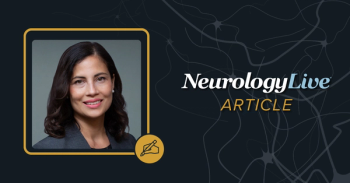
Led by Na Tosha Gatson, MD, PhD, FAAN, director of the Center for Neuro-Oncology at the Indiana University Health Neurosciences and Cancer Institutes, this new column translates complex neuro-oncology topics into accessible, evidence-based insights.
It is with profound professional enthusiasm and a deep-seated commitment to the evolution of medical communication that I submit this letter for conceptual endorsement for the establishment of the column entitled, “The G.L.O.B.” (Gatson’s Living Oncology Blog). In my capacity as a Tenured Professor of Neurology, Neurosurgery, and Medicine at the Indiana University School of Medicine, and as the Director of the Center for Neuro-Oncology at the IU Health Neurosciences and Cancer Institutes, I have dedicated my career to the intersection of clinical excellence, academic rigor, and patient advocacy.
The proposal for "The G.L.O.B." represents more than a mere addition to the NeurologyLive publication; it is a strategic intervention in the field of health literacy. As the Founding President and CEO of Living Oncology™, a 501(c)(3) nonprofit organization dedicated to the democratization of oncological knowledge, I have witnessed firsthand the devastating "void" that exists between complex neuro-oncological diagnoses and patient comprehension. The "G.L.O.B." is designed to fill that void.
The title of this column, "The G.L.O.B.," is intentionally metaphorical and clinically resonant. In the realm of neuro-oncology, we frequently encounter "globs"—masses of tissue, complex radiological findings, and abstract genomic data that, to the untrained eye, lack shape, form, or discernible meaning. For a patient or a non-specialist clinician, a diagnosis like a glioblastoma multiforme or a primary central nervous system lymphoma is initially perceived as an amorphous "glob" of fear and clinical jargon.
A "glob" is something in dire need of development. It is a nascent entity that requires the steady hand of an expert to mold it into a "known entity." Through the lens of Living Oncology™, we view health literacy as the primary tool for this transformation. By providing structured, evidence-based, and accessible answers to the most daunting questions in our field, "The G.L.O.B." will serve as the intellectual kiln where the raw, frightening material of a cancer diagnosis is shaped into a functional, empowering vessel of knowledge.
Neuro-oncology is perhaps the most cognitively and emotionally taxing subspecialty in modern medicine. We deal with the "seat of the soul"—the brain—and the malignancies that threaten not just life, but the very essence of personality, memory, and agency. When a patient is told they have a high-grade glioma, the "neuro-cognitive sequelae" of the disease often pair with a profound "information paralysis."
In my role as a Master Clinician at the IU Health Foundation, I have observed that the greatest barrier to optimal outcomes is often not the limitations of our surgical or chemotherapeutic interventions, but the failure of communication. Patients who do not understand their molecular profiling—such as MGMT promoter methylation status or IDH mutation signatures—cannot fully participate in shared decision-making. "The G.L.O.B." is positioned to bridge this chasm. It will translate the high-fidelity science of the laboratory and the sterile complexity of the clinic into a narrative that is both medically accurate and humanly digestible.
My endorsement of this column is backed by the structural integrity of Living Oncology™. Our 501(c)(3) was founded on the principle that health literacy is a fundamental right. We have spent years developing frameworks to turn "globs" of medical data into actionable insights for diverse populations. By integrating this mission into NeurologyLive, your platform will benefit from a decade of clinical leadership and academic prestige.
In my adjunct roles at Geisinger Health and the University of Arizona College of Medicine-Phoenix, I have mentored countless residents and fellows. I have consistently taught them that a physician’s duty does not end with a successful resection or a precisely delivered dose of radiation. Our duty ends when the patient understands their journey. "The G.L.O.B." will serve as an extension of this educational philosophy, providing a recurring masterclass in medical communication for your readership.
To illustrate the necessity of this column, consider a recent case from my clinical practice. A patient presented with a complex, multifocal lesion—a classic "glob" in every sense of the word. The initial consultations with other providers had left the family in a state of "information entropy," where the more data they received, the less they understood.
Utilizing the principles that will govern "The G.L.O.B.," we broke down the pathophysiology of the tumor, the rationale for the targeted therapy, and the expected trajectory of their neuro-oncological care. We took the "glob" of their diagnosis and, through the meticulous application of health literacy, turned it into a "known entity." The change in the patient's psychological state was as palpable as the radiographic response to treatment. Fear was replaced by a sense of agency. This is the transformative power that "The G.L.O.B." will bring to the NeurologyLive audience on a global scale.
"The G.L.O.B." will not be a typical blog. It will be a curated column that adheres to the highest standards of academic neurology while embracing the accessibility of modern digital media. The content will cover:
1. Decoding the Data: Breaking down the latest clinical trial results (e.g., advances in CAR-T cell therapy for glioblastoma) into understandable milestones.
2. The Human Element: Addressing the "Living" in Living Oncology—navigating the psychosocial challenges of brain tumor survivorship.
3. Policy and Advocacy: Examining how health literacy impacts healthcare equity and access to cutting-edge neuro-oncological care.
4. The "Glob" of the Month: A recurring segment where a complex medical concept is "shaped" into a clear, concise explanation.
As a Fellow of the American Academy of Neurology (FAAN) and a leader in the international neuro-oncology community, I do not lend my name to projects lightly. I am advocating for "The G.L.O.B." because it represents the future of our field. We are entering an era where the "Master Clinician" must also be a "Master Communicator."
Dr. Na Tosha N. Gatson and the Living Oncology™ team are uniquely positioned to deliver a column that is authoritative, empathetic, and intellectually stimulating. By hosting "The G.L.O.B.," NeurologyLive will distinguish itself as a leader in the global effort to improve health literacy and patient outcomes.
I give this initiative my highest, most emphatic energies in designing and execution of this effort. It is time to stop fearing the "glob" and start shaping the future of neuro-oncology.
Cordially Yours,
Dr. Tosha
Na Tosha N. Gatson, MD, PhD, FAAN
Tenured Professor, Neurology, Neurosurgery, & Medicine | IU School of Medicine
Director, Center for Neuro-Oncology | IU Health Neurosciences & Cancer Institutes
Master Clinician, Neuro-Oncology | IU Health Foundation
Adjunct Professor of Neurology | Geisinger Health & University of Arizona CoM-Phoenix
Founding President & CEO of Living Oncology™ 501(c)(3)