Brian Lin, PhD, discussed the current evidence linking football participation with ALS, the questions that remain unanswered, and how emerging research may help clarify the association.
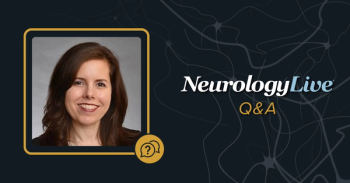
Cynthia Keator, MD, director of neurology at Cook Children's Hospital, shares her perspective on building longitudinal Lennox-Gastaut syndrome care plans, navigating the pediatric-to-adult transition, and what the field needs to do better for patients and families.
Lennox-Gastaut syndrome (LGS) presents one of the most complex care challenges in pediatric epilepsy, not only because of its intractable seizures, but because of the wide range of comorbidities and systemic needs that accompany patients across their lifetimes. As treatment advances have extended life expectancy for this population, the question of how to plan for that longer life has grown increasingly urgent. That question took center stage at the 2026 LGS Foundation Family and Professional Conference, held in July, where clinicians and families gathered to address the practical realities of care across all stages of life.
Epileptologist Cynthia Keator, MD, director of neurology at Cook Children's Hospital, participated in a session titled “Building Your LGS Care Team and Care Plan,” which she co-led alongside adult epileptologist Fabio Nascimento, MD. The session brought together both pediatric and adult perspectives, and drew significant input from the families themselves, many of whom came with pressing concerns about what happens when their child ages out of pediatric care.
In a conversation with NeurologyLive®, Keator broke down what the session covered, which aspects of the LGS care transition tend to get overlooked, how the pediatric and adult neurology communities can better collaborate, and how she envisions LGS care planning evolving as natural history data and cohort research continue to develop.
Cynthia Keator, MD: I did this as a workshop with my colleague Fabio Nascimento, who is an adult epileptologist, so it was really nice to get both perspectives. A lot of the families who attended had patients or loved ones that were already in their teenage years, and many that were in their adult years. What we continue to see with technology and advancements in medical care and LGS treatment options is that, while we don't have a cure, we definitely are seeing this population live to longer ages in life over the last 20 years, which is fantastic. But how do we plan for that?
In a pediatric plan, it's a little bit more straightforward in the sense that your pediatric neurologist, or if possible, your epileptologist, really becomes kind of your go-to person, just because so many of your needs are focused around your neurological care. Your primary care physician is kind of integral in those first few years of life when you're talking about routine well-child checks and milestones and vaccinations. But as the LGS progresses and a lot of things change, your primary care physician, from a pediatrics standpoint, really turns to the neurologist for guidance on where we're supposed to be, what we're supposed to expect, and how to handle the next challenge, because things are going to look different for a patient with LGS.
The goal of the workshop was really looking at the 3 phases of growing up with LGS. Depending on when the patient develops it, the majority of pediatric patients will develop it prior to age 8, but with the new criteria and the new definition in 2022, it's now 18 years and younger.
There are really 3 groups: the pediatric group, which goes until about age 12; the adolescent and teenage group, from about 12 to 18; and then the adult group, 18 and older. The goal was identifying who are the people on that care team and who takes the lead on that role. From a pediatric perspective, where does the pediatric epileptologist fit in? And for Dr Nascimento, how does it change when you move into the adult world?
One of the things he emphasized is that the American Academy of Neurology, many years ago, came out with guidelines on when you should start discussing transition care, and it should be as early as 14, and some will argue as early as age 12. It's very difficult because of how health care is in the United States, with different insurance companies and who covers what, so you really should start thinking about that early on. It's very overwhelming even for a child who has very well-controlled epilepsy, and it's a whole different ball game for a child who has Lennox-Gastaut [syndrome] with intractable epilepsy.
We focused on a worksheet that looked at other systems beyond neurology. Your gastroenterology, is your child suffering from constipation? Your mobility, do we have all the equipment we need? Do we have issues with tone? Do we have hip issues? Do you have scoliosis? Really going through all the different systems from orthopedics and cardiology to pulmonary. The session ended up going in a very parent-driven direction, which was about how families can become the person to help guide this transition to adult care, because it's very overwhelming and there are a lot of challenges and a lot of fear in how you do it. And very few adult epilepsy providers feel very comfortable with Lennox-Gastaut and other developmental epileptic encephalopathies. So that was kind of the common theme of what we can do better.
My take-home message, and what I do at my institution, is I have a kind of flow sheet or care plan, which starts with the neurology. When did everything start? What medications have you been on? What have your prior studies looked like, for MRIs, genetic testing, etc.? And then going into every single system: have you seen pulmonary? Have you seen cardiology? Do you need to see those?
And sometimes you don't, but making sure you're thinking about those things and putting it all into their categories, so that when you do move on to adult care, you have it all in one place and it's succinct. It's only 2 or 3 pages, but it's all there. One of the big things we talked about is that families get very frustrated because when they transfer to adult neurology, they're often told that their records didn't come through, and getting records is very difficult. My action plan was to say, this is where I see a gap, and this is where families can take initiative. From a physician side, we need to be better about that too.
The main thing that doesn't get talked about is that we have to do a transfer of care at some point from pediatrics to adult care, and I think we don't like talking about it because we're pediatricians and we love what we do, and we only want to work with that population. We don't talk about it because we feel bad, and we don't want the families to feel that we're dismissing them, because we're not. But it is a very important discussion to have, including about finding a provider that takes your insurance. And you might have identified that provider when the child was 16, 17, or 18 years old, and then here you are ready to transfer at age 20 or 21, and the provider you identified no longer takes that insurance plan. Those things happen.
The second thing I think gets lost is that it's not just seizures. I think we often focus so much on just one thing. From a pediatric perspective, I focus a lot on mobility, because a lot of these children have gross motor function scores usually in the 3 to 5 range. One being you walk around with no problem. Two being you need some sort of assistive device from time to time but still ambulate on your own. Three, you really need a device to walk around with like a gait trainer. Four, you can stand and you can use the gait trainer, but you prefer to be in a wheelchair most of the time. And five, being completely wheelchair bound.
Those patients have a much higher risk for hip dysplasia, and a lot of those children are nonverbal. From a pediatrics perspective, we focus on some of those other organ systems more comprehensively. But in the adult world, it really becomes very specialty-focused. I'm a specialist; I only focus on seizures. And so now you've got to find all these different people. If you don't think about those things in the pediatric and adolescent years, you're setting yourself up for more complications and potentially more failure for your loved one in the adult world, because they're going to end up having adult problems that we often could have picked up in the pediatric realm.
That's something that I think the LGS Foundation has worked really hard on. Can we centralize information? Luckily, I think it was the CARES Act that was passed several years ago, so now when I write a note, or when I release a record, or when a lab gets completed, it gets immediately released. Families have the opportunity to have their information, or their loved ones' information, at their fingertips immediately. And so, taking that information, and saying it's not just LGS, what about all the other different chronic neurological conditions, or pulmonary conditions, or cardiac conditions? You can centralize all your information, and with the cloud, you can store it in a way that makes it user-friendly for wherever you go, so that a physician can pull that information and get that answer.
“I know I've been on 10 medicines, but I can only remember 6 of them, and I cannot remember the other 4.” They all sound unfamiliar because sometimes we tried them, came off of them, and then retried them. If you had an area where you could say, here were the medicines that you tried, and here were the [adverse] effects you had, or drug reactions, or drug trials, that is incredibly valuable.
I would love for everyone to do the same thing I'm doing in all 50 states, but they might do it their own way, and that's fair. But those ideas about how we do things the same way, or at least centralize things the same way, will give us a way to collaborate better. And from a research perspective, when a family shares their information on their own, you don't have to worry about de-identification or data use agreements. Those go away. They've already given their consent. It's a beautiful thing, and I think people don't realize how beautiful it is. And as more adult colleagues are getting more of these patients, there is going to be more interest. We're already seeing it now, and I think we're going to continue to see it.
Kind of like what the LGS Foundation is already doing, creating a centralized natural history database, when you follow just the natural history, you're able to do 1 of 2 things. The first is you start to cohort groups. The very unique thing about LGS is that there are thousands of reasons why a patient develops it. Dravet [syndrome], we know it's SCN1A. TSC, kind of the same thing.
But LGS can be due to genetic causes, acquired causes, metabolic causes, and then of course there's the 40% that are unknown, which are still probably genetic, but we don't know which gene yet. One of the things I hope for in the evolution of the future is that you start to cohort these groups and say, this is the group that has these etiologies at this time point, and you start to see these features that occur with LGS. And then you can start to piece them out and understand what are the unique features about them, and can you build better prediction models of how these things happen?
The second thing would be from a research perspective: Once you look at those groups and you have those prediction models, comparing them to patients who do not have LGS, some that will never develop epilepsy, and some that will develop epilepsy but not LGS—what is different about them? Is there something different about them so that you can pinpoint why they all develop these specific EEG features? Slow spike and wave is usually the one that comes first, but why does that happen? We have a lot of clinical and scientific research understanding of where it comes from and the pathways in the brain. But nobody can prevent it.
As we start getting this natural history data and finding these groups and cohorting them and then trying to understand if there is some sort of pattern that creates a prediction model, we can say this is the group at high risk to develop LGS. Can we then prevent the slow spike wave from happening before they evolve into LGS? I think that's what everyone is really looking for. Every year we get a little bit more information, and I think that's the vision and the future direction. But you have to start somewhere, and you've got to start collecting the patients first, and you've got to do it collectively.
Transcript edited for clarity.