
Opinion|Videos|May 28, 2026
Practical Use of Vorasidenib: Patient Selection, Monitoring, and Real-World Considerations
Author(s)Katherine B. Peters, MD, PhD
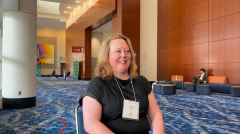
Katherine B. Peters, MD, PhD, shares practical insights on prescribing vorasidenib, including patient education, safety monitoring, and how clinicians can confidently integrate this targeted therapy into routine care.
Advertisement
Episodes in this series
As targeted therapies continue to reshape the management of IDH-mutant glioma, clinicians are increasingly focused on how to effectively integrate these agents into real-world practice. Beyond clinical trial data, considerations such as ease of administration, safety monitoring, and patient counseling play a critical role in ensuring optimal outcomes.
At the 2026 AAN Annual Meeting in Chicago, Katherine B. Peters, MD, PhD, neuro-oncologist at Duke Health and professor of neurology and neurosurgery at the Preston Robert Tisch Brain Tumor Center, spoke with NeurologyLive® about lessons learned from the phase 3 INDIGO trial (NCT04164901) and her clinical experience using vorasidenib. She emphasized the importance of understanding the drug’s mechanism, differentiating it from traditional chemotherapy, and fostering collaboration across specialties to support patient care.
In this final episode, Peters offers practical guidance for clinicians, including how to frame discussions with patients and families, what to monitor during treatment, and how to manage common adverse events such as liver function abnormalities. She also highlights the accessibility of the therapy, its tolerability profile, and the importance of multidisciplinary collaboration in optimizing its use.
Advertisement
Related to this article

The CHMP recommended approval of gefurulimab (Klygefa), a weekly self-administered C5 inhibitor, for AChR-antibody-positive generalized myasthenia gravis in the EU.

Here's some of what is coming soon to NeurologyLive® this week.

Test your neurology knowledge with NeurologyLive®'s weekly quiz series, featuring questions on a variety of clinical and historical neurology topics. This week's topic is Parkinson disease biomarkers!
A retrospective cohort study found DTI-ALPS, a glymphatic function marker, did not independently predict survival in glioblastoma beyond extent of resection and sex.
The approval, based on phase 3 IB1001-303 trial data showing consistent SARA scale improvement, makes levacetylleucine the first treatment approved specifically for ataxia-telangiectasia.

Take 5 minutes to catch up on NeurologyLive®'s highlights from the week ending September 18, 2026.
A published protocol outlines the randomized, open-label EPOCH trial testing whether cilostazol accelerates hematoma resorption and improves recovery after intracerebral hemorrhage.

Brian Lin, PhD, discussed the current evidence linking football participation with ALS, the questions that remain unanswered, and how emerging research may help clarify the association.
Advertisement
Advertisement
Trending on NeurologyLive - Clinical Neurology News and Neurology Expert Insights
1
FDA Approves Levacetylleucine for Ataxia-Telangiectasia
2
FDA Clears Phase 1b/2 Trial of CAR T-Cell Therapy C-CAR168 for Refractory Progressive Multiple Sclerosis
3
Episode 175: Advancing the Ways of Treating Cluster Headache
4
FDA Approves UX111, First Gene Therapy for Pediatric Sanfilippo Syndrome Type A
5