
Opinion|Videos|June 24, 2026
INDIGO Trial Context: Vorasidenib and Early Treatment in IDH-Mutant Glioma
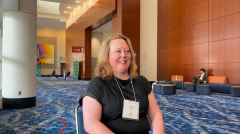
Author(s)Ugur T. Sener, MD
The discussion turns to the pivotal INDIGO trial, with a focus on how vorasidenib improved progression-free survival and introduced a new early treatment strategy for patients with grade 2 IDH-mutant glioma following surgery
Advertisement
Episodes in this series
Advances in molecular profiling have significantly reshaped the understanding of glioma biology, particularly in tumors driven by IDH mutations. Beyond their role in tumor formation and progression, these mutations are increasingly recognized for their contribution to tumor-associated epilepsy, creating new opportunities for therapies that may address both oncologic and neurologic disease burden simultaneously.
In this Special Report, Ugur T. Sener, MD, consultant in the Section of Neuro-Oncology and chair of the Division of Neuro-Oncology at Mayo Clinic, discusses the mechanistic rationale behind targeting mutant IDH in low-grade glioma. Framed around emerging data with vorasidenib, the conversation explores how disruption of the oncometabolite 2-hydroxyglutarate may influence both glioma biology and seizure generation in affected patients.
In this episode, Sener walks through the biologic role of IDH mutations, the downstream production of 2-hydroxyglutarate, and the ways in which this metabolite contributes to both tumor development and epilepsy. He also explains how vorasidenib’s dual inhibition of mutant IDH1 and IDH2 may provide a targeted strategy capable of addressing both processes at the same time.
Advertisement
Related to this article

Phase 3 trials EMNERGIZE and EMVIGORATE will evaluate the efficacy and safety of intravenous empasiprubart in adults with chronic inflammatory demyelinating polyradiculoneuropathy.

EpilepsyGTx and Viralgen have entered a manufacturing collaboration to support development of EPY201, an investigational AAV9-based gene therapy for focal refractory epilepsy planned to enter first-in-human testing in 2027.

The ongoing phase 3 study is enrolling approximately 180 adults across more than 13 countries, with topline results expected in mid-2027.

New data from the 2026 AANEM Annual Meeting showed zilucoplan delivered via autoinjector was bioequivalent to the pre-filled syringe and was well tolerated when self-administered by patients with generalized myasthenia gravis.

The phase 3 HARMONIA trial will evaluate whether a muscle- and CNS-targeted antisense conjugate improves function across multiple systems in patients with myotonic dystrophy type 1.

New phase 3 MINT trial analyses presented at the 2026 AANEM Annual Meeting showed inebilizumab produced sustained improvement in MuSK-positive gMG regardless of time since diagnosis.

PridCor Therapeutics is moving its phase 2 SHIELD trial of a combination antiviral regimen toward enrollment, building on case series data showing durable symptom improvement in long COVID.

New PREVAIL trial analyses presented at the 2026 AANEM Annual Meeting showed gefurulimab reduced gMG-related hospitalizations and produced durable symptom and quality-of-life gains through one year.
Advertisement
Advertisement
Trending on NeurologyLive - Clinical Neurology News and Neurology Expert Insights
1
FDA Approves Tavapadon for the Treatment of Parkinson Disease
2
SHIELD Trial Advances Combination Antiviral for Long COVID
3
Inebilizumab Shows Durable Benefit in MuSK+ Generalized Myasthenia Gravis at AANEM 2026
4
Gefurulimab Cuts Hospitalizations, Sustains Response in Phase 3 PREVAIL Trial of Myasthenia Gravis
5