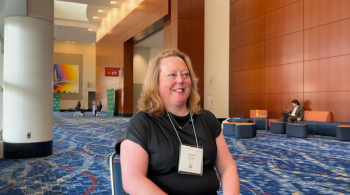
Katherine B. Peters, MD, PhD, outlines how seizures shape the lived experience of patients with grade 2 IDH-mutant glioma, highlighting their impact on independence, employment, and long-term quality of life.
Katherine B. Peters, MD, PhD, outlines how seizures shape the lived experience of patients with grade 2 IDH-mutant glioma, highlighting their impact on independence, employment, and long-term quality of life.
Katherine B. Peters, MD, PhD, breaks down how IDH mutations drive 2-hydroxyglutarate production and how this process contributes to both tumor growth and seizure activity in glioma.
Katherine B. Peters, MD, PhD, reviews the phase 3 INDIGO trial (NCT04164901), highlighting its patient population, significant progression-free survival benefit, and the impact of vorasidenib on delaying disease progression and need for further intervention.
Katherine B. Peters, MD, PhD, reviews the exploratory seizure analysis from the phase 3 INDIGO trial (NCT04164901), discussing the numerical reduction in seizure burden with vorasidenib, the limitations of patient-reported seizure data, and how clinicians should interpret these findings in practice.
Katherine B. Peters, MD, PhD, discusses how INDIGO (NCT04164901) findings may shift practice toward earlier treatment in IDH-mutant glioma, even after gross total resection, while highlighting ongoing questions around patient selection and long-term management.
Katherine B. Peters, MD, PhD, shares practical insights on prescribing vorasidenib, including patient education, safety monitoring, and how clinicians can confidently integrate this targeted therapy into routine care.

The discussion opens with a broad overview of seizure burden in grade 2 IDH-mutant glioma, highlighting how epilepsy affects quality of life, long-term disease management, and day-to-day functioning throughout the disease course.
The discussion shifts toward the biologic rationale behind vorasidenib, exploring how mutant IDH inhibition may simultaneously target tumor growth and seizure activity in patients with IDH-mutant glioma.
The discussion turns to the pivotal INDIGO trial, with a focus on how vorasidenib improved progression-free survival and introduced a new early treatment strategy for patients with grade 2 IDH-mutant glioma following surgery
Ugur T. Sener, MD, discusses exploratory seizure analyses from the INDIGO trial, highlighting reductions in seizure frequency with vorasidenib and the potential biologic relationship between tumor control and epileptogenesis.
Ugur T. Sener, MD, discusses how findings from the INDIGO trial are influencing treatment timing after surgical resection, including evolving considerations surrounding early intervention, surveillance, fertility, and long-term management.