
Opinion|Videos|October 9, 2026
What Drives Treatment Selection Between the Two On-Label Agitation Therapies
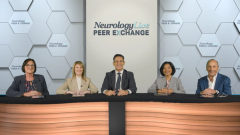
With two on-label options now available, the choice between them comes down to comorbidities, psychosis, and risk. The panel also examines how long-term care rating pressures complicate that decision in practice.
Advertisement
Episodes in this series
With two on-label agents now available, the panel turns to what actually drives the choice between them, noting how recently this was not the case: treatment was entirely off-label, clinical benefit was uncertain, and clinicians were taking on real risk without established evidence to support it. Having two studied, FDA-approved options changes that calculus meaningfully across every specialty caring for these patients.
Comorbidities and overall risk profile emerge as the leading factor in choosing between the two therapies. Patients already at elevated risk for falls, tardive dyskinesia, or existing metabolic and cardiovascular disease tend to steer the panel toward the non-antipsychotic combination first, reserving the antipsychotic option for patients who genuinely need it. Active psychosis moves the decision in the opposite direction, since the non-antipsychotic combination is not designed for that presentation; a patient who is easily activated, or who has a history of hypomania, mania, or activation on other psychotropic medications, similarly points toward the antipsychotic option, sometimes paired with an off-label anticonvulsant.
Long-term care introduces its own complicating layer. Having both agents available is described as a genuine game changer, since facility five-star quality ratings can be penalized by antipsychotic use, making it historically difficult to use an antipsychotic even in patients with psychosis who clearly needed one. Yet the panel is candid that this benefit cuts both ways: administrators and directors of nursing still apply real pressure to use the non-antipsychotic combination instead, purely because it does not affect the facility rating, even in a psychotic patient who may genuinely need an antipsychotic. The panel closes by noting that this dynamic, while still a live tension in long-term care today, is beginning to shift as comfort with both options grows.
Our next episode, "Shared Decision-Making for Agitation in Specialty Care and Disease Trajectory," turns to how shared decision-making plays out in specialty psychiatric care.
Advertisement
Related to this article

Carmela Tartaglia, MD, FRCPC, discusses the challenges of diagnosing frontotemporal dementia, the evolving role of biomarkers, and emerging approaches to disease modification.
Catch up on any of the neurology headlines you may have missed in September 2026, compiled into 1 place by the NeurologyLive® team.

Newly announced Phase 4 THRIVE trial results showed most patients who previously had an inadequate response to a CGRP-targeting therapy improved with eptinezumab over 24 weeks.

Phase 3 ARISE trial results show solengepras 150 mg significantly reduced OFF time and improved motor and non-motor symptoms in Parkinson disease.

An MDS 2026 plenary speaker discusses the evolving role of infusion therapies, deep brain stimulation, and focused ultrasound in Parkinson disease, including when to consider device-aided therapies and how treatment selection can be individualized.
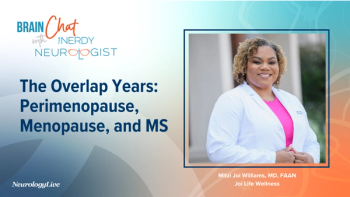
Mitzi Joi Williams, MD, is joined by Jakai McEwen, DO, and Charnetta Colton-Poole, MD, to discuss the challenges of communication between patients and their health care teams, including navigating medical language, promoting shared decision-making, and advocating for clear, patient-centered care.

Christen Kutz, PhD, PA-C, discusses a retrospective survey of neurology providers examining why patients with generalized myasthenia gravis are transitioning to nipocalimab and what real-world outcomes data suggest about its role in the treatment landscape.

Carlos Cruchaga, PhD, director of the NeuroGenomics and Informatics Center at Washington University, discusses emerging blood-based biomarkers for monitoring biological and cognitive responses to lecanemab treatment in Alzheimer disease.
Advertisement
Advertisement
Trending on NeurologyLive - Clinical Neurology News and Neurology Expert Insights
1
Solengepras Meets Primary Endpoint in Phase 3 ARISE Trial of Parkinson Disease
2
CSF Biomarkers Identify Shared LRRK2 Pathway Activation in Sporadic and LRRK2-Associated Parkinson Disease
3
Phase 4 THRIVE Data Highlights Eptinezumab’s Impact on Migraine After Prior CGRP Failure
4
Frontotemporal Dementia Diagnosis, Head Impacts, and Emerging Treatment Approaches
5