
Poststroke patients with more severe deficits and better clinical factors received larger doses of rehabilitation therapy, according to a recently published study.

Isabella Ciccone, Content Associate, NeurologyLive®, has been with the team since September 2022. Follow her on X @iciccone7 or email her at iciccone@mjhlifesciences.com
Poststroke patients with more severe deficits and better clinical factors received larger doses of rehabilitation therapy, according to a recently published study.

Marcelo Bigal, MD, PhD, chief executive officer of Ventus Therapeutics, talked about the relationship between inflammation and neurodegeneration in Parkinson disease, and the importance of targeting NLRP3.

Differences in personal experience of dyskinesias in Parkinson disease were observed across multiple cultures, which could be attributable to intrinsic cultural peculiarities.
Leo H. Wang, MD, PhD, FAAN, associate professor of neurology, University of Washington Medical Center, talked about the phase 2 study of losmapimod for facioscapulohumeral muscular dystrophy presented at the 2023 AAN Annual Meeting.
Teri Schreiner, MD, associate professor at the University of Colorado, talked about the impact of B-cell-depleting therapy in pediatric patients with MS infected with COVID-19.

Jean-Cosme Dodart, PhD, senior vice president of research at Vaxxinity, discussed the progress of the UB-312 Parkinson disease vaccine, highlighting its findings from a phase 1 clinical trial, and plans for a phase 2 trial.

Alternative multiple sleep latency test parameters was found to be a better identification method for recognizing hypocretin-deficiency among patients with hypersomnolence and narcolepsy.
Findings showed that pediatric patients with narcolepsy who have had at least 2 components of metabolic syndrome may be at higher risk of future complications.
Findings showed that obstructive sleep apnea can cause early cognitive decline in middle-aged men even if they are healthy and nonobese.
Jeffrey Bennett, MD, PhD, professor of neurology and ophthalmology at the University of Colorado Denver talked about inebilizumab for patients with NMOSD from the N-MOmentum trial.
Melanie Leitner, PhD, consultant and founder of Accelerating NeuroVentures, talked about the findings from regimen D of the HEALY ALS platform trial assessing pridopidine.
Although it showed better functional outcomes, endovascular thrombectomy for the treatment of stroke because of basilar-artery occlusion was associated with procedural complications and intracerebral hemorrhage.
Although the incidence of symptomatic intracranial hemorrhage was low, 18% of the patients in the endovascular thrombectomy group had complications associated with the procedure.
After 48 months of follow up, cipaglucosidase alfa/miglustat in cohorts of ambulatory patients with Pompe disease had an overall safety profile similar to the approved enzyme replacement therapy.
Presented at the 2023 AAN Annual Meeting, remote electrical neuromodulation demonstrated itself as an effective and safe treatment for the prevention of migraine when applied every other day.
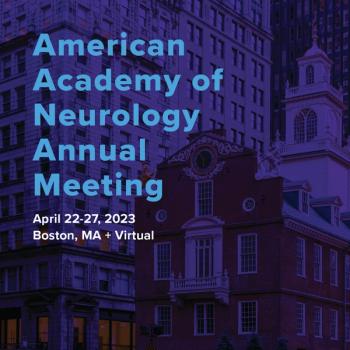
A group of experts in the care of patients with neurological conditions—Ali Jannati, MD, PhD; Madhav R. Thambisetty, MD, PhD; Daniel Ontaneda, MD, PhD; Peter J. Goadsby, MD, PhD, DSc; Andrew Russman, DO—shared their perspectives on hot topics of treatment and management in neurology from the 2023 American Academy of Neurology Annual Meeting.
As a recap from AAN 2023, get caught up on some of the latest news in neurology as the NeurologyLive® team shares some of our data updates.
In April 2023, NeurologyLive® is spotlighting a clinician in neuromuscular diseases, Michelle Mauermann, MD, chair of the division of neuromuscular medicine at Mayo Clinic.
Inhibition of serum free complement 5 with ravulizumab was sustained throughout the treatment period according to a pharmacokinetics and pharmacodynamics analysis.
Minoryx's leriglitazone showed a decrease in matrix metalloproteinase-9 concentrations in pediatric patients with cerebral adrenoleukodystrophy, according to a 24-week analysis.
The treatment was superior in preventing on-trial relapse in both the monotherapy and immunosuppressive therapy groups compared with placebo in the CHAMPION-NMOSD trial.

Higher rates of no evidence of disease activity and no 24-week confirmed disability progression or relapses were observed in patients that continued with ocrelizumab.
Findings showed a significant reduction in mean monthly migraine days with atogepant 60 mg once daily for patients with episodic migraine compared with placebo across a 12-week period.
Zavegepant, a calcitonin gene-related peptide (CGRP) receptor antagonist, provided onset of pain relief as early as 15 minutes postdose and sustained benefits to 48 hours post dose.
An interim analysis showed no reduction in T-cell counts and their subsets as a consequence of B-cell depletion in the first year of treatment with ocrelizumab.
Updated results to the phase 3 CHAMPION-NMOSD trial of ravulizumab showed significantly lower HAI score worsening following treatment.
Resilience was positively correlated with quality of life in patients with narcolepsy type 1, according to a recent published study.
Andrew Siderowf, MD, director of the Parkinson disease and movement center at the University of Pennsylvania, talked about available therapeutics and potential future therapies in research for Parkinson disease.
Sheryl Lapidus, MA, senior director of patient advocacy at Horizon Therapeutics, talked about the findings from a recently conducted patient survey on NMOSD and the importance of advocacy in the field.
CSL Behring's subcutaneous immune globulin is the first and only immune globulin available in prefilled syringes for patients with primary immunodeficiency or chronic inflammatory demyelinating polyneuropathy.