
Test your neurology knowledge with NeurologyLive®'s weekly quiz series, featuring questions on a variety of clinical and historical neurology topics. This week's topic is ocular generalized myasthenia gravis!

Louie Pasculli, Assistant Editor for NeurologyLive®, has been with the team since October 2025. Follow him on X @Louie_Pasculli or email him at lpasculli@neurologylive.com
Test your neurology knowledge with NeurologyLive®'s weekly quiz series, featuring questions on a variety of clinical and historical neurology topics. This week's topic is ocular generalized myasthenia gravis!

Peter Sguigna, MD, assistant professor of neurology at UT Southwestern Medical Center in Dallas, Texas, spoke on emerging research, innovative biomarkers, and expanding targeted therapies for patients living with NMOSD.
Test your neurology knowledge with NeurologyLive®'s weekly quiz series, featuring questions on a variety of clinical and historical neurology topics. This week's topic is GLP-1s & migraine!

Early-phase 1b trial data showed that ANX005 is generally safe and engages its complement target in Huntington disease.

Purple Day, observed each March 26, highlights the global impact of epilepsy while encouraging awareness, education, and open dialogue to reduce stigma and improve care for millions worldwide.

Jonathan Charlesworth, PhD, chief scientific officer at Noctrix Health, discusses emerging research connecting restless legs syndrome with neurologic conditions such as multiple sclerosis, and the role of the FDA-cleared Nidra wearable device in patient care.
Test your neurology knowledge with NeurologyLive®'s weekly quiz series, featuring questions on a variety of clinical and historical neurology topics. This week's topic is chronic traumatic encephalopathy!
From FDA regulatory milestones for investigational agents to emerging clinical data across sleep disorders, this roundup highlights notable developments shaping the evolving landscape of orexin-targeted therapies.

Phase 1 data suggest plasma GFAP levels may correlate with cognitive outcomes in patients with Alzheimer disease treated with troculeucel, an investigational autologous NK-cell therapy.

New findings from a phase 3 trial conducted in China showed that solriamfetol boosted wakefulness and reduced daytime sleepiness in patients with obstructive sleep apnea, with manageable adverse effects.
Test your neurology knowledge with NeurologyLive®'s weekly quiz series, featuring questions on a variety of clinical and historical neurology topics. This week's topic is cerebroprotection in stroke!

In a retrospective cohort of 33 patients with chronic inflammatory demyelinating polyneuropathy, variants accounted for nearly two-thirds of cases, while intravenous immunoglobulin demonstrated high response rates across subtypes.

Serum neurofilament light chain levels showed no significant treatment effect with rituximab compared with placebo, although exploratory trends suggested possible reductions in axonal injury among some treated patients.

Benjamin Greenberg, MD, internationally recognized NMOSD expert, discussed the growing use of recently approved therapies, the importance of early diagnosis, and investigational approaches, including biomarker development and CAR-T therapy, for NMOSD Awareness Month.

Interim data from the phase 1/2 AFFINITY DUCHENNE trial suggest RGX-202 gene therapy was well tolerated and produced robust microdystrophin expression with early functional improvements in boys with Duchenne muscular dystrophy.

Interim results from the phase 1/2 FORTIS trial suggest the investigational gene therapy AT845 was generally well tolerated and associated with stable respiratory and functional outcomes in adults with late-onset Pompe disease.

The phase 1/2 VALOR trial is evaluating the safety and preliminary efficacy of the investigational gene therapy ASP2957 in infants with X-linked myotubular myopathy who require significant ventilatory support.
Long-term follow-up from an open-label phase 2 extension study suggests the investigational exon-skipping therapy brogidirsen was well tolerated over 4.5 years and may help maintain motor function in patients with Duchenne muscular dystrophy.

The FDA has approved leucovorin calcium (Wellcovorin) as the first treatment for patients with cerebral folate transport deficiency caused by variants in the FOLR1 gene.

Interim phase 2 data from the FORWARD-53 study suggest the exon-skipping therapy WVE-N531 was well tolerated and produced sustained dystrophin expression, reduced fibrosis, and functional improvements in boys with DMD amenable to exon 53 skipping.
Test your neurology knowledge with NeurologyLive®'s weekly quiz series, featuring questions on a variety of clinical and historical neurology topics. This week's topic is Seronegative generalized myasthenia gravis!

A recently published position statement from the American Headache Society recommends annual screening for migraine in girls and women, highlighting the potential role of tools like the ID Migraine screener to improve identification.

Large-scale proteomic and transcriptomic analyses position the synaptic protein NRN1 as a resilience-linked therapeutic candidate in Alzheimer disease, though validation remains preclinical.
A Large cohort analysis of more than 159,000 adults found greater adherence to multiple healthy dietary patterns—particularly the DASH diet—was linked to a significantly lower risk of subjective cognitive decline in midlife.
A cross-sectional analysis of nearly 28,000 middle-aged adults found that excessive daytime sleepiness is strongly associated with both sleep characteristics and modifiable psychological factors, highlighting the need for integrated prevention strategies.

R. Scott Turner, PhD, MD, director of the memory disorders program at MedStar Georgetown University Hospital, discussed the importance of investigating environmental risk factors in Alzheimer disease.

Neurologists Esther Bui, MD, and Angela O'Neal, MD, talked about the INSIGHT network, a collaborative global initiative designed to advance medical education in women’s neurology.

A clinician and researcher at the University of California, San Francisco highlighted how agentic AI frameworks are being integrated into real-world multiple sclerosis research to streamline big data analysis and accelerate clinically meaningful discovery. [Watch Time: 5 minutes]
Test your neurology knowledge with NeurologyLive®'s weekly quiz series, featuring questions on a variety of clinical and historical neurology topics. This week's topic is diagnostic workup for multiple system atrophy!
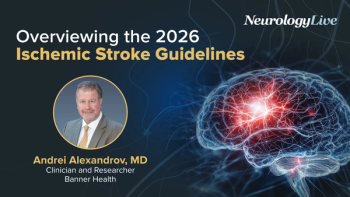
Andrei Alexandrov, MD, an award-winning leader in stroke research and clinical care, discussed the clinical impact of the latest stroke guidelines and their implications for diagnosis and care.