
Test your neurology knowledge with NeurologyLive®'s weekly quiz series, featuring questions on a variety of clinical and historical neurology topics. This week's topic is the MOGAD pipeline!

Louie Pasculli, Assistant Editor for NeurologyLive®, has been with the team since October 2025. Follow him on X @Louie_Pasculli or email him at lpasculli@neurologylive.com
Test your neurology knowledge with NeurologyLive®'s weekly quiz series, featuring questions on a variety of clinical and historical neurology topics. This week's topic is the MOGAD pipeline!
FDA issues complete response letter for GTx-104 in aneurysmal subarachnoid hemorrhage, citing manufacturing and nonclinical concerns despite positive phase 3 efficacy and safety data.

In the phase 3 NIMBLE trial, Cemdisiran met primary and secondary endpoints, demonstrating rapid and sustained improvements in MG-ADL and QMG scores with once-every-12-week dosing in AChR-positive generalized myasthenia gravis.

A medical student at at Santa Casa de São Paulo School of Medical Sciences discussed the findings from a systematic review suggest potential biomarker-level benefits of estradiol-based hormone therapy in Alzheimer disease, but cautions that heterogeneous data limit firm conclusions. [WATCH TIME: 3 minutes]

In the global phase 3 PREVAIL trial, gefurulimab met primary and secondary endpoints in adults with acetylcholine receptor antibody–positive generalized myasthenia gravis, potentially offering a more convenient alternative to intravenous therapies.

In a 58-week open-label extension, most patients with Parkinson disease treated with tavapadon avoided starting levodopa or required no dose increases, suggesting a potential levodopa-sparing effect.
Test your neurology knowledge with NeurologyLive®'s weekly quiz series, featuring questions on a variety of clinical and historical neurology topics. This week's topic is pediatric strokes!
Single-dose adjunctive dexamethasone did not significantly lower 48-hour relapse rates or improve functional outcomes in children and adolescents treated for acute migraine in the emergency department.

Paul George, MD, PhD, FAAN, a board member of the American Academy of Neurology (AAN), gave an inside look at what clinicians can expect from the upcoming AAN Annual Meeting, held April 18-22 in Chicago.

International Pompe Day highlights advances in molecular diagnostics, newborn screening, and enzyme replacement therapy that have reshaped the recognition and management of Pompe disease over the past century.

Erika Trovato, DO, MS, associate chief medical officer at Burke Rehabilitation Hospital in New York, discusses interdisciplinary rehabilitation, emerging technologies, and the evolving focus on long-term outcomes and caregiver support in brain injury care.
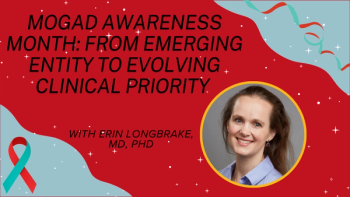
MOGAD Awareness Month highlights the evolution of myelin oligodendrocyte glycoprotein antibody–associated disease from a once-misclassified condition to a distinct neuroimmunologic disorder.

A data-driven slideshow for National Public Health Week highlights the global burden of neurologic diseases, featuring key statistics on prevalence, disability, and workforce gaps across major conditions.
Test your neurology knowledge with NeurologyLive®'s weekly quiz series, featuring questions on a variety of clinical and historical neurology topics. This week's topic is AAN Annual Meeting History!

A multicenter study showed that kappa free light chain index offers strong diagnostic accuracy for distinguishing MS from MOGAD and NMOSD, with added value when combined with oligoclonal band testing in complex cases.

Lead Investigators explain blood-based “Clock Model” that uses plasma p-tau217 levels to estimate when symptoms of Alzheimer disease may begin, with an average prediction error of approximately 3 to 4 years.

High-dose influenza vaccination was associated with a lower risk of incident Alzheimer dementia compared with standard-dose vaccination among adults aged 65 years and older in a large US claims-based cohort study.

Early clinical and real-world data suggest meningococcal vaccination is associated with a low risk of short-term relapse in patients with anti–aquaporin-4 antibody–positive NMOSD.
Test your neurology knowledge with NeurologyLive®'s weekly quiz series, featuring questions on a variety of clinical and historical neurology topics. This week's topic is ocular generalized myasthenia gravis!

Peter Sguigna, MD, assistant professor of neurology at UT Southwestern Medical Center in Dallas, Texas, spoke on emerging research, innovative biomarkers, and expanding targeted therapies for patients living with NMOSD.
Test your neurology knowledge with NeurologyLive®'s weekly quiz series, featuring questions on a variety of clinical and historical neurology topics. This week's topic is GLP-1s & migraine!

Early-phase 1b trial data showed that ANX005 is generally safe and engages its complement target in Huntington disease.

Purple Day, observed each March 26, highlights the global impact of epilepsy while encouraging awareness, education, and open dialogue to reduce stigma and improve care for millions worldwide.

Jonathan Charlesworth, PhD, chief scientific officer at Noctrix Health, discusses emerging research connecting restless legs syndrome with neurologic conditions such as multiple sclerosis, and the role of the FDA-cleared Nidra wearable device in patient care.
Test your neurology knowledge with NeurologyLive®'s weekly quiz series, featuring questions on a variety of clinical and historical neurology topics. This week's topic is chronic traumatic encephalopathy!
From FDA regulatory milestones for investigational agents to emerging clinical data across sleep disorders, this roundup highlights notable developments shaping the evolving landscape of orexin-targeted therapies.

Phase 1 data suggest plasma GFAP levels may correlate with cognitive outcomes in patients with Alzheimer disease treated with troculeucel, an investigational autologous NK-cell therapy.

New findings from a phase 3 trial conducted in China showed that solriamfetol boosted wakefulness and reduced daytime sleepiness in patients with obstructive sleep apnea, with manageable adverse effects.
Test your neurology knowledge with NeurologyLive®'s weekly quiz series, featuring questions on a variety of clinical and historical neurology topics. This week's topic is cerebroprotection in stroke!

In a retrospective cohort of 33 patients with chronic inflammatory demyelinating polyneuropathy, variants accounted for nearly two-thirds of cases, while intravenous immunoglobulin demonstrated high response rates across subtypes.