
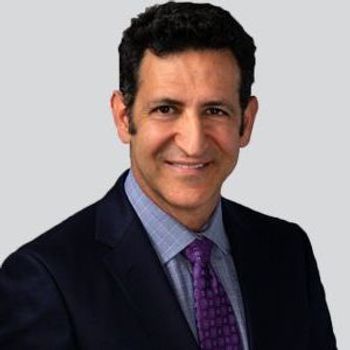
Over a 48-week treatment period, once daily blarcamesine slowed clinical decline in patients with early-stage Alzheimer disease, with even more pronounced effects in pre-specified common SIGMAR1 wild type group.

Marco Meglio, Assistant Managing Editor for NeurologyLive, has been with the team since October 2019. Follow him on Twitter @marcomeglio1 or email him at mmeglio@neurologylive.com
Over a 48-week treatment period, once daily blarcamesine slowed clinical decline in patients with early-stage Alzheimer disease, with even more pronounced effects in pre-specified common SIGMAR1 wild type group.

At week 25 of treatment with trontinemab, patients demonstrated decreases in CSF total tau, CSF p-tau181, and CSF neurogranin.
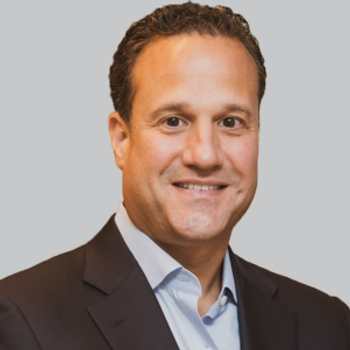
Bruce Leuchter, MD, president and chief executive officer at Neurvati Neurosciences, provided clinical insight on the newly initiated Astroscape trial of radiprodil for the treatment of tuberous sclerosis complex and focal cortical dysplasia type II.

Amy Tsou, MD, MSc, program director at the National Institutes of Neurological Disorders and Stroke, discussed the increasing cost of prescription drugs in the US and its impact on healthcare providers, including those who treat patients with neurologic conditions.
Test your neurology knowledge with NeurologyLive®'s weekly quiz series, featuring questions on a variety of clinical and historical neurology topics. This week's topic is on GBA1-associated Parkinson disease.

Over a 24-week period, comprising both the core study and extension trial, the incidence of treatment-emergent adverse events was infrequent, with less occurring over the long-term extension.

Ahead of International LGS Awareness Day, Melanie Huntley, PhD, a data scientist for Roche and mother of child with Lennox-Gastaut syndrome, shed light on the realities of living with LGS, emphasizing the need for greater awareness of the condition’s impact.

A subgroup analysis of the phase 3 Clarity AD open-label extension study showed a 14% increased amyloid plaque removal with subcutaneous lecanemab vs intravenous administration, the administration for which it was FDA-approved for.
Mind Moments®, a podcast from NeurologyLive®, brings you an exclusive interview with Lawrence Robinson, MD. [LISTEN TIME: 15 minutes]

LX1001, an AAV gene therapy, was considered safe and well tolerated, with no events of amyloid-related imaging abnormalities (ARIA) observed.
In total, more than half of the screened population failed by not meeting plasma p-tau217 criteria and of the remaining, most participants were not in the intermediate tau PET range.

Insulin treatment significantly increased beneficial plasma biomarkers, including SNAP25, SMOC1, BDNF, and VCAM1.
The rare disease population health strategy lead at UCB provided clinical insight on some of the unique challenges of diagnosing myasthenia gravis, and some of the early signs clinicians and non-specialists should look out for. [WATCH TIME: 3 minutes]

The multicenter, randomized, double-blind, placebo-controlled, parallel-group, event-driven trial will use time to clinical progression, defined as an increase in Clinical Dementia Rating score, as the primary end point.

Compared with the standard dosing arm, those on an enhanced titration dosing of donanemab demonstrated a 41% reduction in the relative risk of ARIA-E.

Despite a small cohort sample size, treated patients with E2814 demonstrated significant reductions in p-tau217 after 12 weeks of treatment, sustained through the 108-week time point.

In the study, both migraine and gestational diabetes mellitus independently increase the risk of premature major cardiovascular and cerebrovascular events, with the highest risk observed among those with both conditions.

Semaglutide was associated with a lower risk of Alzheimer diagnosis compared to other diabetes medications, especially in older adults and women.

Melissa Spencer, PhD, gave commentary on her presentation from AANEM 2024, highlighting the emerging role of adeno-associated virus as a delivery system for gene therapies targeting muscular dystrophies.

CAP-003, a non-invasive gene therapy, exceeded the 30% efficacy threshold for normalizing GCase activity in patients across all doses observed.

Over months 4 through 6, 69.1% of participants on erenumab 140 mg, and 60.3% of the erenumab 70 mg group achieved MOH remission compared with 52.6% of those on placebo
Test your neurology knowledge with NeurologyLive®'s weekly quiz series, featuring questions on a variety of clinical and historical neurology topics. This week's topic is on medication overuse headaches.
In a small sample population of adolescents with myasthenia gravis, nipocalimab met its primary end point, showing a significant reduction in total serum immunoglobuin over a 24-week period.
The chief medical officer at Immunic provided clinical insight on the dual mechanism of action of vidofludimus calcium, and how its positioned as a treatment option across all MS subtypes. [WATCH TIME: 3 minutes]

David Devos, MD, PhD, a neuropharmacologist at the University of Lille, in France, discussed positive data from an early-stage study assessing InBrain Pharma’s device-assisted therapy in Parkinson disease.

Fumihiko Urano, MD, PhD, principal investigator of the phase 2 HELIOS trial, discussed some of the notable findings from the study, as well as the potential of AMX0035 to treat patients with Wolfram syndrome.

Based on the positive data, the company plans to begin a phase 3 trial assessing FLT203 in patients with Gaucher disease type 1 in the second half of 2025.
Mind Moments®, a podcast from NeurologyLive®, brings you an exclusive interview with Anne Marie Morse, DO, FAASM. [LISTEN TIME: 12 minutes]

ArthemiR, a placebo-controlled study, primarily evaluates the safety of ATX-01 in myotonic dystrophy type 1, with other assessments that include target engagement and measures associated with muscle function.
The senior scientist at Sunnybrook Research Institute in Toronto, Ontario, provided clinical insight on his lecture given at AANEM 2024, focusing on the challenges and opportunities of teaching the next generation of practitioners.