




Dementia and Alzheimer Disease
Latest News
Advertisement
Latest Videos





CME Content











Advertisement
More News

Tamara Kaplan, MD, vice chair of education for the department of neurology at Mass General Brigham, shares insights on evolving neurology education, highlighting her framework for supporting clinician educators and the growing recognition of education as a career path.
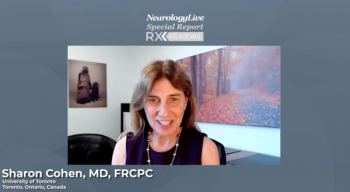
In this sixth episode, Cohen discussed aligning patient expectations with the goals of antiamyloid antibody treatment, emphasizing disease slowing, eligibility factors, and real-world satisfaction data. Supported by Eli Lilly.
The vice president of scientific engagement at the Alzheimer's Association shared data presented at AAIC 2025 from the phase 3 U.S. POINTER study among patients at risk for dementia. [WATCH TIME: 4 minutes]

At 48 weeks, patients treated with blarcamesine showed an 84.7% reduction in decline on the primary cognitive end point compared with placebo.
In this fifth episode, Cohen explained the types, risks, and monitoring protocols for ARIA with antiamyloid antibodies, emphasizing MRI schedules, symptom vigilance, and individualized patient safety considerations. Supported by Eli Lilly.
Catch up on any of the neurology news headlines you may have missed in August 2025, compiled into 1 place by the NeurologyLive® team.
In this fourth episode, Sharon Cohen, MD, FRCPC, talked about key differences between lecanemab and donanemab in terms of eligibility requirements to the receive the treatment. Supported by Eli Lilly.
Take 5 minutes to catch up on NeurologyLive®'s highlights from the week ending September 5, 2025.
The vice president of scientific engagement at the Alzheimer's Association discussed new data on amyloid-targeting therapies, expanded diagnostic tools, and emerging clinical guidelines for Alzheimer disease presented at AAIC 2025. [WATCH TIME: 5 minutes]

A recent study reveals GLP-1 receptor agonists significantly reduce medication use and symptoms in idiopathic intracranial hypertension patients, suggesting a promising management strategy.

Eisai and Biogen seek FDA approval for a convenient, at-home Alzheimer’s treatment option, enhancing patient flexibility and reducing costs.

At AAIC 2025, the associate professor in the Department of Psychiatry at McGill University talked about the strengths and limitations of PET and blood biomarkers for Alzheimer disease. [WATCH TIME: 5 minutes]

Semaglutide significantly reduced the risk of heart attack, stroke, and death compared to tirzepatide in patients with obesity and cardiovascular disease.

Research reveals that increased sedentary time significantly impacts neurodegeneration and cognitive decline in older adults, especially those genetically at risk for Alzheimer’s.
FDA Approves Lecanemab Autoinjector, Marking First At-Home Treatment for Alzheimer Disease
Published: | Updated:
The autoinjector, branded as Leqembi Iqlik, contains a 360 mg/1.8 mL dose administered over 15 seconds. It is expected to enhance Alzheimer treatment accessibility and offer cost savings for patients.
Take 5 minutes to catch up on NeurologyLive®'s highlights from the week ending August 29, 2025.

The vice chair of education for the department of neurology at Mass General outlined her AUPN 2025 session on supporting clinician educators through recognition, career development, and institutional frameworks for advancement. [WATCH TIME: 4 minutes]

The neurologist at Maimonides Medical Center and SUNY Downstate shared how interactive simulations give neurology trainees the chance to practice skills, gain feedback, and move beyond passive learning. [WATCH TIME: 3 minutes]

New research reveals that socioeconomic factors, rather than cardiovascular risks, significantly influence the occurrence of nonfocal transient neurologic attacks in older adults.
Test your neurology knowledge with NeurologyLive®'s weekly quiz series, featuring questions on a variety of clinical and historical neurology topics. This week's topic is on the use of GLP-1 RAs in neurology.

Vatiquinone Recieves CRL, RAINBOWFISH Study Published in NEJM, Hearing Aids Show Protective Effects Against Dementia
Published: | Updated:
Neurology News Network. for the week ending August 23, 2025. [WATCH TIME: 4 minutes]
Take 5 minutes to catch up on NeurologyLive®'s highlights from the week ending August 22, 2025.

Lea Grinberg, MD, PhD, a neuropathologist at Mayo Clinic Florida, discussed how tau accumulation and orexin neuron loss drive early sleep disturbances in Alzheimer disease and the potential for sleep-based biomarkers.

A recent study highlights that hearing aids significantly lower dementia risk in younger patients with hearing loss, emphasizing the need for early intervention.

The European Medicines Agency has accepted NewAmsterdam Pharma’s application for obicetrapib, an oral CETP inhibitor that lowers LDL-C and shows promise in reducing Alzheimer-related biomarkers.
Advertisement
Advertisement
Trending on NeurologyLive - Clinical Neurology News and Neurology Expert Insights
1
Clene Submits NDA Seeking Accelerated Approval for ALS Drug
2
Real-World Data Show Switch to Subcutaneous Ocrelizumab Well Tolerated
3
Early Data Show Dual-Targeting CAR-T Agent CTA313 Stabilizes Progressive Multiple Sclerosis
4
CALLIPER Extension Data Show Sustained Disability Outcomes With Vidofludimus Calcium in Progressive MS
5