


Dementia and Alzheimer Disease
Latest News

NeuroVoices: Dennis Rivet, MD, on Expanding the Role of GLP-1 RAs to Idiopathic Intracranial Hypertension and Beyond
By Marco Meglio
Advertisement
Latest Videos
CME Content











Advertisement
More News
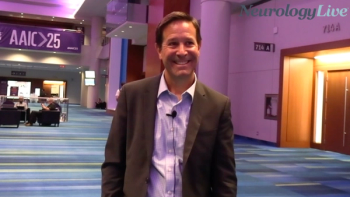
At AAIC 2025, the chief executive officer at ALZpath discussed the growing adoption of the company’s pTau217 antibody blood test for AD research, emphasizing its potential role in early detection. [WATCH TIME: 4 minutes]
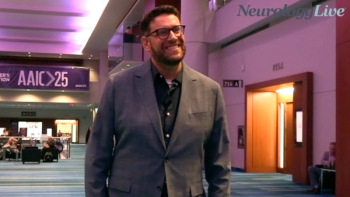
AAIC 2025 Preclinical Results of Anti-Tau Antibody MK-2214 in Alzheimer Disease: Jonathan Sugam, PhD
The principal scientist of neuroscience discovery at Merck presented preclinical data at AAIC 2025 supporting the development of MK-2214, an anti-tau antibody designed to slow or prevent the progression of AD. [WATCH TIME: 5 minutes]
Test your neurology knowledge with NeurologyLive®'s weekly quiz series, featuring questions on a variety of clinical and historical neurology topics. This week's topic is on the use of lithium to treat Alzheimer disease.
Take 5 minutes to catch up on NeurologyLive®'s highlights from the week ending August 15, 2025.

At AAIC 2025, Alberto Ramos, MD, FAAN, director of the sleep disorders program at the University of Miami, discussed the association between long sleep duration, specific sleep phenotypes, and progressive cognitive decline in Hispanic populations.

Researchers unveil promising findings from the GABriella trial, exploring a novel treatment for prodromal Alzheimer's disease at AAIC 2025.
The associate professor of neurology at Johns Hopkins Medicine previewed a 2025 AUPN panel exploring AI’s clinical, research, and educational applications, along with the ethical considerations shaping its responsible adoption. [WATCH TIME: 2 minutes]

The chief medical officer at Acumen Pharmaceuticals discussed the benefits of using the blood-based p-tau 217 biomarker to improve screening accuracy and reduce patient burden in AD. [WATCH TIME: 5 minutes]

The cofounder and chief science officer of the Alzheimer's Drug Discovery Foundation recapped some of the notable recent developments in the Alzheimer disease field presented at the 2025 Alzheimer’s Association International Conference.

Sam Gandy, MD, PhD, director of the Center for Cognitive Health at the Icahn School of Medicine at Mount Sinai, discussed his presentation on detecting toxic amyloid-β oligomers and their role in AD pathology at AAIC 2025.

Discover groundbreaking insights from the 2025 Alzheimer’s Association International Conference, featuring expert interviews on innovative treatments and diagnostics.
Catch up on any of the neurology news headlines you may have missed over the course of July 2025, compiled all into 1 place by the NeurologyLive® team.
Larger, More Controlled Studies Needed to Confirm Genistein’s Potential to Curve Alzheimer Cognition
A recent meta-analysis reveals genistein's potential to enhance cognitive function in prodromal Alzheimer disease, urging further research for validation.
In the third episode, Salloway emphasizes the need for careful patient selection when prescribing donanemab to minimize serious risks, highlighting the value of the newly approved safer dosing regimen. Supported by Eli Lilly.
Dementia expert Stephen Salloway, MD, PhD, overviews the stepwise donanemab regimen approved by the FDA, citing how it not only reduces ARIA rates but preserves the same level of amyloid reduction as the original dosing. Supported by Eli Lilly.

New findings reveal ACP-204 shows no significant QT interval prolongation in healthy adults, supporting its safety for Alzheimer disease psychosis treatment.
Elecsys Blood Test Gains EU Approval, FDA Expands Fremanezumab Indication Into Pediatrics, VX-993 Fails Phase 2 Pain Trial
Published: | Updated:
Neurology News Network. for the week ending August 9, 2025. [WATCH TIME: 4 minutes]
Expert Stephen Salloway, MD, discussed findings from the TRAILBLAZER-ALZ 6 study, highlighting how a stepwise donanemab dosing regimen significantly lowered rates of ARIA in early Alzheimer disease. Supported by Eli Lilly.
Take 5 minutes to catch up on NeurologyLive®'s highlights from the week ending August 8, 2025.

Two experts from Cerevance discussed data from the company’s posters recently presented at AAIC 2025, which highlighted potential therapeutic targets for Alzheimer disease. [WATCH TIME: 5 minutes]

Daniel Freedman, PhD, of MIT, gave clinical commentary on how Openwater’s Open-LIFU enables new research into conscious perception and potential clinical applications for conditions like pain and depression.

Donanemab has received a positive opinion from the European Medicines Agency’s CHMP for the treatment of early symptomatic Alzheimer disease, bringing Eli Lilly’s anti-amyloid therapy one step closer to approval in the European Union.

Yang Liu, PhD, co-founder, CEO, and chief scientific officer of OncoC4, provided commentary on the rationale and promising preclinical data behind ONC-841, a novel anti-SIGLEC10 antibody targeting amyloid and tau in Alzheimer disease.
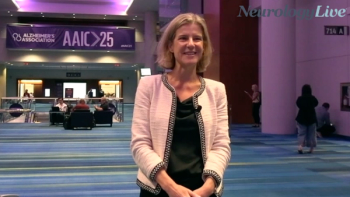
At AAIC 2025, the head of AD, MS and Immunology Development Units at Biogen discussed ongoing research efforts targeting tau pathology in AD, specifically the company's investigational candidate BIIB080. [WATCH TIME: 6 minutes]
The chief scientific officer at Alzheon discussed the mechanism of valiltramiprosate and new data on toxic amyloid oligomers presented at the recently concluded Alzheimer’s Association International Conference.
Advertisement
Advertisement
Trending on NeurologyLive - Clinical Neurology News and Neurology Expert Insights
1
Clene Submits NDA Seeking Accelerated Approval for ALS Drug
2
Real-World Data Show Switch to Subcutaneous Ocrelizumab Well Tolerated
3
Early Data Show Dual-Targeting CAR-T Agent CTA313 Stabilizes Progressive Multiple Sclerosis
4
FDA Accepts Troriluzole NDA Resubmission for Spinocerebellar Ataxia
5