





Parkinson Disease
Latest News
Advertisement
Video Series
Latest Videos





Shorts

0:48
Breaking Down Tavapadon's Phase 3 Efficacy Results
22 days ago
by
Cindy Zadikoff, MD, MSc
0:57
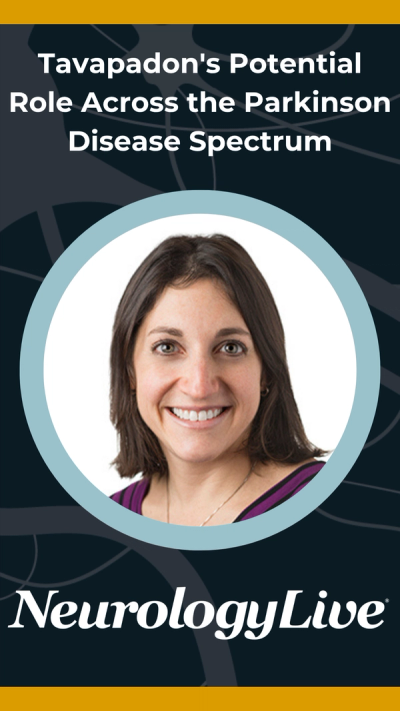
Tavapadon's Potential Role Across the Parkinson Disease Spectrum
23 days ago
by
Cindy Zadikoff, MD, MSc
1:06
The Gut-Brain Connection in Parkinson Disease
2 months ago
by
Laurie Sanders, PhD(+1 more)

1:03
ATMRD 2026: Understanding Demoralization in Parkinson Disease
3 months ago
by
Indu Subramanian, MD(+1 more)
1:11
ATMRD 2026: Overlooked Symptoms of Autonomic Dysfunction in PD
3 months ago
by
Louie Pasculli(+2 more)

0:35
Call to Action: Why Clinicians Should Explore ISSCR's New Stem Cell Course
4 months ago
by
Claire Henchcliffe, MD, DPhil

2:27
How Stem Cells Differ From Levodopa
4 months ago
by
Claire Henchcliffe, MD, DPhil

1:25
The Science Behind Cell Replacement
4 months ago
by
Roger A. Barker, MD, PhD

1:27
How to Counsel Patients on Emerging Stem Cell Treatments
4 months ago
by
Claire Henchcliffe, MD, DPhil

0:46
Overviewing ISSCR's New Course on Parkinson Disease and Stem Cell Medicine
4 months ago
by
Roger A. Barker, MD, PhD
Podcasts



CME Content












Advertisement
More News
Findings from a phase 1 study showed that bilateral putaminal delivery of AAV2-GDNF using convection-enhanced delivery was well tolerated over 5 years, although exploratory clinical measures did not demonstrate significant improvements from baseline.

Full results from the phase 3 TEMPO-2 trial, published in Lancet Neurology, showed that flexible-dose tavapadon significantly improved motor symptoms and daily function in people with early Parkinson disease.

A recently published phase 2 trial showed that CBD/THC cannabis oil failed to ease chronic pain or nonmotor symptoms versus placebo among patients with Parkinson disease.

Investigators independently tracked the 6 patients treated in a Parkinson disease gene therapy trial that was abandoned mid-study after its sponsor became insolvent, finding a reassuring safety profile and mixed signals of motor benefit through up to 3 years.

Topline findings from the Phase 2 SUNRISE-PD study showed statistically significant improvements in clinical measures, inflammatory biomarkers, and exploratory neurodegeneration markers among patients with early Parkinson disease treated with bezisterim.

The FDA has granted Regenerative Medicine Advanced Therapy designation to sasineprocel, an autologous cell therapy for Parkinson disease, based on early data from the ongoing ASPIRO trial.

Arif Dalvi, MD, director of the Comprehensive Movement Disorders Center at Palm Beach Health Network in Florida, discusses new Lancet Neurology data on staged bilateral focused ultrasound for Parkinson disease motor complications.

A $2.5 million Michael J. Fox Foundation grant is funding 4 new sites for the NEULARK trial assessing NEU-411 as a potential disease-modifying therapy in genetically selected patients with early Parkinson disease.

Movement disorder experts Jonathan Isaacson, MD, and Abhishek Lenka, MD, PhD, discuss early identification and accurate diagnosis of autonomic dysfunction in Parkinson disease, highlighting emerging biomarkers and monitoring tools that may enable more personalized care.

Doris D. Wang, MD, PhD, an associate professor of neurological surgery at UCSF, discusses a newly published adaptive deep brain stimulation system that adjusts in real time during walking and what it means for the future of Parkinson disease care.

Take 5 minutes to catch up on NeurologyLive®'s highlights from the week ending June 12, 2026.

Pariceract missed meeting the primary and key secondary efficacy end points in the phase 2b ACTIVATE trial, leading to the discontinuation of its development for GBA1-associated Parkinson disease.
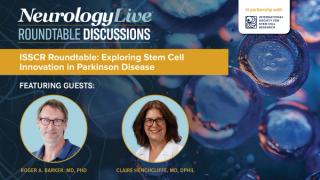
Experts explore how stem cell therapies could transform the treatment of Parkinson disease, covering clinical trial progress, patient counseling challenges, and the potential to replace current standard-of-care approaches.

Early data from the Clinical Nurse Navigator program show that more than 99% of patients with Parkinson's disease reaching a first optimization dose of continuous subcutaneous apomorphine infusion did so without antiemetic pretreatment.

Exploratory post hoc data suggest prompt pimavanserin initiation within 6 to 12 months of PDP onset may yield a more favorable symptom trajectory, though prospective confirmation is needed.

Kelsey Jensen, MD, a movement disorders neurologist at Allina Health, discussed Parkinson disease diagnosis, deep brain stimulation candidacy, treatment personalization, and ongoing unmet needs in PD care and research.

Experts shared their clinical perspectives and insights on main focus areas at the 2026 American Academy of Neurology (AAN) Annual Meeting, held April 18-22 in Chicago, Illinois.

Kinan Muhammed, MD, PhD, consultant neurologist and co-founder and Chief Medical Officer for Kneu Health, discussed how smartphone-based remote monitoring tools may help clinicians track motor and cognitive changes in Parkinson disease and dementia more continuously.
NeuroVoices: Hubert Fernandez, MD, on Tavapadon, TEMPO-4, and Improving Parkinson Disease Management
The director of the Center for Neurological Restoration at Cleveland Clinic discussed long-term TEMPO-4 data evaluating tavapadon’s impact on symptom control and levodopa utilization in Parkinson disease.

A duo of Baptist Health experts discussed emerging evidence suggesting that hormonal factors, sex-based clinical differences, and social roles contribute to distinct experiences for women with Parkinson disease.
A recent study suggested that probiotic regimens and biomarker-guided strategies may be a promising signal for reducing excessive daytime sleepiness in patients with PD and CKD.

New findings from a post hoc analysis of 2 phase 3 trials, presented at AAN 2026, reported that a majority of participants with advanced Parkinson disease had no troublesome dyskinesia at follow-up.

The president at Cala Health discussed the clinical role, evidence base, and potential of the Cala kIQ Plus wearable TAPS therapy for patients with essential tremor and Parkinson disease at AAN 2026.

Real-world data of the ELEVATE-PD study, presented at AAN 2026, suggest that switching to IPX203 from other levodopa-based therapies may improve motor function in patients with Parkinson disease.

In recognition of National Public Health Week, held April 6-12, NeurologyLive summarizes recent literature showing that environmental exposures are associated with increased risk of neurologic disorders.
Advertisement
Advertisement
Trending on NeurologyLive - Clinical Neurology News and Neurology Expert Insights
1
What's Next in Ataxia: Pipeline Overview of Investigational Therapeutics
2
FDA Grants Fast Track Designation to Apitegromab for Facioscapulohumeral Muscular Dystrophy
3
Azetukalner NDA Submitted, EMA Gives Approval Recommendation to Ocrelizumab, Phase 3 FUSION Trial Meets End Points
4
Ulefnersen Meets Primary End Point in Phase 3 FUSION Trial for FUS-ALS
5