

John Corboy, MD, professor of neurology at the University of Colorado, discussed recent findings focused on disease-modifying therapy discontinuation in older, stable patients with multiple sclerosis.
John Corboy, MD, professor of neurology at the University of Colorado, discussed recent findings focused on disease-modifying therapy discontinuation in older, stable patients with multiple sclerosis.

Actress Jamie Lynn Sigler discussed how patient education, treatment adherence, and self-advocacy have shaped her approach to living with multiple sclerosis at the 2026 CMSC Annual Meeting.
Carrie Hersh, DO, MSc, FAAN, president of the Consortium of Multiple Sclerosis Centers, discussed key sessions presented on disability progression, emerging biomarkers, and the shift toward comprehensive, patient-centered MS care.
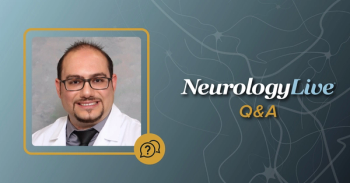
Ahmed Obeidat, MD, PhD, associate professor of neurology at the Medical College of Wisconsin, talked about the need to rethink multiple sclerosis clinical trial design by recognizing immune cells’ potential neuroprotective roles.
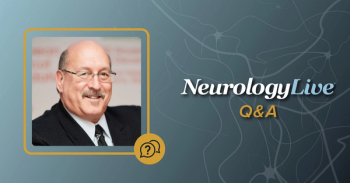
Mark Freedman, MD, MSc, HBSc, CSPQ, FANA, FAAN, FRCPC, director of the multiple sclerosis research unit at Ottawa Hospital, outlined how research-integrated multiple sclerosis care can refine treatment strategies in clinical practice.

At CMSC 2026, the assistant professor of neurology at NYU Grossman School of Medicine talked about how optical coherence tomography contributes to the updated 2024 McDonald criteria for multiple sclerosis. [WATCH TIME: 4 minutes]

At CMSC 2026, the associate professor of neurology at the Medical College of Wisconsin discussed the need to reconsider clinical trial paradigms by recognizing the role of immune cells in MS. [WATCH TIME: 6 minutes]

At CMSC 2026, the director of the multiple sclerosis research unit at Ottawa Hospital discussed how integrating clinical research into MS practice enhances clinician expertise. [WATCH TIME: 5 minutes]

The professor of neurology at UT Southwestern Medical Center discussed the Octave Multiple Sclerosis Disease Activity Test as a complementary tool to MRI and clinical assessment in MS. [WATCH TIME: 6 minutes]
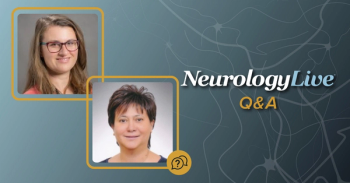
Neurologists Sarah Simmons, MD, PhD, and Fatma Inanici, MD, PhD, discuss how the combination of noninvasive cervical spinal cord stimulation with exercise therapy can improve upper extremity function in people with MS.

The senior vice president for research at the Kessler Foundation discussed findings showing associations between reductions in neurofilament light chain and gains in cognitive processing speed, verbal memory, and visual memory in patients with early relapsing multiple sclerosis treated with ozanimod. [WATCH TIME: 3 minutes]

The new president of Consortium of Multiple Sclerosis Centers (CMSC) discussed key themes in multiple sclerosis care presented at the 2026 CMSC Annual Meeting. [WATCH TIME: 11 minutes]

The professor of neurology at the University of Colorado discussed evidence from DISCOMS and other trials on disease-modifying therapy discontinuation in older, stable patients with multiple sclerosis. [WATCH TIME: 8 minutes]

At CMSC 2026, the neuroimmunologist and director at OhioHealth MS Center, discussed results from the phase 3 FENhance 1 and 2 studies, highlighting significant reductions in relapse rates and robust MRI outcomes. [WATCH TIME: 3 minutes]

The neurologist at Orlando Health discussed findings from an analysis of cladribine tablets in patients aged 50 years and older with relapsing multiple sclerosis presented at CMSC 2026. [WATCH TIME: 7 minutes]

The research neuropsychologist at Mount Sinai Rehabilitation Hospital outlined hallmark patterns of cognitive impairment in multiple sclerosis at the 2026 CMSC Annual Meeting. [WATCH TIME: 6 minutes]
The assistant professor of neurology at NYU Grossman School of Medicine discussed how optical coherence tomography can support the 2024 McDonald Criteria for multiple sclerosis at CMSC 2026.

A clinical research coordinator at SunnyBrook Health Sciences Centre, explained key factors of the computerized cognitive training program that contributed to cognitive improvement. [WATCH TIME: 3 minutes]

The neurologist at St. Michael's Hospital shared findings presented at CMSC 2026 from a large dataset on preconception ocrelizumab exposure among women with multiple sclerosis. [WATCH TIME: 5 minutes]

Kyle Blackburn, MD, a neurologist at UT Southwestern Medical Center, discussed new proposed updates to the diagnostic criteria and nosology for myelitis presented at the 2026 CMSC Annual Meeting.
CMSC 2026 registry data showed low relapse rates and no new safety signals among adults with AQP4-positive NMOSD treated with eculizumab or ravulizumab in real-world practice.

At CMSC 2026, Jamie Lynn Sigler, an actress and patient advocate, shared her perspective on living with multiple sclerosis, emphasizing informed decision-making and treatment consistency. [WATCH TIME: 7 minutes]

The director of the Stony Broke MS Comprehensive Care Center reviewed late-breaking subgroup data evaluating high-efficacy therapy in patients with highly active relapsing multiple sclerosis and discussed the evolving role of early intervention. [WATCH TIME: 5 minutes]

New data presented at CMSC 2026 suggest ocrelizumab provides comparable relapse and MRI control in pediatric- and young-adult–onset multiple sclerosis, with greater disability improvement observed in pediatric patients.

German 3-year real-world data shows ozanimod keeps RRMS relapses low, disability stable, and safety consistent in routine care.

A retrospective study presented at CMSC 2026 found GLP-1 receptor agonist use in multiple sclerosis was associated with higher physical activity levels and improvements across several patient-reported symptom domains.

Three-year extension data presented at CMSC 2026 showed sustained suppression of MRI activity and low relapse rates with frexalimab in relapsing multiple sclerosis.

A new analysis presented at CMSC 2026 suggests that rescue treatment with complement inhibition may help stabilize disease activity in Hispanic patients with NMOSD who experienced relapse despite treatment.

A real-world study presented at CMSC 2026 reported year-1 improvements in treatment satisfaction and disease impact measures in patients with MS treated with ublituximab.

An analysis from the phase 3b ENLIGHTEN study presented at the 2026 CMSC Annual Meeting showed that cognitive performance remained stable during long-term treatment with ozanimod in patients with relapsing multiple sclerosis.