

At the 2023 CMSC Annual Meeting, Christopher C. Hemond, MD, assistant professor of neurology at UMass Chan Medical School, provided an overview of his study on mindfulness-based stress reduction in patients with MS using MRI and patient outcomes.
At the 2023 CMSC Annual Meeting, Christopher C. Hemond, MD, assistant professor of neurology at UMass Chan Medical School, provided an overview of his study on mindfulness-based stress reduction in patients with MS using MRI and patient outcomes.
The professor of neurology at Washington University School of Medicine discussed progressive multiple sclerosis and the need for targeted therapies to address the progression and associated challenges. [WATCH TIME: 5 minutes]
In the 2023 Donald Paty Lecture, speaker Darin Okuda presented novel MRI methods that might help determine whether MS lesions have potential for future remyelination.
At CMSC 2023, the associate professor of neurological sciences at the University of Vermont in Burlington talked about data surrounding multiple sclerosis diagnosis and misdiagnosis, suggesting the need for the development of diagnostic biomarkers. [WATCH TIME: 5 minutes]
At CMSC 2023, the professor of neurology at Barts and The London School of Medicine and Dentistry discussed the emerging paradigm shift in understanding multiple sclerosis (MS) as a smoldering disease and the potential role of Epstein Barr Virus in causing MS. [WATCH TIME: 6 minutes]
Most patients completed at least 3 years of treatment, with no new safety signals observed and a treatment discontinuation rate of 5.3%.
The first results from a phase 2 study frexalimab (SAR441344; Sanofi), in relapsing multiple sclerosis have shown promise for the anti-CD40L antibody.
Although the CDC has declared the public health emergency for the COVID-19 pandemic over, patients with multiple sclerosis and other conditions are still in need of guidance.
Using the Modified Fatigue Impact Scale, patients either forced to exercise or who volunteered saw significant improvements over a 12-week period.
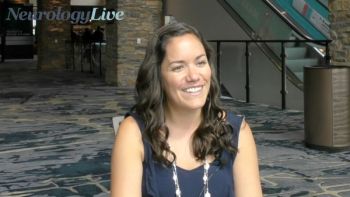
At CMSC 2023, the neuromuscular and movement disorders speech-language pathologist at Orlando Health discussed the importance of early intervention in speech and communication therapy, as well as the challenges faced in getting patients to seek therapy at the time of diagnosis. [WATCH TIME: 5 minutes]
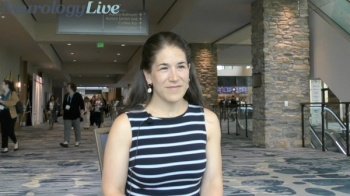
The adjunct instructor at the UCSF Weill Institute for Neurosciences provided perspective on the next steps in research for potential wearable devices focused on treating issues of multiple sclerosis. [WATCH TIME: 2 minutes]
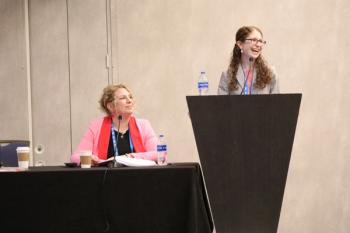
Many programs and activities at the 2023 CMSC Annual Meeting focused on burnout prevention and supporting the current and future MS care workforce.
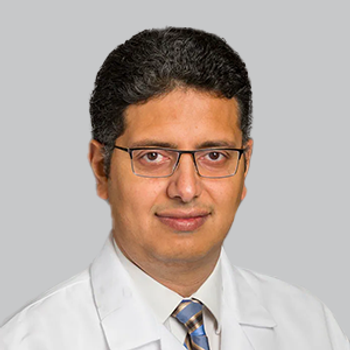
Factors such as older age, poor steroid responsiveness, and plasma exchange were associated with NMOSD phenotype, while normal or thinned retinal nerve fiber layer and short-segment hyperintensity were associated with idiopathic optic neuritis.
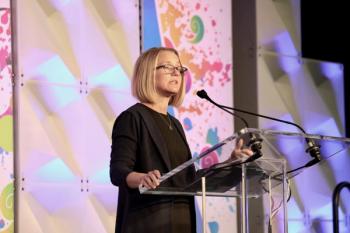
Jennifer Graves, MD, PhD, presented data at the CMSC annual meeting suggesting that secondary progressive disease might be more age-related than previously realized.
The combination of EDSS scores above 6 and age over 55 years resulted in higher serious infection rate that was nearly double that seen in the overall population.
In mixed-effect analyses adjusting for multiple cofounders, changes in inflammatory gene expression correlated inversely with changes in patient-reported stress, loneliness, hair cortisol, and aspects of interoceptive awareness.

Investigators observed significant correlations between processing speed and arterial stiffness among patients with multiple sclerosis, but not in healthy controls.
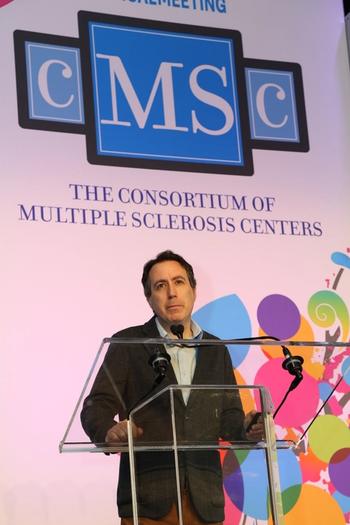
Andrew Solomon, MD, discussed inherent biases affecting MS diagnosis and how advances in imaging may help curb diagnostic errors.
Over the 96-week treatment period, ublituximab-treated patients outperformed teriflunomide-treated patients on several domains of the Fatigue Impact Scale.
Despite similar proportion of females and ever-smokers, age of onset of multiple sclerosis was significantly earlier for Latinx patients compared with White non-Latinx individuals.
Investigators observed significant decreases in Modified Fatigue Impact Scale and Fatigue Severity Scale with the low-fat diet in relation to controls.
The senior vice president for research and training at the Kessler Foundation discussed the assessment of cognitive challenges among patients with multiple sclerosis and planning for treatment options when necessary. [WATCH TIME: 4 minutes]
The senior vice president for research and training at the Kessler Foundation spoke about the critical need to prioritize cognitive challenges among patients with multiple sclerosis, as it remains among the chief complaints. [WATCH TIME: 4 minutes]
The chair of Cleveland Clinic’s Department of Physical Medicine provided insight on a newly approved modality aimed to improve rehabilitation efforts for patients with multiple sclerosis. [WATCH TIME: 3 minutes]
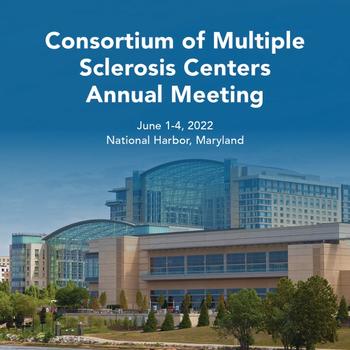
The NeurologyLive® team has compiled a roundup of our discussions with leaders in the multiple sclerosis field following the 2022 Annual Meeting of the Consortium of Multiple Sclerosis Centers (CMSC).
The head of the MS center at University Hospital Basel provided insight on the role of BTK inhibitors and how the multiple sclerosis community views the potential of neurofilament light as a key biomarker of neurodegeneration. [WATCH TIME: 3 minutes]
The associate neurologist at Brigham and Women’s Hospital provided insight on the current state of promising targets in progressive MS and why anti-CD3 therapy might be a new consideration for future trials. [WATCH TIME: 2 minutes]
The president and chief executive officer of Mapi Pharma discussed the positive phase 2 findings of a new formulation of glatiramer acetate to treat progressive forms of MS, as well as the long-term plans for the drug. [WATCH TIME: 5 minutes]
In the comparator study between ponesimod and teriflunomide, the risk of both 12- and 24-week confirmed disability accumulation at week 108 was significantly different between MAGNIMS score groups.
Meghan Garabedian, CRNP, MSN, nurse practitioner at the Penn Neuroscience Center, discussed her presentation at the 2022 CMSC Annual Meeting regarding the patient experience on diroximel fumarate.