

The professor of neurology at the University of Michigan Medical School discussed the themes that defined SLEEP 2026, and what they signal for clinical practice heading into 2027. [WATCH TIME: 5 minutes]
The professor of neurology at the University of Michigan Medical School discussed the themes that defined SLEEP 2026, and what they signal for clinical practice heading into 2027. [WATCH TIME: 5 minutes]

At SLEEP 2026, the head of orexin franchise development and neuroscience programs at Takeda discussed new phase 3 data for oveporexton in patients with narcolepsy type 1. [WATCH TIME: 5 minutes]

At SLEEP 2026, the research intern at Beth Israel Deaconess Medical Center described the development of an electronic health record–based machine learning model for obstructive sleep apnea screening. [WATCH TIME: 3 minutes]
At SLEEP 2026, the sleep medicine specialist at University of Arizona discussed the new American Academy of Sleep Medicine guideline on the use of combination therapy in adults with chronic insomnia. [WATCH TIME: 5 minutes]

At SLEEP 2026, a sleep medicine specialist at Mayo Clinic talked about the 2026 Restless Legs Syndrome Foundation algorithm, recently published in Mayo Clinic Proceedings. [WATCH TIME: 10 minutes]
Carol Rosen, MD, professor emerita of pediatrics at Case Western Reserve University School of Medicine, discussed the transformation of pediatric sleep medicine from a clinical curiosity to a core medical specialty at SLEEP 2026.
A sleep specialist and sleep patient advocate discussed diagnostic and patient-reported outcome measures that aim to better capture the cognitive, functional, and psychosocial burden of central disorders of hypersomnolence.
The professor of neurology at Wake Forest School of Medicine discussed the evolution of sleep medicine education, its relevance across neurologic specialties, and advice for early-career clinicians.

The associate clinical professor at the University of South Carolina School of Medicine discussed data presented at SLEEP 2026 from a phase 2 study of orexin 2 receptor agonist alixorexton in narcolepsy type 2. [WATCH TIME: 3 minutes]
The phase 3 REVITALYZ study assessed whether once-nightly extended-release sodium oxybate can improve excessive daytime sleepiness and other core symptoms of idiopathic hypersomnia.
The professor of neurology and pediatrics at Vanderbilt University Medical Center discussed her advocacy for sleep health, especially for pediatric patients and their families, at SLEEP 2026. [WATCH TIME: 5 minutes]
The section chief in the Division of Pulmonary Critical Care and Sleep Medicine at West Virginia University discussed new evidence-based guidelines for sleep-disordered breathing in hospitalized patients.
Long-term phase 3 extension data showed that pitolisant was generally well tolerated and associated with sustained improvements in excessive daytime sleepiness, sleep inertia, and functional outcomes in adults with idiopathic hypersomnia for more than 2 years.

At SLEEP 2026, the section chief in the Division of Pulmonary Critical Care and Sleep Medicine at West Virginia University discussed the high burden of undiagnosed sleep apnea in hospitalized patients. [WATCH TIME: 5 minutes]

Data from phase 3 studies presented at SLEEP 2026 showed that investigational oveporexton was associated with improvements in REM sleep architecture and sleep-related symptoms in patients with NT1.

Romy Hoque, MD, Professor of Neurology at Emory University, previews the 2026 SLEEP Annual Meeting, highlighting key themes across neurodegeneration, hypersomnolence, sleep apnea, and the growing role of GLP-1 receptor agonists in sleep medicine.
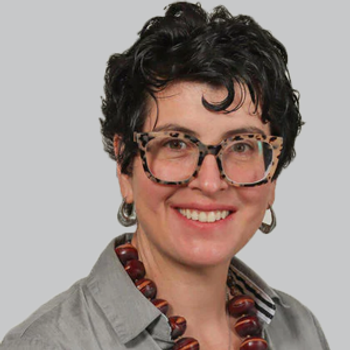
Lea Grinberg, MD, PhD, a neuropathologist at Mayo Clinic Florida, discussed how tau accumulation and orexin neuron loss drive early sleep disturbances in Alzheimer disease and the potential for sleep-based biomarkers.
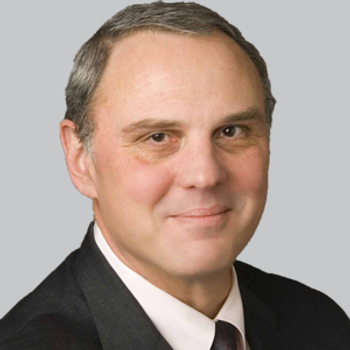
Richard Kovacs, MD, PhD, chief medical officer for the American College of Cardiology, discusses interim XYLO trial results, highlighting how switching to low-sodium oxybate can significantly impact blood pressure and cardiovascular risk profiles in narcolepsy.

In this final episode, the sleep experts analyze real-world prescribing data to understand how low-sodium oxybate impacts the use of traditional alerting agents in narcolepsy. [WATCH TIME: 4 minutes]
In episode 5, the sleep specialists examine actigraphy data from a study of TAK-861 in narcolepsy type 1 and discuss the promise of home-based sleep tracking in clinical care. [WATCH TIME: 3 minutes]
In this segment, Eric Olson, MD, and Anita Shelgikar, MD, discuss the design of the Vibrance-3 trial, a phase 2 study of the orexin-2 receptor agonist ALKS 2680 in patients with idiopathic hypersomnia. [WATCH TIME: 4 minutes]
In episode 3, Drs. Olson and Shelgikar break down a retrospective study exploring how social determinants of health impact the clinical experience of patients with narcolepsy. [WATCH TIME: 6 minutes]
Panelists Eric Olson, MD, and Anita Shelgikar, MD, examine interim data on high-dose low-sodium oxybate in patients with narcolepsy, discussing safety signals, efficacy trends, and clinical considerations. [WATCH TIME: 4 minutes]
In this episode, Eric Olson, MD, and Anita Shelgikar, MD, review the XYLO study’s findings on the impact of switching from high- to low-sodium oxybate on blood pressure in patients with narcolepsy.
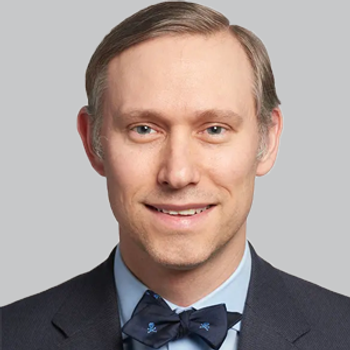
Andrew Varga, MD, PhD, associate professor of medicine at the Icahn School of Medicine at Mount Sinai, provided comment on a featured debate at the 2025 SLEEP Annual Meeting exploring the evolving science behind glymphatic clearance and its potential link to Alzheimer disease.

The director of sleep health at Flinders University in Australia explored how combination pharmacologic and noninvasive therapies may offer a personalized path forward in obstructive sleep apnea treatment. [WATCH TIME: 6 minutes]
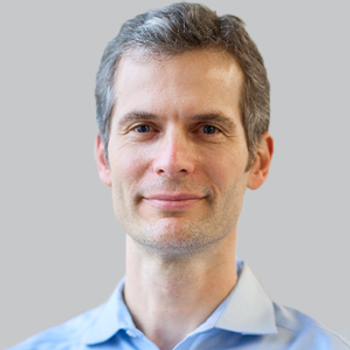
Emmanuel During, MD, an associate professor of neurology at the Icahn School of Medicine at Mount Sinai, discussed the external validation of an actigraphy-based classifier for diagnosing iRBD and its implications for scalable neurodegenerative screening.
The associate professor of medicine at the Icahn School of Medicine at Mount Sinai outlined emerging interventions aimed at enhancing glymphatic clearance to potentially lower Alzheimer disease risk. [WATCH TIME: 4 minutes]
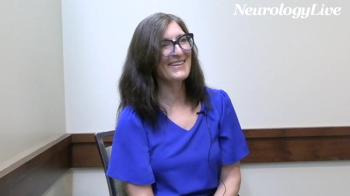
The professor of psychology at the University of Tulsa discussed the clinical utility of using CBT to treat nightmares–especially in children with comorbid conditions like ADHD and anxiety–and the latest research her lab is conducting. [WATCH TIME: 4 minutes]
Mind Moments®, a podcast from NeurologyLive®, brings you an exclusive interview with Joyce Lee-Iannotti, MD, PhD. [LISTEN TIME: 17 minutes]