Leonard Dragone, MD, PhD, Disease Area Leader at Johnson & Johnson, discusses how nipocalimab is being incorporated into generalized MG care, what long-term data show, and where J&J sees the therapy’s role evolving.
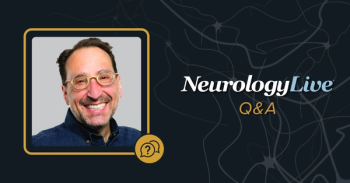
Romy Hoque, MD, Professor of Neurology at Emory University, previews the 2026 SLEEP Annual Meeting, highlighting key themes across neurodegeneration, hypersomnolence, sleep apnea, and the growing role of GLP-1 receptor agonists in sleep medicine.
The 2026 SLEEP Annual Meeting, hosted by the American Academy of Sleep Medicine and the Sleep Research Society, marks the 40th year of the joint conference and arrives at a moment of significant momentum for the field. Sleep medicine is no longer a siloed specialty, with research and clinical practice increasingly intersecting with neurology, cardiology, psychiatry, and beyond. From breakthroughs in hypersomnolence treatment to the expanding role of GLP-1 receptor agonists, this year's meeting promises a wide-ranging and clinically relevant program.
Prior to the meeting, sleep expert Romy Hoque, MD, Professor of Neurology at Emory University, spoke with NeurologyLive® to get a clinical preview of what attendees can expect. A sleep medicine specialist with deep roots in both neurology and sleep research, Hoque brings a unique perspective on the intersection of these fields and what the latest science means for everyday clinical practice.
In this Q&A, Hoque discussed the major themes shaping this year's meeting and what neurologists and sleep specialists should be paying attention to. He weighed in on anticipated presentations and late-breaking data, addressed what the meeting offers clinicians who do not specialize in sleep medicine, and shared his thoughts on where the field still has unanswered questions heading into 2026.
Romy Hoque, MD: This year's meeting is the 40th annual meeting of the American Academy of Sleep Medicine and the Sleep Research Society joint meeting, so it's a big year for us. One of the biggest themes is the integration of neurology and medical care into sleep medicine. It's no longer just an isolated specialty. It intersects with cardiology, cardiovascular disease, stroke, neurodegeneration, epilepsy, and psychiatry. There are a lot of intersections between sleep and neurology, and there's a lot of momentum building in that direction in terms of how we diagnose and treat the diseases we see in everyday sleep medicine practice.
In terms of neurodegeneration, our keynote speaker this year is Carlo Schenck, who discovered and defined REM behavior disorder, as well as a whole host of other parasomnias. He'll be giving an overview of the historical landscape over the past 40 years of REM behavior disorder. During the meeting itself, we'll be having discussions about the importance of REM behavior disorder and isolated REM sleep without atonia as a marker for the eventual development of neurodegenerative disorders.
On the neurodegenerative side, there's also going to be a lot of research on dementia, cognitive impairment, and Alzheimer's disease and their intersections with sleep. Then, of course, there are the central disorders of hypersomnolence, narcolepsy, and idiopathic hypersomnia.
Over the past few years, there has been an explosion in terms of medicines available to treat these disorders, and the research is really exciting. We're going to be hearing some of the latest breaking clinical data on some of these newer medications, so it's going to be a lot of interesting data at this year's meeting.
The clinical data on the drugs for hypersomnolence are going to be impactful, and that is very important. There are also going to be discussions about the treatment of restless leg syndrome, updated management guidelines, and the intersection between restless leg syndrome and other disorders, such as sleep apnea, and how those disorders interact with each other. In terms of sleep apnea more broadly, it impacts essentially every area of neurology, from dementia and neurodegeneration to stroke.
Hearing updates on the treatment of sleep apnea is important for every neurologist, because it really does end up being a big part of practice. Even if you're a general neurologist taking care of patients with stroke, epilepsy, or headaches, evaluating sleep is part of your core evaluation of these patients.
That includes diagnosing them with new home sleep apnea testing equipment, looking at new therapies in terms of positive airway pressure, and phenotyping sleep apnea into different subcategories with different treatment strategies. We have some invited lectures on that as well, so it's going to be a very wide-ranging look at neurology and sleep at this year's meeting.
Even if you don't treat sleep apnea, hypersomnia, or restless leg syndrome yourself, having an understanding of the pathophysiology and what new treatments are available gives you some comfort in making appropriate referrals and encouraging patients to seek care. For example, if you have a stroke patient and you want to manage all their risk factors, blood pressure, cholesterol, and diabetes, sleep apnea is a big part of that as well. Having an understanding of what diagnostic tools are available, from home testing to in-lab testing, and what new developments exist in treatment, allows you to have meaningful conversations with your patients.
You can help them realize that treating sleep apnea is one of those controllable risk factors to help prevent another event, and then encourage them to seek out that care. Having some appreciation of how sleep interacts with neurology, and what the new developments are, ultimately helps your patients even if you yourself are not managing that care.
The glucagon-like peptide receptor agonists are really a game changer for a lot of different areas of medicine, including internal medicine, neurology, and sleep medicine. The weight loss effects have been dramatic. I've seen patients go from severe sleep apnea down to essentially nothing, and in many ways it represents almost a cure for the problem.
In sleep medicine, that's an expanding area of patient management. We often get referrals from the community to evaluate patients for these medications, because one of the indications is moderate to severe sleep apnea, so it oftentimes ends up in the lap of a sleep medicine physician to manage those medications. Not everybody feels comfortable prescribing and managing the associated adverse effects, but as these medications move from injectables to oral formulations, I think more sleep medicine physicians will become more comfortable managing weight loss with them.
The developments in this area are changing all the time, the insurance requirements are evolving, and there are going to be talks at the meeting about how sleep medicine providers can integrate these medications into practice. There isn't a day that goes by in my clinic where we don't have a discussion about these medications. It has really been quite remarkable.
We are always looking for better biomarkers and predictive tools for diagnosing disease. One of the great benefits of identifying REM sleep without atonia and REM behavior disorder is that it serves as a predictor of eventual neurodegenerative disease, but if there are other biomarkers we could use outside of the in-lab polysomnogram to assess for those things related to sleep, those are always useful.
In the area of hypersomnia, we're always looking for biomarkers that could help distinguish between clinically tricky entities like idiopathic hypersomnia and narcolepsy type two. If there are more precise ways of tracking progression over time, that's something we're always interested in.
There's also the question of how we subdivide diseases we've lumped into big categories, because not all sleep apnea is the same. Mild sleep apnea with an AHI of eight is not the same as severe sleep apnea with an AHI of 80, so what are the risks, how do you manage them differently, and can we rely on markers beyond AHI for diagnosis? And then, like every area of medicine, we're interested in how artificial intelligence is going to be integrated into our practice, what areas we feel comfortable applying it to, and what precautions need to be in place. That's always an area of interest as we move forward as the technology develops.
Transcript edited for clarity.