


Movement Disorders
Latest News


TEMPO-2 Data Supports Tavapadon’s Efficacy in Early-Stage Parkinson Disease
By Marco Meglio
Advertisement
Video Series
Latest Videos








Shorts
1:06
The Gut-Brain Connection in Parkinson Disease
19 days ago
by
Laurie Sanders, PhD(+1 more)

1:03
ATMRD 2026: Understanding Demoralization in Parkinson Disease
2 months ago
by
Indu Subramanian, MD(+1 more)
1:11
ATMRD 2026: Overlooked Symptoms of Autonomic Dysfunction in PD
2 months ago
by
Louie Pasculli(+2 more)

1:04
ATMRD 2026: Redefining Wellness in Parkinson Disease
2 months ago
by
Louie Pasculli(+1 more)
0:47
ATMRD 2026: The Future of Clinical Trials Is Closer to Home
3 months ago
by
David Shprecher, DO, MSci, FAAN(+1 more)
1:34
ATMRD 2026 Session Spotlight: Experiencing Parkinson Speech Therapy Firsthand
3 months ago
by
Anissa Mitchell, LCSW(+1 more)

0:35
Call to Action: Why Clinicians Should Explore ISSCR's New Stem Cell Course
3 months ago
by
Claire Henchcliffe, MD, DPhil
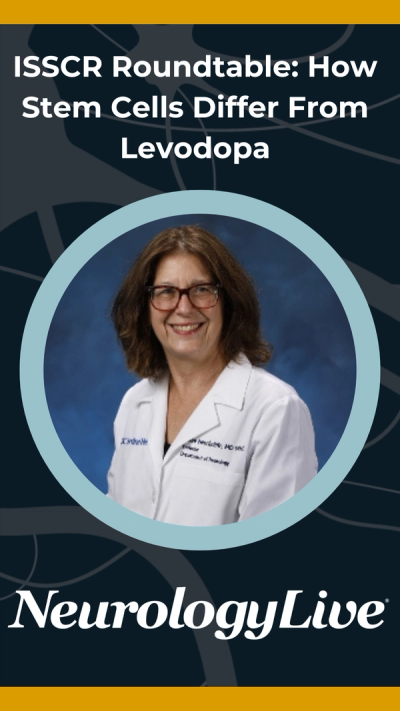
2:27
How Stem Cells Differ From Levodopa
3 months ago
by
Claire Henchcliffe, MD, DPhil

1:25
The Science Behind Cell Replacement
3 months ago
by
Roger A. Barker, MD, PhD
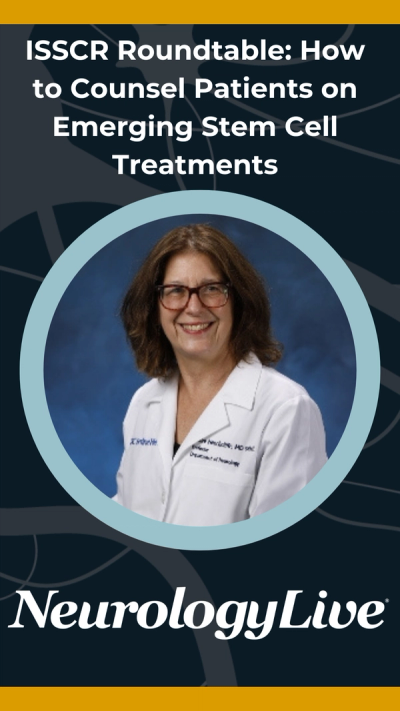
1:27
How to Counsel Patients on Emerging Stem Cell Treatments
3 months ago
by
Claire Henchcliffe, MD, DPhil
Podcasts


CME Content






Advertisement
More News

Horacio Kaufmann, MD, Director of the Dysautonomia Center at NYU Langone, discusses the prospective validation of prodromal MSA criteria, how olfactory testing can sharpen specificity, and how close the field is to biomarker-driven early diagnosis.

Investigators independently tracked the 6 patients treated in a Parkinson disease gene therapy trial that was abandoned mid-study after its sponsor became insolvent, finding a reassuring safety profile and mixed signals of motor benefit through up to 3 years.

Take 5 minutes to catch up on NeurologyLive®'s highlights from the week ending August 7, 2026.

Topline findings from the Phase 2 SUNRISE-PD study showed statistically significant improvements in clinical measures, inflammatory biomarkers, and exploratory neurodegeneration markers among patients with early Parkinson disease treated with bezisterim.
Six FDA PDUFA decisions this fall could reshape care in Alzheimer disease, DMD, Sanfilippo syndrome, Alexander disease, and SMA, here's what clinicians need to know about the data behind each.

The FDA has granted Regenerative Medicine Advanced Therapy designation to sasineprocel, an autologous cell therapy for Parkinson disease, based on early data from the ongoing ASPIRO trial.
The submission is backed by phase 3 FoCus trial data showing ALXN1840 tripled copper mobilization and produced significant, sustained neurologic improvement compared with standard of care over 48 weeks.

Kristen Harris, MD, Medical Director of the Extended Recovery Unit at Hackensack Meridian JFK Johnson Rehabilitation Institute, discussed new findings on functional recovery and community discharge rates in acquired brain injury patients undergoing skilled nursing facility rehabilitation.
Ahead of World Brain Day, NeurologyLive explores 5 emerging strategies for preventing neurologic disease, from modifiable dementia risk factors to GLP-1 drugs, sleep science, the gut brain axis, and wearable technology.

Here's some of what is coming soon to NeurologyLive® this week.

Arif Dalvi, MD, director of the Comprehensive Movement Disorders Center at Palm Beach Health Network in Florida, discusses new Lancet Neurology data on staged bilateral focused ultrasound for Parkinson disease motor complications.

Leslie M. Thompson, PhD; Ravi Rajmohan, MD, and Jefferson W. Chen, MD, from UCI Health discuss the rationale, delivery, and early steps of REGEN4HD, the world's first neural stem cell phase 1b/2a clinical trial for Huntington disease.
Here's some of what is coming soon to NeurologyLive® this week.

Recent findings from a study of growth and nutritional status in primary ciliary dyskinesia revealed high rates of undernutrition, obesity, and vitamin D insufficiency across pediatric and adult populations.
Led by Na Tosha Gatson, MD, PhD, FAAN, director of the Center for Neuro-Oncology at the Indiana University Health Neurosciences and Cancer Institutes, this new column translates complex neuro-oncology topics into accessible, evidence-based insights.

Findings from a 25-year analysis showed that tiapride was associated with significantly fewer adverse effect–related discontinuations than tetrabenazine in patients with Huntington disease chorea.
Here's some of what is coming soon to NeurologyLive® this week.

Twelve-month phase 1/2 data show SKY-0515-treated patients trending favorably versus natural history expectations across motor, functional, and cognitive endpoints, while 65% of patients and 50% of clinicians reported disease improvement.

A $2.5 million Michael J. Fox Foundation grant is funding 4 new sites for the NEULARK trial assessing NEU-411 as a potential disease-modifying therapy in genetically selected patients with early Parkinson disease.
Here's some of what is coming soon to NeurologyLive® this week.

Movement disorder experts Jonathan Isaacson, MD, and Abhishek Lenka, MD, PhD, discuss early identification and accurate diagnosis of autonomic dysfunction in Parkinson disease, highlighting emerging biomarkers and monitoring tools that may enable more personalized care.

A recently published 20-year study suggests that preoperative putamen volume on MRI independently can predict motor response to GPi-DBS in patients with dystonia-dyskinesia syndrome secondary to perinatal hypoxic-ischemic encephalopathy.

Doris D. Wang, MD, PhD, an associate professor of neurological surgery at UCSF, discusses a newly published adaptive deep brain stimulation system that adjusts in real time during walking and what it means for the future of Parkinson disease care.

Patients with incident TD incurred annual all-cause healthcare costs nearly double those of matched non-TD controls, driven primarily by inpatient encounters, while fewer than a quarter received any approved treatment.
Here's some of what is coming soon to NeurologyLive® this week.
Advertisement
Advertisement
Trending on NeurologyLive - Clinical Neurology News and Neurology Expert Insights
1
FDA Clears Roche's Single-Biomarker Elecsys pTau217 Blood Test for Alzheimer Disease
2
FDA Extends Deramiocel Review for Duchenne Muscular Dystrophy After HOPE-3 Amendment
3
First-Ever Consensus Framework Aims to Guide Charcot-Marie Tooth Clinical Trial Design
4
FDA Clears PrecivityAD2 Alzheimer Blood Test for Symptomatic Patients 40 and Older
5