
Jinsy A. Andrews, MD, Director of the ALS Clinic and Director of Clinical Trials at NYU Langone Health, discussed the evolving ALS treatment landscape, including emerging gene-targeted therapies, and the next generation of disease biomarkers.
Jinsy A. Andrews, MD, Director of the ALS Clinic and Director of Clinical Trials at NYU Langone Health, discussed the evolving ALS treatment landscape, including emerging gene-targeted therapies, and the next generation of disease biomarkers.

The professor of psychiatry and neurology reviewed approaches to treating chorea, cognitive impairment, apathy, irritability, and aggression in Huntington disease, while highlighting the promise of huntingtin-lowering therapies.

Daniel Vitt, PhD, chief executive officer of Immunic, discussed the dual mechanism of vidofludimus calcium, ongoing phase 3 ENSURE trials in relapsing MS, and phase 2 CALLIPER findings suggesting potential neuroprotective effects in progressive MS.

At ATMRD 2026, the director of the Parkinson's Disease and Movement Disorders Program at the Cleveland Clinic discussed the importance of movement phenomenology and accurate diagnosis in guiding treatment decisions for patients with hyperkinetic disorders. [WATCH TIME: 7 minutes]

At ATMRD 2026, the professor of neurology at Georgetown University Medical Center discussed how clinicians can distinguish Alzheimer disease from Lewy body dementia. [WATCH TIME: 5 minutes]

Characterization of early-start TRAILBLAZER-ALZ 2 participants who required continued donanemab in the long-term extension suggests durable clinical benefit with fewer cumulative doses.

The professor at MedStar Georgetown University Hospital spoke about a live session that featured patient evaluations and injection demonstrations designed to help clinicians refine treatment strategies for dystonia, spasticity, sialorrhea, and other neurologic conditions. [WATCH TIME: 2 minutes]

Early data from the Clinical Nurse Navigator program show that more than 99% of patients with Parkinson's disease reaching a first optimization dose of continuous subcutaneous apomorphine infusion did so without antiemetic pretreatment.

At ATMRD 2026, the director of Movement Disorders at Banner Sun Health Research Institute discussed emerging biomarker and imaging technologies, the importance of clinical diagnostic expertise, and the evolving treatment landscape for atypical parkinsonian disorders and adult-onset ataxias.

Here's some of what is coming soon to NeurologyLive® this week.

Real-world survey data suggest deutetrabenazine treatment may be associated with improvements in patient- and caregiver-reported quality-of-life outcomes among individuals with Huntington disease chorea.

The CEO and founder of Yes, And...eXercise (YAX) discussed how support groups, psychosocial connection, and hybrid telehealth models can complement pharmacologic treatment in Parkinson disease. [WATCH TIME: 3 minutes]

Test your neurology knowledge with NeurologyLive®'s weekly quiz series, featuring questions on a variety of clinical and historical neurology topics. This week's topic is Brain insulin resistance!

Exploratory post hoc data suggest prompt pimavanserin initiation within 6 to 12 months of PDP onset may yield a more favorable symptom trajectory, though prospective confirmation is needed.
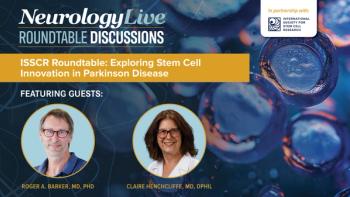
In this final episode, Roger Barker, MD, PhD, and Claire Henchcliffe, MD, DPhil, discuss why neurologists should stay informed on stem cell medicine and the broader implications of regenerative therapies across neurology.

Neurology News Network for the week ending June 6th, 2026. [WATCH TIME: 5 minutes]

Take 5 minutes to catch up on NeurologyLive®'s highlights from the week ending June 5, 2026.

Phase 2b PROCEED trial results and a phase 1 drug interaction study for bocunebart were presented at AHS 2026, collectively strengthening the drug's development case as a first-in-class PACAP-targeting therapy.

The professor of neurology at the University of Colorado discussed evidence from DISCOMS and other trials on disease-modifying therapy discontinuation in older, stable patients with multiple sclerosis. [WATCH TIME: 8 minutes]
Neurologists Roger Barker, MD, PhD, and Claire Henchcliffe, MD, DPhil, discuss how stem cell therapies may differ from existing Parkinson disease treatments and the potential benefits of dopamine cell replacement.
Mitzi Joi Williams, MD, sits down with sleep specialist Shantel Branson, MD, to discuss how sleep impacts brain health, memory, mood, and long-term neurologic well-being.

At CMSC 2026, the neuroimmunologist and director at OhioHealth MS Center, discussed results from the phase 3 FENhance 1 and 2 studies, highlighting significant reductions in relapse rates and robust MRI outcomes. [WATCH TIME: 3 minutes]

As the MS community reflects on World MS Day, Alla Wilson, a clinical ambulatory pharmacist at Shields Health Solutions, discusses how integrated specialty pharmacy models can improve treatment access, adherence, and patient-reported outcomes for multiple sclerosis.

The neurologist at Orlando Health discussed findings from an analysis of cladribine tablets in patients aged 50 years and older with relapsing multiple sclerosis presented at CMSC 2026. [WATCH TIME: 7 minutes]
Roger Barker, MD, PhD, and Claire Henchcliffe, MD, DPhil, examine the expanding clinical trial landscape for stem cell therapies in Parkinson disease and the programs leading development efforts.

European regulators have expanded atogepant’s label to include acute migraine treatment, supported by phase 3 data showing significant pain freedom and sustained relief versus placebo.

The research neuropsychologist at Mount Sinai Rehabilitation Hospital outlined hallmark patterns of cognitive impairment in multiple sclerosis at the 2026 CMSC Annual Meeting. [WATCH TIME: 6 minutes]
From patient questions to clinical trial referrals, this episode highlights practical strategies for counseling individuals interested in stem cell-based therapies for Parkinson disease.

The assistant professor of neurology at NYU Grossman School of Medicine discussed how optical coherence tomography can support the 2024 McDonald Criteria for multiple sclerosis at CMSC 2026.

12-montn interim findings from an ongoing phase 1/2 study showed up to 69% reductions in mutant huntingtin protein and favorable cUHDRS trends with the investigational oral RNA-splicing modifier SKY-0515.