
In addition the reductions in the number of new gadolinium-enhancing lesions, frexalimab lowered plasma levels of neurofilament light and CXCL13, a biomarker of inflammatory activity.
In addition the reductions in the number of new gadolinium-enhancing lesions, frexalimab lowered plasma levels of neurofilament light and CXCL13, a biomarker of inflammatory activity.
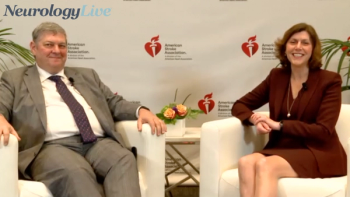
The medical director of the Cooper Neurological Institute and the professor of neurology at Yale University School of Medicine shared a few highlights from research presented at ISC 2024. [WATCH TIME: 7 minutes]
Test your neurology knowledge with NeurologyLive®'s weekly quiz series, featuring questions on a variety of clinical and historical neurology topics. This week's topic is multiple sclerosis.

A recent study highlighted the potential of susceptibility-weighted image features as imaging biomarkers to differentiate patients with multiple sclerosis from those with neuromyelitis optica spectrum disorder.
Patients with aquaporin-4-IgG-seropositive neuromyelitis optica spectrum disorder exhibited higher urine pH compared to those with multiple sclerosis and healthy controls.
Neurology News Network for the week ending February 17, 2024. [WATCH TIME: 3 minutes]
Take 5 minutes to catch up on NeurologyLive®'s highlights from the week ending February 16, 2024.
The FDA has accepted Sarepta Therapeutics' efficacy supplement for gene therapy SRP-9001, granting it a priority review for the treatment of Duchenne muscular dystrophy, with a decision expected by June 21, 2024.
The professor of nursing and neurology at the University of Tennessee Health Science Center talked about findings from a study investigating head-of-bed position in patients undergoing thrombectomy which was presented at ISC 2024. [WATCH TIME: 6 minutes]
Experts from different subspecialties in neurology shared their clinical perspectives for patients on promising therapeutics and expansion of care interventions for 2024.
The professor of neurology and director of the Stanford Stroke Center provided commentary on clinical implications of findings from the TIMELESS trial assessing tenecteplase initiated in the late window after stroke onset. [WATCH TIME: 4 minutes]
A recent analysis estimated the prevalence of subjective cognitive complaints experienced by patients with Parkinson disease, suggesting these may be predictive of cognitive decline.

The efficacy of vamorolone at a dose of 6 mg/kg/d was maintained over 48 weeks of treatment for all 5 motor outcomes.
Here's the latest multidisciplinary MS research published online first in the International Journal of MS Care.
The postdoctoral research fellow in neurology at Harvard Medical School talked about the potential of a portable low field MRI device to provide timely and cost-effective diagnoses for stroke. [WATCH TIME: 4 minutes]

Cynthia Tsai, MD, PhD, assistant professor of neurology at National Taiwan University College of Medicine, shared her clinical viewpoint on findings from a study presented at ISC 2024 using amyloid PET scans to differentiate between CAA and AD.
The assistant professor of neurosurgery and biomedical informatics at the State University of New York at Buffalo discussed the questions that still remain following the EMBOLISE trial and the use of embolization in the treatment of subacute and subdural hematoma. [WATCH TIME: 5 minutes]
Considering the favorable safety profile and acknowledging the unmet therapeutic needs in Huntington disease, further investigation of laquinimod or other immune-modulating therapeutics might be warranted.
In a recent study presented at ISC 2024, results revealed that patients who used assisted reproductive technologies therapy during hospitalization for delivery had a higher risk of stroke than those who did not use such therapies.

Omaveloxolone is an oral, once-daily medication indicated for the treatment of Friedreich’s ataxia in adults and adolescents aged 16 years and older in both the United States and the European Union.

Eleonora Tornatore-Mikesh, chief executive officer of CaringKind, The Heart of Alzheimer's Caregiving, and an anonymous caregiver, spoke about their perspective with caring for a loved one who has been diagnosed with Alzheimer disease.

The associate professor of neurology at the University of Colorado School of Medicine talked about promising developments in multiple sclerosis treatment strategies for 2024. [WATCH TIME: 6 minutes]
The director of neurocritical care and emergency neurology services at Westchester Medical Center Health System discussed the call for a paradigm shift in stroke care with a focus on intracerebral hemorrhage.

A recent study showed anticoagulation reduced ischemic stroke risk in patients with cervical artery dissection; however, cautioned is warned about the importance of transitioning to antiplatelet therapy at a certain point.

After showing inconsistent results in previous trials, AVP-786 did not demonstrate statistically significant outcomes vs placebo on the primary outcome of change in Cohen-Mansfield Agitation Inventory.

The postdoctoral research fellow at Brigham and Women’s Hospital and Harvard Medical School discussed some of the issues with ensuring timely care access to approved therapies for patients with Duchenne muscular dystrophy. [WATCH TIME: 3 minutes]
TAK-861, an orexin receptor 2 agonist, demonstrated efficacy and safety in a phase 2b trial for narcolepsy type 1.
The epileptologist at NYU Langone Health and associate professor of neurology at NYU Grossman School of Medicine talked about the ongoing need to improve public awareness and education on seizure first aid. [WATCH TIME: 3 minutes]
Topline results from the RESCUE trial indicate that RNS60, an anti-inflammatory agent, demonstrates safety and potential efficacy in acute ischemic stroke.

New findings from the TIMELESS trial suggest that tenecteplase within 4.5 to 24 hours post-stroke might benefit certain subgroups, despite overall neutral outcomes.