

The data suggest that central nervous system-derived extracellular vesicles in the blood will likely play a key role in biomarker development, especially for patients with Parkinson disease, in the coming years.
The data suggest that central nervous system-derived extracellular vesicles in the blood will likely play a key role in biomarker development, especially for patients with Parkinson disease, in the coming years.
The associate professor of clinical neurology at the University of California, Irvine School of Medicine, discussed the use of a multiple sclerosis disease activity test and serum biomarkers in improving the landscape of care for patients. [WATCH TIME: 5 minutes]

Nancy Foldvary-Schaefer, DO, FAAN, director of the Sleep Disorders Center and staff in the Epilepsy Center at Cleveland Clinic, discussed the recent advancements in narcolepsy treatments and the importance of incorporating a holistic care approach for patients.
The vice-chair for research at Cleveland Clinic’s Neurological Institute provided commentary on the expanded research of GFAP in multiple sclerosis and whether certain biomarkers may predict treatment response. [WATCH TIME: 8]
Stratification of the cohort into low- and elevated-cardiovascular risk groups revealed no differences in cardiovascular adverse events with repetitive DHE; however, elevated-risk patients had higher mean arterial blood pressure.

Mind Moments®, a podcast from NeurologyLive®, brings you an exclusive interview with James F. Howard, MD. [LISTEN TIME: 16 minutes]

Following treatment with diazepam, patients achieved resolution of clinical relevant seizures within 10 minutes, with no adverse events that led to discontinuation or respiratory depression.
The clinical neurologist at the MS Center of Catalunya provided perspective on her presentation from MSMilan 2023, focusing in on key factors when diagnosing multiple sclerosis from other similarly presenting disorders. [WATCH TIME: 5 minutes]
Diego Torres-Russotto, MD, chair of neurology at Baptist Health Miami Neuroscience Institute, provided an overview of the upcoming 11th Annual Miami Neuroscience Symposium, a 3-day educational event held in early November.

A group of panelists set the stage for the introduction of biosimilar therapies in multiple sclerosis care, and offer an overview of the current landscape of treatment. [WATCH TIME: 9 minutes]

Here's some of what is coming soon to NeurologyLive® this week.

In animal models, HL192 showed disease-modifying effects, as demonstrated through improvements in behavioral deficits.
Test your neurology knowledge with NeurologyLive®'s weekly quiz series, featuring questions on a variety of clinical and historical neurology topics. This week's topic is rare and genetic neurological disorders.

Among football players, odds of having a parkinsonism or Parkinson disease diagnosis were greater with more seasons and higher level of football play.
Take 5 minutes to catch up on NeurologyLive®'s highlights from the week ending October 20, 2023.

PRO-PD showed good 6-month test-retest reliability, as well as good convergent validity between other widely used validated scales of PD.
The research fellow at the Amsterdam University Medical Center provided thoughts on the possibilities of assessing cognitive decline in clinical settings for patients with multiple sclerosis. [WATCH TIME: 5 minutes]
Mind Moments®, a podcast from NeurologyLive®, brings you an exclusive interview with Mitzi Joi Williams, MD; Rhonda Voskuhl, MD, PhD; Tom Fuchs, MD, PhD; Barry Singer, MD; and Georgina Arrambide, MD, PhD. [LISTEN TIME: 15 minutes]

During the progression of the movement disorder, older patients with Parkinson disease may see changes in their insulin-like growth factor and serum homocysteine indices but a potential therapy could improve these factors.
The FDA’s decision to allow at-home dosing of intransal foralumab for patients with multiple sclerosis is likely to improve patient compliance to treatment and health outcomes, according to a recent release statement.
The director and founder of The MS Center for Innovations in Care provided thoughts on the potential role of biosimilars in treating multiple sclerosis and the steps needed to ensure that this integration process is safe. [WATCH TIME: 4 minutes]

The 40-week study includes 150 patients with documented patent foramen ovale closure and migraine who are randomized to either the GORE CARDIOFORM Septal Occluder or sham.
The neurologist in the Danish Multiple Sclerosis Center at Copenhagen University Hospital discussed the debate surrounding the use of hormone therapy in multiple sclerosis treatment, highlighting the need for more clinical evidence to support its use. [WATCH TIME: 5 minutes]

After a median follow-up of 19 months, only the physical component on the Multiple Sclerosis Impact Scale was worsened in the discontinuation group.
Findings from the study further confirmed target engagement of BHV-7000, with future plans of a potential phase 3 trial in focal epilepsy later this year.
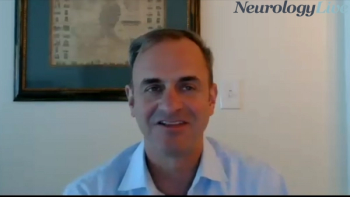
The chief of the Movement Disorders Division at Mass General Hospital discussed the challenges medical students face in pathing their career and the importance of a strong mentor figure. [WATCH TIME: 6 minutes]

Over a 6-month treatment period, investigators observed either stabilization or improvement on outcomes of Expanded Disability Status Scale, MFIS, T25FW, and pyramidal score.
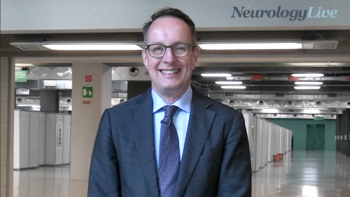
The global program head of the development unit for neuroscience at Novartis talked about the evolving landscape of mental health care for multiple sclerosis including the accessibility barrier that remains for patients in many regions. [WATCH TIME: 4 minutes]

The head of Biogen’s MS and Immunology Department Unit provided an overview of FUSION, a currently recruiting study assessing the efficacy and safety of BIIB091 as a monotherapy and in combination with diroximel fumarate.
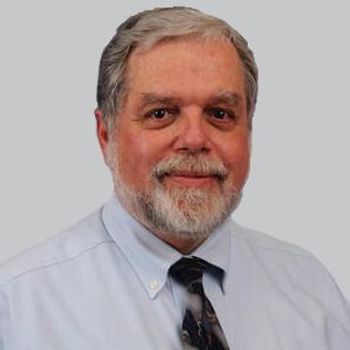
With the approval, zilucoplan becomes the first once-daily subcutaneous C5 complement inhibitor available for adults with generalized myasthenia gravis.