

During the open-label treatment period, 83% of patients with idiopathic hypersomnia who completed treatment saw a significant reduction in sleepiness, with an average Epworth Sleepiness Scale change of -9.4 points.
During the open-label treatment period, 83% of patients with idiopathic hypersomnia who completed treatment saw a significant reduction in sleepiness, with an average Epworth Sleepiness Scale change of -9.4 points.

Mark I. Boulos, MD, BSc, FRCP, CSCN, MSc, associate professor of medicine, division of neurology, Institute of Medical Science, University of Toronto, talked about a comprehensive meta-analysis aimed to determine normal mean sleep latency values to accurately help clinicians with interpreting sleep test results.

The pediatric neuromuscular neurologist at Arkansas Children's Hospital and associate professor of pediatrics at the University of Arkansas for Medical Sciences talked about findings from a phase 1/2 study on dosing 3 pediatric patients with Duchenne muscular dystrophy with REGENXBIO’s RGX-202. [WATCH TIME: 4 minutes]

In a recent clinical trial, patients who received SaiLuoTong showed improvements in aspects of memory and executive function including delayed episodic memory retrieval, switching between cognitive concepts, higher-level divided attention, and multitasking compared with placebo.

Episode 38 of the AUPN Leadership Minute features Muhammad "Mud" Alvi, MD, of West Virginia University Robert C. Byrd Health; and David B. Watson, MD, of West Virginia University Robert C. Byrd Health. [WATCH TIME: 5 minutes]
Over an 11-week treatment period, patients on pitolisant experienced improvements in secondary outcomes of behavioral symptoms, behavioral disturbances, and hyperphagia.
The senior neurologist at the University Hospital Center of Nice in France talked about a digital tool developed to monitor disability more accurately in patients with multiple, especially during the early stages of the disease. [WATCH TIME: 5 minutes]

Over a 24-month follow-up, investigators observed increased ganglion cell loss that could potentially be associated with an enhanced risk of developing progression without relapse activity.

The director of the neurology residency program and assistant professor of neurology at the University of South Alabama College of Medicine shared his insights from a year’s worth of using a serum biomarker test for the diagnosis of multiple sclerosis. [WATCH TIME: 5 minutes]

Solanezumab did not slow the progression of preclinical Alzheimer disease as compared with placebo on the basis of the primary or secondary cognitive and functional end points over a 4.5-year treatment period.

Hammer, a patient advocate living with acute flaccid myelitis, discussed the language around neurologic disability, and how the conversations should shift going forward. [WATCH TIME: 4 minutes]

Here's some of what is coming soon to NeurologyLive® this week.

Jay Alberts, PhD, the Edward F. and Barbara A. Bell Endowed Chair at Cleveland Clinic, provided comment on a recently published randomized controlled trial assessing the therapeutic potential of an augmented reality program for postural instability and gait dysfunction in Parkinson disease.

AOC 1001 consistently demonstrated directional improvements across multiple aspects of myotonic dystrophy type 1, including measures of myotonia, strength, function, and patient reported outcome.
Test your neurology knowledge with NeurologyLive®'s weekly quiz series, featuring questions on a variety of clinical and historical neurology topics. This week's topic is the European Committe for Treatment and Research in Multiple Sclerosis.

In preclinical data, treatment with PGN-EDODM reduced pathogenic nuclear foci by 54% per nuclei and liberated muscleblind like splicing regulator 1, resulting in a greater than 68% correction of downstream transcript missplicing events.

Data from a US database suggest that patients who switched to eculizumab (Soliris; Alexion) significantly reduced their hospitalization, days hospitalized, and documented comorbidities.

Neurology News Network for the week ending October 14, 2023. [WATCH TIME: 3 minutes]

The head of Biogen’s MS and Immunology Department Unit discussed FUSION, a new phase 2, 2-part study assessing the efficacy and safety of BIIB091, an investigational Bruton’s tyrosine kinase inhibitor. [WATCH TIME: 3 minutes]
Take 5 minutes to catch up on NeurologyLive®'s highlights from the week ending October 13, 2023.

The decision opens the door for greater access to PET imaging that can assist in timely diagnosis of Alzheimer disease and facilitate with appropriate treatment decisions.

Over a 6-month period, ofatumumab-treated patients met the primary end point of no change or reduction in the number of gadolinium-enhancing lesions on MRI.

The clinical research director of the UCSF Multiple Sclerosis Center talked about a clinical trial highlighting the therapeutic benefits of longterm treatment with inebilizumab in patients with NMOSD. [WATCH TIME: 4 minutes]

Findings from the OCARINA I study presented at the MSMilan 2023 meeting showed that a 920 mg subcutaneous dose of ocrelizumab was well-tolerated in patients with relapsing or primary progressive multiple sclerosis, with similar exposure to the FDA-approved intravenous dose.

A recent analysis presented at MSMilan 2023 showed significant cognitive and biomarker improvements among patients with progressive multiple sclerosis receiving repeated intrathecal injections of autologous mesenchymal stem cells.
The director of the Multiple Sclerosis Program at UCLA discussed the need to consider HRT among women with MS going through menopause, and how HRT can improve its negative effects. [WATCH TIME: 4 minutes]

A new analysis of the SAkuraMoon study showed that annual relapse rate remained consistently low in satralizumab-treated patients, with high proportions of patients remaining free from relapse, severe relapse, and worsening in disability.

Despite not showing significant associations, those with B cell suppression had longer time to relapse, new MRI activity, and progression independent of relapse activity than those without.
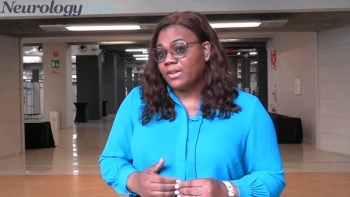
The founder and chief executive officer of Joi Life Wellness Group Multiple Sclerosis Center provided insight on the barriers with expanding precision medicine and the need for additional biomarkers of clinical progression. [WATCH TIME: 3 minutes]
The administration of a subcutaneous 920-mg dose resulted in near-complete suppression of radiological and clinical disease activity as measured up to week 24, similar to the intravenous therapy.