
VO659, the only clinical candidate targeting the CAG repeat expansion that causes all polyglutamine diseases, is designed to reduce mutant HTT and spare wildtype HTT.
VO659, the only clinical candidate targeting the CAG repeat expansion that causes all polyglutamine diseases, is designed to reduce mutant HTT and spare wildtype HTT.
Take 5 minutes to catch up on NeurologyLive®'s highlights from the week ending April 7, 2023.
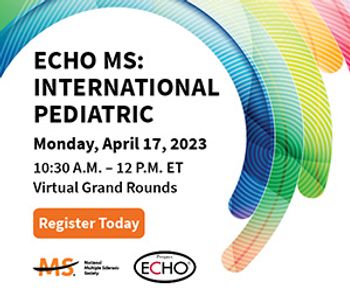
The National Multiple Sclerosis Society’s CME program follows Project ECHO’s evidence-based telementoring model and establishes a peer-to-peer knowledge sharing network.
Increased odds of miscarriage, stillbirth, preterm birth, and maternal birth were documented in women with epilepsy. These odds were increased with greater use of antiseizure medication.
The associate professor of neurology at Columbia University spoke at the 2023 MDA conference about the unmet needs of patients with ALS and the potential of new gene therapies. [WATCH TIME: 5 minutes]

Mind Moments®, a podcast from NeurologyLive®, brings you an exclusive interview with Dilesh Doshi, PharmD. [LISTEN TIME: 22 minutes]
Michael Levy, MD, PhD, associate professor at Harvard Medical School, spoke about the breakthrough of drugs for NMOSD and the challenges patients face to receive treatment.

More than 95% of the cohort of elderly patients showed functional improvement at 6 months after plasma exchange, including 60% who experienced moderate-to-marked improvement.
The executive director of the Alliance for Headache Disorders Advocacy discussed some of the successes from recent Headache on the Hills, and the expansion in centers of excellence for veterans with migraine. [WATCH TIME: 6 minutes]
Evidence from a nationwide healthcare system data in South Korea showed that narcolepsy is closely related to systemic autoimmune diseases, particularly those related to HLA genes.
At the 2023 MDA conference, a pediatric endocrinologist from Cincinnati Children’s Hospital talked about the unmet needs in treating bone health for patients with Duchenne muscular dystrophy. [WATCH TIME: 5 minutes]

Treatment with neflamapimod was associated with statistically significantly higher functional dynamic connectivity, with almost half of the cohort experiencing a greater than 10% increase over time.
The neuroophtalmologist at Mayo Clinic detailed improvements in prescribing methods for NMOSD treatments and the conversations surrounding reversing neurodegeneration. [WATCH TIME: 3 minutes]

Robin Ryther, MD, PhD, director of the Rett Spectrum Clinic at Washington University in St. Louis School of Medicine, shared her response to the recently approved therapy trofinetide for Rett syndrome.
The associate professor of neurology at the University of Texas Health Science Center at Houston talked about advances in the classification of inflammatory myopathies at the recently concluded 2023 MDA conference. [WATCH TIME: 4 minutes]

Amyloid clearance was achieved by 75% of participants who received remternetug at doses ranging from 700 to 2800 mg IV Q4Q by day 169.
The vascular neurologist at Allegheny Health Network provided perspective on the complex diagnosis of basilar artery occlusions and the signs clinicians and emergency room specialists should be aware of. [WATCH TIME: 2 minutes]

Anastasia Vishnevetsky, MD, an immunology fellow at Brigham and Women’s Hospital, provided insight on the latest research initiatives in MOG-antibody associated disease, including the potential for the first FDA-approved therapy.

By the end of the open label long-term extension study, BIIB080 reduced aggregated tau pathology in all dose groups assessed across all brain composites.
A group of experts in the care of patients with neuromuscular diseases—Douglas Sproule, MD, MSc; David Brumbaugh, MD; Sharon Hesterlee, PhD; Lauren Treat, MD; Donovan Lott, PT, PhD, CSCS—shared their perspectives on hot topics of treatment and management from the 2023 MDA conference.
At the 2023 MDA conference, the professor for human genetics and neurology at the University of Miami Miller School of Medicine talked about the role of genetics in neuromuscular diseases and potential therapies. [WATCH TIME: 5 minutes]

Investigators identified associations between several distance and area-related life-space measures with TUG performance, not NIHSS or modified Rankin scales scores.
At the 2023 MDA conference, the scientific research portfolio director at Muscular Dystrophy Association detailed a session on collaborative research in ALS and ongoing efforts in the field. [WATCH TIME: 3 minutes]
Pitolisant will be assessed in 200 patients with idiopathic hypersomnia, using change in excessive daytime sleepiness as the primary end point.
Investigators exercised caution when considering administration of antithrombotics or a thrombolytic agent for patients on lecanemab as cases of intracerebral hemorrhage of more than 1cm have been observed.

Russell Cerejo, MD, vascular neurologist at Allegheny Health Network, discussed the ways basilar artery occlusions are identified and treated despite lack of consensus guidelines.
The chair of the Department of Neurology at Cedars Sinai Medical Center discussed the prominent topics of research in multiple sclerosis and the need to learn more about age and sex. [WATCH TIME: 5 minutes]

Namita A. Goyal, MD, a principal investigator on the pivotal phase 3 trial of NurOwn, talked about the importance of the upcoming FDA AdComm meeting and its impact on the ALS community.
The director of the Ann Kimball and John W. Johnson Center for Cellular Therapeutics at Houston Methodist Hospital spoke on about advances in ALS research and promising therapies on the horizon at the 2023 MDA conference. [WATCH TIME: 8 minutes]

Here's some of what is coming soon to NeurologyLive® this week.