

The director of medical outpatient services at the Kennedy Krieger Institute provided insight on the recently announced revisions to the “Learn the Signs. Act Early.” CDC developmental milestones for children. [WATCH TIME: 4 minutes]
The director of medical outpatient services at the Kennedy Krieger Institute provided insight on the recently announced revisions to the “Learn the Signs. Act Early.” CDC developmental milestones for children. [WATCH TIME: 4 minutes]

In a subanalysis of individuals with acute ischemic stroke with tandem lesions, treatment with the Penumbra system resulted in successful revascularization in almost 90% of patients.

Those who had used tobacco at any time demonstrated multiple significantly lower whole-brain measures than nonusers, including total cortical surface area, cortical volume, and total intracranial volume.
The chair of the nephrology division at Mayo Clinic provided context on recent findings linking inflammation and neurovascular damage in women with a history of severe preeclampsia, and how the community may react. [WATCH TIME: 2 minutes]
Results showed significantly smaller bilaterally gray matter volumes in Parkinson disease compared with controls, but no differences in brain-first or body-first subtypes on asymmetric atrophy.

Here's some of what is coming soon to NeurologyLive® this week.

Chaired by Augusto Miravalle, MD, of the University of Colorado, the presentations also feature Barry Hendin, MD, of the Center for Neurology and Spine; Ilana B. Katz Sand, MD, of Mount Sinai; Brett Fling, PhD, of Colorado State University; and Gavin Giovannoni, MBBCh, PhD, of Queen Mary University of London. [WATCH TIME: 1 hour, 59 minutes]

Plasma GFAP was increased in both presymptomatic and symptomatic mutation carriers compared with noncarriers, and in symptomatic compared with presymptomatic carriers.
Test your neurology knowledge with NeurologyLive®'s weekly quiz series, featuring questions on a variety of clinical and historical neurology topics. This week's topic is Parkinson disease and movement disorders.

For patients with MCA M2 occlusions, use of the Zoom Stroke Solution resulted in significant decreases in National Institutes of Health Stroke Scale scores and no reported perforations or other reperfusion–catheter-related complications.
Take 5 minutes to catch up on NeurologyLive®'s highlights from the week ending August 26, 2022.

Between the 2 trials, patients showed significantly lower annualized relapse rates and mean number of gadolinium-enhancing lesions when treated with ublituximab relative to teriflunomide.
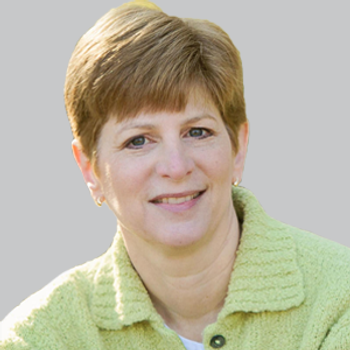
The transition period between summer and school represents a key time for children and adolescents to focus on sleep, correct poor sleep habits, and set themselves up for long-term success, both academically and physically.
Mind Moments®, a podcast from NeurologyLive®, brings you an exclusive interview with Chris Winter, MD. [LISTEN TIME: 31 minutes]

Branaplam, an mRNA splicing modifier, was being evaluated in a cohort of 75 participants with early manifest Huntington disease, using change in mutant huntingtin protein as the primary outcome measure.

The associate professor of neuropsychology at the University of Miami Miller School of Medicine discussed the next steps in using the Cognitive Stress Test and the remaining questions from recent findings. [WATCH TIME: 4 minutes]

Investigators concluded there were no viable candidates for CVD risk phenotyping in sleep clinics because there were no strong links between any individual or type of oximetry pattern and incident cardiovascular disease.
The Edward F. and Barbara A. Bell Endowed Chair at Cleveland Clinic discussed the complexities with identifying viable biomarkers for Parkinson disease, as well as interventions geared toward specific regions of the brain. [WATCH TIME: 4 minutes]
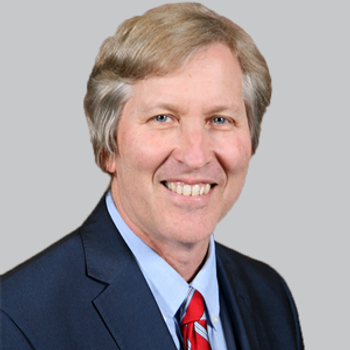
Treatment with remote ischemic conditioning performed twice daily for 2 weeks as an adjunct to guideline-based treatment resulted in higher odds of modified Rankin Scale scores between 0 and 1, and 0 and 2.

In a multiday ascending dose trial, pharmacokinetic analysis indicated a direct linear relationship between drug dosing concentration and blood plasma levels for each of the 5 days of dosing.
The publication’s findings were consistent with previous scientific literature suggestive that Alzheimer disease is a multifactorial disease, where several pathways interlink and cause cognitive impairments.
The molecular biologist at the Cleveland Clinic Lerner Research Institute provided insight on the lingering questions about GFAP and sTREM2 astrocytes, and their immunologic correlations with Alzheimer disease and related dementias. [WATCH TIME: 4 minutes]
The Edward F. and Barbara A. Bell Endowed Chair at Cleveland Clinic discussed a new virtual reality tool that quantifies prodromal changes in activities of daily living for Parkinson disease, without incurring issues of sensory fatigue.

The findings suggests that existing migraine preventative medications are commonly prescribed in idiopathic intracranial hypertension, the most common of which were acetazolamide and topiramate.
Magnetoencephalography provides an opportunity for physicians to capture a more dynamic view of brain function over time and space that may offer an advantage to clinical care.
The associate director of the Sleep Center at Children’s Hospital of Philadelphia discussed the detrimental effects poor sleep can have on children, both neurologically and on quality of life. [WATCH TIME: 4 minutes]

After adjusting for stroke severity, prestroke physical activity still accounted for a 52% lowered risk for long-term morality following intracerebral hemorrhage and 48% after ischemic stroke.

Although the prevalence of epilepsy among veterans was similar to what has been reported in the literature, those with DRE had a mortality rate higher than the US general population and other veterans.
CXCL2 and CXCL12, known to induce B-cell proliferation and differentiation, were significantly higher in those with acute and remitted cases of NMOSD compared with controls.
The Edward F. and Barbara A. Bell Endowed Chair at the Cleveland Clinic detailed how a new virtual reality tool elucidates prodromal symptoms from patients with Parkinson disease. [WATCH TIME: 3 minutes]