

The assistant professor of pharmacology at the University of Arizona College of Medicine Tucson shared her insight into the endocannabinoid system and its therapeutic potential in treating migraine. [WATCH TIME: 5 minutes]
The assistant professor of pharmacology at the University of Arizona College of Medicine Tucson shared her insight into the endocannabinoid system and its therapeutic potential in treating migraine. [WATCH TIME: 5 minutes]

After previously being approved for use in the stroke and acquired brain injury populations, the Ekso Bionics product now becomes the first such device approved in the multiple sclerosis patient population.
The approval was based on phase 2/3 findings that showed an average score of 2.32 points higher on ALS Functional Rating Scale with AMX0035 compared with placebo.

Laurie Gutmann, MD; Gauri Pawar, MD; and Claire Henchcliffe, MD, discuss their own paths in medicine and observations of other women leaders. [WATCH TIME: 1 hour, 51 minutes]
The journey of aducanumab (Aduhelm; Biogen) from development to the FDA is a tortured one, but its path may serve to teach the Alzheimer disease field valuable lessons as it strives forward to develop disease-modifying therapies.

Here's what is coming soon to NeurologyLive®.
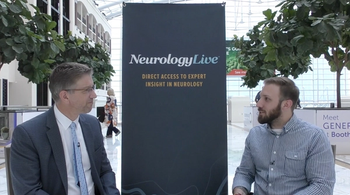
Robert Fox, MD, who presented the DISCO-MS study results at the CMSC 2022 Annual Meeting, offered his closing thoughts on the data and the take-home messaging for clinicians.
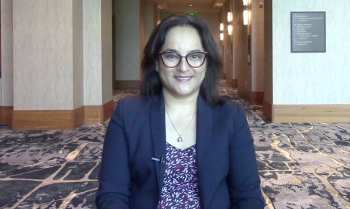
The associate professor of psychiatry at the University of Illinois at Chicago shared the findings of her and colleagues’ work that suggest that distinct cytoarchitectural changes occur in the brain that may underlie migraine chronification. [WATCH TIME: 4 minutes]
Data from a cohort of almost 5000 women seen at Montefiore Health System emergency departments suggest that primary headache, likely migraine, is underdiagnosed, and a high proportion of these women being of Black and Hispanic backgrounds.
The pediatric neurologist and headache specialist at the University of Calgary discussed the work she presented at AHS 2022 on the incidence of anxiety and depressive disorders in the pediatric migraine population. [WATCH TIME: 6 minutes]
Test your neurology knowledge with NeurologyLive®'s weekly quiz series, featuring questions on a variety of clinical and historical neurology topics. This week's topic is the history of the American Headache Society.
Data from a study in Olmsted County, Minnesota, identified the incidence rate of status migrainosus to be 26.60 per 100,000, with more than 10% of the cohort reporting that too much or too little sleep triggered the condition.
Robert Fox, MD, offered perspective on data from the DISCO-MS study of disease-modifying therapy discontinuation in patients with multiple sclerosis and how it compares with day-to-day clinical practice.
The percent change in monthly migraine days across weeks 1 to 12 and scores on Headache Impact Test were precursors to suboptimal response to eptinezumab, prompting the need for a second dose.
The professor and chair of Psychiatry & Human Behavior at Wake Forest School of Medicine provided insight on the signs and risks associated with sleep disorders and Alzheimer disease. [WATCH TIME: 3 minutes]

At 2- and 4-hours post dose, return to normal function was achieved by 30.1% and 52.1% of participants for their first 10 ubrogepant-treated attacks.
Neurology News Network for the week ending June 11, 2022. [WATCH TIME: 3 minutes]
Headache frequency remained the top driver of higher disability scores, but opposing to prior findings, school versus summer was not a significant predictor of disability, suggesting that pandemic schooling changes affected coping abilities to cause less disability.
Robert Fox, MD, shared the details of the DISCO-MS study of disease-modifying therapy discontinuation in patients with multiple sclerosis, presented at the CMSC 2022 Annual Meeting.
Take 5 minutes to catch up on NeurologyLive®'s highlights from the week ending June 10, 2022.
The president and chief executive officer of Mapi Pharma discussed the differences and additional benefits from glatiramer acetate depot, a new intramuscular extended-release version of the known multiple sclerosis medication. [WATCH TIME: 4 minutes]

The associate professor of neurology at Mayo Clinic and member of the board of directors at AHS shared her perspective on the importance of collecting more information on status migrainosus and the need to develop a better approach and definition. [WATCH TIME: 3 minutes]
The director of the Montefiore Headache Center spoke about the Migraine Clinical Outcome Assessment System project and the need for better patient-reported outcome measures in migraine clinical care.
The Michael Hooker Distinguished Professor and director of the NIMH psychoactive drug screening program at University of North Carolina School of Medicine discussed the need for large placebo-controlled trials of psychedelics in migraine disorders. [WATCH TIME: 4 minutes]
Patients in the open-label extension also showed limited need for acute treatment with rimegepant (Nurtec ODT; Biohaven Pharmaceuticals), as more than 80% of patients took 16 or fewer total tablets over the 28-day period.
The neurologist at Weill Cornell Medicine and NewYork-Presbyterian Hospital offered his insight into the hot topics at the American Headache Society Annual Scientific Meeting, including a presentation on the prevalence of status migrainosus. [WATCH TIME: 4 minutes]
A retrospective review of more than 1000 electronic medical records suggests that for those with migraine, the presence of neck pain, anxiety, depression, and insomnia show no comparative differences in treatment response predictability.
The Michael Hooker Distinguished Professor and director of the NIMH psychoactive drug screening program at University of North Carolina School of Medicine shared his insight into his keynote address at the American Headache Society Annual Scientific Meeting. [WATCH TIME: 8 minutes]
Daniel Kantor, MD, discussed the data from his presentation at the 2022 CMSC annual meeting on COVID-19 vaccine response in patients with multiple sclerosis, and what questions are still lingering among the clinical community.
The professor and chair of Psychiatry & Human Behavior at Wake Forest School of Medicine discussed the need for improved tools to evaluate and treat sleep disorders in patients with Alzheimer disease. [WATCH TIME: 3 minutes]