
The codirector of Epilepsy Clinical Trials at NYU Langone spoke to the progress that’s been made in treating refractory epilepsy and her hopes for the future of drug development in this area of medicine. [WATCH TIME: 5 minutes]
The codirector of Epilepsy Clinical Trials at NYU Langone spoke to the progress that’s been made in treating refractory epilepsy and her hopes for the future of drug development in this area of medicine. [WATCH TIME: 5 minutes]

Investigators found no serious AEs related to acupuncture in all 22 studies that reported on it, consisting unanimously with findings in previous studies. Acupoints catgut embedding, auricular acupuncture plus manual acupuncture, and electroacupuncture plus acupoint application showed the most promise.

Despite progress in the understanding of Tourette syndrome and similar disorders, no clear cause of TS has been identified, nor are there treatment options that completely eliminate symptoms.
The professor of neurology at NYU Langone Grossman School of Medicine discussed what high-potential repurposed medications could be an option to treat symptoms of COVID-19 and the realistic possibility of clinical trials. [WATCH TIME: 4 minutes]

Safety outcomes of the study demonstrated a lower risk of treatment-emergent adverse events and serious adverse events, along with a high risk of drug withdrawal because of adverse events for high-dose clobazam.

The study investigators noted a desire to further assess the virtual aspect of the HOBSCOTCH self-management and cognitive training intervention, calling it “particularly well-suited for the current environment.”

In addition to reductions in monthly migraine days, participants on erenuamb demonstrated improvements on patient-reported outcomes and physicians’ assessments of migraine severity.

Parkinson disease is neither imminently fatal nor transient but is incurable, and as it affects individuals differently based on their unique identities, culture, access to health care, and social support, it is vital to empower patients.
The chair and vice-chair of the Headache and Facial Pain Section of the American Academy of Neurology discussed some of the key research needs for migraine care going forward. [WATCH TIME: 3 minutes]

Here's what is coming soon to NeurologyLive®.

Over a 12-month treatment period, fremanezumab afforded significantly greater reductions in monthly migraine days and higher responder rates compared with placebo for patients with chronic migraine.
The clinical research director of the UCSF Multiple Sclerosis Center discussed the recently presented analysis on ublituximab’s effect on disability in relapsing MS and the critical need to focus on improving quality of life. [WATCH TIME: 4 minutes]

Test your neurology knowledge with NeurologyLive®'s weekly quiz series, featuring questions on a variety of clinical and historical neurology topics. This week's topic is headache and migraine.

A literature review of the evidence for erenumab (Aimovig; Amgen) treatment in migraine suggests that certain patients would benefit from initiating treatment at 140 mg rather than 70 mg and that the higher dose more effectively prevents progression to chronic disease.

When controlling for insulin and body mass index, the association between physical activity and cerebral glucose metabolism remained unchanged, while the association with gray matter volume was lost.
Neurology News Network for the week ending April 16, 2022 [WATCH TIME: 3 minutes]
Take 5 minutes to catch up on NeurologyLive®'s highlights from the week ending April 15, 2022.

The 2 older patients, ages 47 and 51 years at last evaluation, were ambulatory in their first assessment in 2014, but were no longer able to walk in 2019 when the second assessment was done.
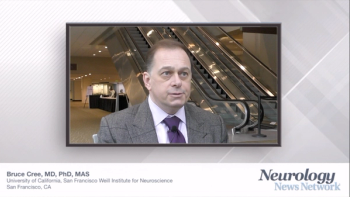
Bruce Cree, MD, PhD, MAS, FAAN, shared his thoughts on the data from the ULTIMATE I and II studies of ublituximab's effect on measures of MS disability, including EDSS and 9HPT scores.

Basil Darras, MD, offered his perspective on the ASCEND study (NCT05067790) of nusinersen (Spinraza; Biogen) in SMA and what it aims to uncover about the therapy.

New neurological deficits were a predictor of long-term survival regardless of the status epilepticus cause and were associated with a 5-fold increase in the odds of death at 2 years after status epilepticus diagnosis.

Over 24 months, treatment with siponimod (Mayzent; Novartis) was associated with improvements in brain tissue integrity and myelination within newly formed normalized magnetization transfer ratio lesions.
The medical director and chief medical officer of the New England Center for Neurology and Headache discussed notable data from the STEMTRA trial, and the progress made in the field of regenerative medicine. [WATCH TIME: 2 minutes]

As a primary investigator for fenfluramine’s pivotal phase 3 program, Kelly Knupp, MD, MSCS, FAES, provided insight on new results presented at AAN 2022, as well as the positive ripple effect its recent approval brings to patients with Lennox-Gastaut syndrome.

Alnylam’s investigational subcutaneous RNAi therapy is in development for both wild-type and hereditary transthyretin-mediated amyloidosis, with data from the phase 3 HELIOS-A trial demonstrating its potential in treating associated polyneuropathy.

In addition to demonstrating significant differences in slowing functional decline, those on gamma sensory stimulation also demonstrated a significant reduction in brain atrophy relative to the sham group in the OVERTURE study.
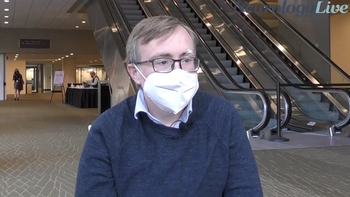
The assistant professor of neurology at the University of Pennsylvania discussed stroke risk among patients with COVID-19 and the need to seek neurological consultation. [WATCH TIME: 3 minutes]

Following their data presentation on AMX0035 at AAN 2022, Justin Klee and Josh Cohen, the co-CEOs and co-founders of Amylyx Pharmaceuticals, shared their perspectives on the agent.

A recent study showed that use of STIMVIEW XT helped adjust patient stimulation by an average of 20 minutes, lowering the programming time by 56%.

The investigational agent was well-tolerated, with no new safety signals and no indication of worsening of supine hypertension based on 24-hour monitoring.