
Adverse events were balanced across treatment and placebo groups, with no observed treatment-associated elevations in cerebrospinal fluid white blood cell counts or protein.
Adverse events were balanced across treatment and placebo groups, with no observed treatment-associated elevations in cerebrospinal fluid white blood cell counts or protein.
In addition to significantly less disability observed in tenecteplase-treated patients, this group was also administered treatment 9.40 minutes faster than those on alteplase.

Shephard Mpofu, MD, the senior vice president and chief medical officer at Novartis Gene Therapies, offered his perspective on the latest phase 3 data of onasemnogene abeparvovec (Zolgensma) in SMA treatment.

EEG Talk is a series dedicated to teaching electroencephalogram (EEG) reading skills in neurology in a way that is both digestible and fun. New episodes featuring special guests in the field are posted regularly on Mondays.
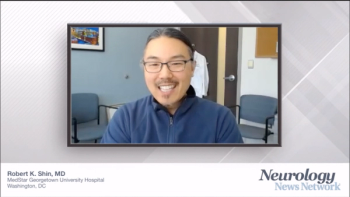
Robert K. Shin, MD, offered his perspective on the novel therapies being developed for multiple sclerosis, highlighting the potential of Bruton tyrosine kinase inhibitors for progressive disease.
The mean bodyweight-normalized infant rimegepant dose was 0.0005 mg/kg/day, and the mean estimated relative infant dose was 0.51%, therefore indicating the study drug results in less than 1% relative infant dose in human milk.
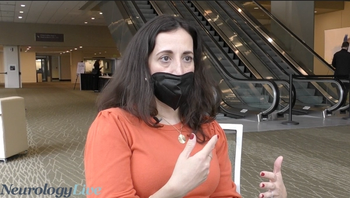
The professor of neurology at NYU Langone Grossman School of Medicine broke down the knowns and unknowns about long-term changes related to COVID-19, their legitimacy, and associations with neurodegenerative disorders. [WATCH TIME: 6 minutes]

Here's what is coming soon to NeurologyLive®.

Data presented at the 2022 AAN Annual Meeting from the ALITHIOS and KYRIOS trials suggest that ofatumumab (Kesimpta; Novartis), an anti-CD20 therapy, is safe with up to 4 years of treatment and does not prevent the mounting of an immune response to mRNA vaccines.
After showing several significant differences between placebo, the company has planned a phase 3 study that will assess the therapeutic in a cohort of 230 adults with FSHD.
Test your neurology knowledge with NeurologyLive®'s weekly quiz series, featuring questions on a variety of clinical and historical neurology topics. This week's topic is the history of the American Academy of Neurology.
Among triptan non/past use and current use patients, investigators observed refill decreases of 15.3% and 16.8%, respectively, in the 9 months following rimegepant treatment.
Mind Moments®, a podcast from NeurologyLive®, brings you exclusive interviews with Jennifer Frontera, MD; Stephen Krieger, MD; Peter McAllister, MD; Kelly Knupp, MD, MSCS; Bruce Cree, MD, PhD, MAS; Shrujal Baxi, MD, MPH; and Indu Subramanian, MD. [LISTEN TIME: 32 minutes]
Neurology News Network for the week ending April 9, 2022. [WATCH TIME: 4 minutes]
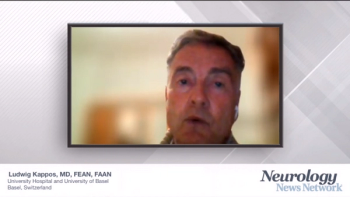
Ludwig Kappos, MD, FEAN, FAAN, provided insight on a new analysis that showed greater proportions of patients achieving no evidence of disease activity on ozanimod compared with interferon ß-1a.
Take 5 minutes to catch up on NeurologyLive®'s highlights from the week ending April 8, 2022.
The pediatric neurologist and epilepsy specialist at Colorado Children’s Hospital discussed new data presented at AAN 2022 on the use of recently approved fenfluramine in patients with Lennox-Gastaut syndrome. [WATCH TIME: 3 minutes]
As a result of treatment with the Vercise Genus DBS system, patients reduced their use of anti-parkinsonian medications while maintaining improvements in quality of life.
Following the switch to ubrogepant, more than half of patients with migraine had reduced use of triptans and more than one-third of patients had reduced use of anti-inflammatory drugs.
The clinical research director of the UCSF Multiple Sclerosis Center offer his perspective on the 3 available agents for the treatment of patients with neuromyelitis optica spectrum disorder. [WATCH TIME: 2 minutes]
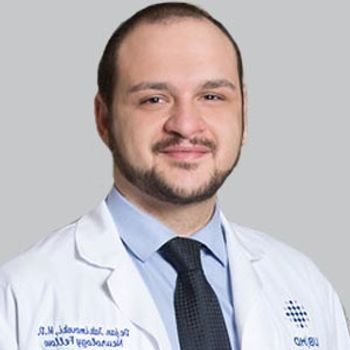
Dejan Jakimovski, MD, PhD, research assistant professor, Buffalo Neuroimaging Analysis Center, discussed his presentation at AAN 2022 on the associations between cerebral hypoperfusion and increased axonal pathology in MS.
The assistant professor of neurology at the University of Pennsylvania discussed the similarities observed between the results of neurological exams in patients with COVID-19 vs other respiratory infections. [WATCH TIME: 3 minutes]
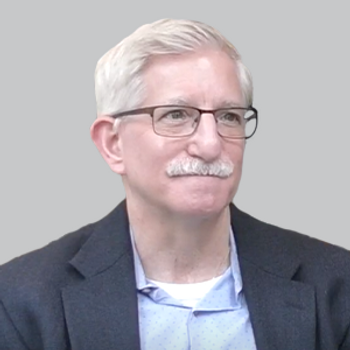
Seth M. Keller, MD, chair of the Section for Adults With IDDs at AAN, shared his perspective on the state of care for these individuals and the need to improve the difficulties they face when transitioning out of pediatric care.
The medical director and chief medical officer of the New England Center for Neurology and Headache spoke to the phase 2 STEMTRA trial results of the stem cell treatment SB623. [WATCH TIME: 4 minutes]
All patients received 100% of the intended stimulations, with no reported deaths, stimulation site reactions, or any cases of acute coronary syndrome or symptomatic intracerebral hemorrhage.
Among those who took their second nighttime sodium oxybate dose 4 hours after their first, 42% claimed they felt somewhat, quite a bit, or extremely groggy or unsteady the next morning.

The director of the Parkinson’s Disease and Movement Disorder Center at the University of South Florida detailed the data presented at AAN 2022 and IPX-203’s potential in Parkinson disease. [WATCH TIME: 3 minutes]

The pediatric epileptologist at Cleveland Clinic’s Epilepsy Center discussed data presented at AAN 2022 on the use of ganaxolone in CDD, as well as how its recent approval sets the stage for the future.
Low annualized relapse rates determined by investigator were observed and sustained over a 3.5-year period with treatment of satralizumab.
Stephen Krieger, MD, spoke about the latest safety data on ofatumumab (Kesimpta; Novartis) and the progress made in novel therapeutics for multiple sclerosis.