

Findings were presented at AES 2021, with 56.7% of patients reporting a 50% or greater reduction in seizure frequency.
Findings were presented at AES 2021, with 56.7% of patients reporting a 50% or greater reduction in seizure frequency.

Data suggest that roughly 1 in 100 patients hospitalized with COVID-19 infection will develop central nervous system complications.

Neurology News Network for the week ending December 4, 2021. [WATCH TIME: 4 minutes]

The investigational ZZ Biotech treatment was previously evaluated in patients with acute ischemic stroke, with exploratory analyses showing a trend towards lower hemorrhage rate.
Take 5 minutes to catch up on NeurologyLive®'s highlights from the week ending December 3, 2021.
More than two-thirds of patients who received prednisolone after showing no response to vigabatrin demonstrated complete electroclinical response at 2 weeks, with most sustaining response at 6 weeks.
The director of the Chambers-Grundy Center for Transformative Neuroscience at the University of Nevada–Las Vegas discussed the positive trends within the Alzheimer drug development space. [WATCH TIME: 2 minutes]

After previously showing proof-of-concept in a phase 2 setting, investigators will continue to evaluate efficacy and safety of apitegromab, potentially the first muscle-directed therapy for patients with SMA.

Mind Moments™, a podcast from NeurologyLive®, brings you an exclusive interview with Christina Szperka, MD, MSCE.
The approval expands the devices existing indications for medication-refractory essential tremor and tremor-dominant Parkinson disease.
There was a statistically significant difference in epileptic seizure frequency means across baseline and the 6- and 12-month follow-up visits.
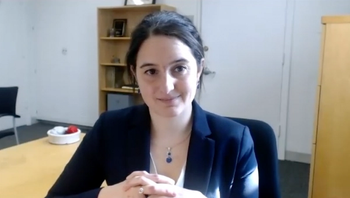
The staff neurologist at the Mellen Center for Multiple Sclerosis Treatment and Research at Cleveland Clinic outlined the positive feedback from patients when discussing telehealth. [WATCH TIME: 4 minutes]

The FDA-approved preventive therapy for migraine was well-tolerated, with low dropout rates, and showed sustained clinically meaningful outcomes across a 2-year stretch.
The director of the Chambers-Grundy Center for Transformative Neuroscience at the University of Nevada–Las Vegas discussed new data that highlights wasted expenditures from Alzheimer trials and the importance of understanding their impacts. [WATCH TIME: 3 minutes]
Expert clinicians offer their perspectives on transitional care in pediatric MS, a biomarker for SUDEP, and a novel approach to narcolepsy, among other topics.

A phase 3 trial has been initiated to further study masupirdine’s effect on agitation in patients with Alzheimer dementia.
After being granted FDA clearance, the medical device is approved for commercial distribution in the US for cognitive assessments in dementia studies.
The staff neurologist at the Mellen Center for Multiple Sclerosis Treatment and Research at Cleveland Clinic discussed the necessary data to support telemedicine’s integration into clinical care. [WATCH TIME: 4 minutes]

After demonstrating a significant effect in reducing the frequency of drop seizures, fenfluramine aims to build on its previous indication in rare epileptic disorders, as it is currently approved to treat Dravet syndrome.
The professor of neurology at the University of Colorado provided insight on the data that reinforced the relationship between B-cell depletion and improved outcomes using inebilizumab (Uplizna; Horizon Therapeutics). [WATCH TIME: 2 minutes]

The director of the Chambers-Grundy Center for Transformative Neuroscience at the University of Nevada–Las Vegas discussed his recently published research on the costs of developing treatments for Alzheimer disease.

Data show a clinical benefit via a reduction in brain amyloid as early as 3 months in the open-label extension period.

CBT-I treatment was found to provide an overall benefit in preventing incident and recurrent major depression in the patient population, highlighting the need for community-level screening for insomnia.

The staff neurologist in the Neurological Institute’s Mellen Center for Multiple Sclerosis Treatment and Research at Cleveland Clinic outlined the process of choosing a therapy for patients with multiple sclerosis. [WATCH TIME: 4 minutes]
Phase 3 study represented the highest research and development costs for Alzheimer disease treatments, with more than $24.1 billion incurred.
In addition to a well-tolerated safety profile, investigators observed a dose proportional increase in plasma pharmacodynamics in the MONARCH study cohort of 21 children and adolescents.
Annualized attack rate was reduced to 0.08 attacks per year after the first administration of inebilizumab, similar to those who were not previously exposed to rituximab.
As more organizations begin to adopt palliative care practices for patients with Parkinson disease, some may turn to the implemented plans of Cleveland Clinic as an example to follow.

The director of the Mellen Center for MS Treatment and Research at Cleveland Clinic discussed the possibility of using multiple DMTs to combat the effects of MS. [WATCH TIME: 3 minutes]

Here's what is coming soon to NeurologyLive®.