
Catch up on any of the neurology news headlines you may have missed over the course of the last month, compiled all into one place by the NeurologyLive team.
Catch up on any of the neurology news headlines you may have missed over the course of the last month, compiled all into one place by the NeurologyLive team.
Monthly focal seizure frequency was reduced from baseline at all 3 dose levels of the differentiated Kv7 potassium channel modulator, compared to placebo.
The assistant professor in the division of pulmonary, critical care, and sleep medicine at the University of Washington discussed patients’ response to the use of telehealth when treating sleep disorders. [WATCH TIME: 2 minutes]
Most attacks occurred within the first year of inebilizumab treatment, and nearly all participants were attack free in subsequent years following treatment initiation.
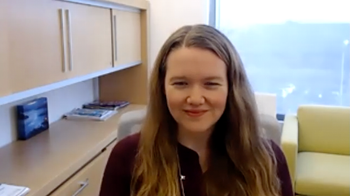
The director of the Women’s Alzheimer’s Movement Prevention Center at Cleveland Clinic discussed the role genetics play in Alzheimer disease and the importance for all-women trials. [WATCH TIME: 2 minutes]

The expert medical director at Roche provided context on recently published data, which showed prasinezumab’s positive impact in delaying motor progression in patients with Parkinson disease.

Data from 31,052 patients on the German Multiple Sclerosis Register were analyzed in the case-control study.

In the largest prospective study evaluating the Penumbra system, 87.4% of patients achieved postprocedure modified Thrombolysis in Cerebral Infarction scores between 2b to 3.

The neurologist at Wayne State University School of Medicine discussed recently published data describing inebilizumab’s role in producing rapid and sustained B-cell depletion in African Americans with NMOSD [WATCH TIME: 4 minutes]
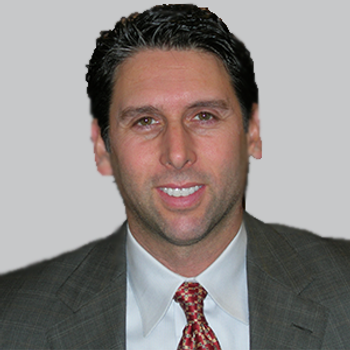
Application follows the results of 2 independent, identical phase 3 trials, ULTIMATE 1 and 2, which assessed the TG Therapeutics anti-CD20 antibody in more than 1000 patients.
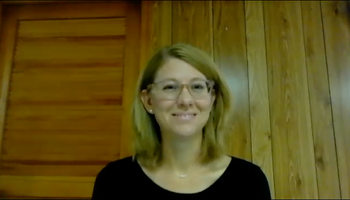
The registered dietician at Ann & Robert H. Lurie Children’s Hospital of Chicago discussed whether epilepsy type factors into the decision to use a given dietary approach. [WATCH TIME 2 minutes]
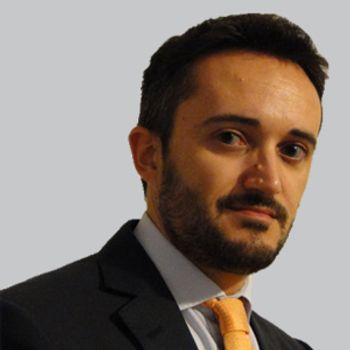
Investigators observed a high prevalence of cerebral microbleeds, cortical superficial siderosis, and history of intracerebral hemorrhage, all well-established surrogate markers of cerebral amyloid angiopathy severity.
Children with AADC receiving treatment developed motor function and cognitive skills that persisted through up to 10 years of follow-up.

During the double-blind treatment phase, rates of hypertension AEs were low for the placebo and erenumab 70- and 140-mg treatment groups, as well as during open-label erenumab treatment.
The registered dietician at Ann & Robert H. Lurie Children’s Hospital of Chicago provided commentary on the multidisciplinary efforts to tailor a patient’s diet. [WATCH TIME: 3 minutes]
Differences in response to treatment with levetiracetam (Keppra; UCB Pharma) among individuals with and without epileptiform activity who have Alzheimer disease warrant future investigations of other antiseizure medications in this population, according to study authors.
Following a study of patient experiences with telehealth in sleep medicine, the assistant professor in the division of pulmonary, critical care, and sleep medicine at the University of Washington shed light on the positive and negative aspects of its integration. [WATCH TIME: 4 minutes]

Here's what is coming soon to NeurologyLive.
Mitzi Joi Williams, MD, offered her perspectives on the patient and physician roles in MS care, the need for comprehensive care teams, resources for patients, and ongoing research.
In preclinical mouse models lacking both dystrophin and utrophin, treatment with an agent using the company's PN chemistry resulted in 100% survival at 40 weeks, setting up the therapy for this phase 1b2/a trial.
The assistant professor in the division of pulmonary, critical care, and sleep medicine at the University of Washington discussed key findings from a recent study on patient experience with telehealth encounters. [WATCH TIME: 3 minutes]
After 10-12 months of treatment, 51.2% of patients responded with a clinically meaningful reduction in drop seizures, while 25.3% of patients demonstrated a profound reduction.

Findings from studies of the neuromuscular treatments were presented by at the 2021 World Muscle Society Virtual Congress, September 20-24.
Neurology News Network for the week of October 2, 2021. [WATCH TIME: 4 minutes]
Patients with Duchenne muscular dystrophy receiving the treatment had a decline in Mid-level Performance of Upper Limb scores in the phase 2 trial of the cell therapy.
Take 5 minutes to catch up on NeurologyLive's highlights from the week ending October 1, 2021.

The expert medical director at Roche provided detail on results from the phase 2 PASADENA study presented at the 2021 MDS Virtual Congress. [WATCH TIME: 3 minutes]

David R. Lynch, MD, PhD, professor of neurology, University of Pennsylvania Perelman School of Medicine, discussed why omaveloxolone’s recent success speaks to the progress made within the FA treatment space.

The investigator at the Healey & AMG Center for ALS at Massachusetts General Hospital spoke to the data backing the investigational AMX0035 in the treatment of ALS. [WATCH TIME: 3 minutes]
Children and adults with migraine displayed significantly less REM sleep as a percentage of total sleep time than healthy individuals.