
Boston Scientific’s Vercise Gevia deep brain stimulation system labels will allow for clinical use of stimulation during full-body MRI in patients with Parkinson disease, with an improved battery.
Boston Scientific’s Vercise Gevia deep brain stimulation system labels will allow for clinical use of stimulation during full-body MRI in patients with Parkinson disease, with an improved battery.
The regulatory agency cited 2 concerns in the complete response letter: the risk of infections related to intravenous infusion ports and renal toxicity.

The director of the Sleep-Wake Disorders Center at Montefiore Medical Center will offer further insights on narcolepsy at the upcoming International Congress on the Future of Neurology, September 27-28, 2019 in New York City.

Those with an existing inventory of eletriptan hydrobromide 40 mg tablets, lots AR5407 and CD4565, should stop use and distribution, and quarantine immediately.
"Mind Moments," a podcast from NeurologyLive, brings you an exclusive interview with Reisa Sperling, MD.

The investigational candidate is the subject of a phase 3 study assessing efficacy and safety in adults with hATTR amyloidosis with transthyretin mutation.

The director of the MedStar Georgetown Headache Center and associate professor of neurology at MedStar Georgetown University Hospital discussed the ongoing efforts in drug development and what the ideal future may hold for migraine medicine.
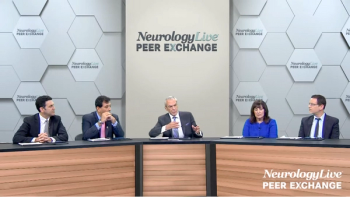

The associate chief of the MS division and professor of neurology at the University of Pennsylvania described the relationship between artificial intelligence and medicine, and how he sees it evolving in the future.

The professor of emergency medicine at the University of Wisconsin-Madison School of Medicine and Public Health discussed the impact that telemedicine, conducted in senior living communities, can have on emergency department visits for individuals with dementia.