Take 5 minutes to catch up on NeurologyLive®'s highlights from the week ending October 16, 2026.
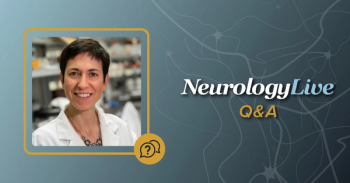
In honor of Down Syndrome Awareness Day, neurologist Elizabeth Head, PhD, discusses neurologic comorbidities, biomarker advances, and emerging precision medicine approaches in Down syndrome–associated Alzheimer disease.
Down syndrome represents one of the most well-established genetic risk factors for early-onset Alzheimer disease (AD), with nearly all individuals developing Alzheimer-related neuropathology by midlife. Despite this predictable biological trajectory, variability in clinical presentation, timing of cognitive decline, and comorbid neurologic conditions continues to pose challenges for clinicians managing this population.
In parallel, growing recognition of co-occurring neurologic and systemic conditions such as epilepsy, sleep apnea, and hypothyroidism has underscored the need for a more comprehensive, lifespan-based approach to care. As patients with Down syndrome live longer, neurologists are increasingly encountering complex clinical scenarios that require tailored diagnostic strategies and careful therapeutic decision-making.
Against this backdrop, research efforts have intensified around biomarker development, precision medicine, and early detection strategies, particularly as they relate to Alzheimer disease risk and progression in Down syndrome. In recognition of World Down Syndrome, held March 21, expert Elizabeth Head, PhD, Professor and Vice Chair of Research at the University of California, Irvine, discussed key neurologic considerations across the lifespan, emerging diagnostic tools, and opportunities for the neurology community to better engage with this growing patient population.
Elizabeth Head, PhD: This is one of our favorite days of the year, World Down Syndrome Day. It’s a global awareness day that’s been officially recognized by the United Nations since 2012. I did a little bit of research on this, and the idea is to advocate for the rights, inclusion, and well-being of people with Down syndrome.
So certainly, in the communities that I serve, including through research opportunities, they would love to see a lot more attention and help and guidance, especially from the clinical community, where they’re trying to find help as their loved ones are getting older and are vulnerable to Alzheimer disease. There’s clearly an unmet need. Celebrating this day with the neurology community is a wonderful thing.
Can you discuss the most common neurologic conditions clinicians should be prepared to manage in patients with Down syndrome?
There are several common co-occurring illnesses that are identified in people with Down syndrome that I think neurology should take into account when they’re meeting with that person.
Such things as hypothyroidism, which even though it’s an endocrine issue, it does affect cognition and neurologic function. Soaking sure that hypothyroidism is under control. We also see seizures. It’s kind of a bimodal phenomenon in people with Down syndrome. When they’re little babies, they have infantile spasms, and then that may go away, or it might develop into epilepsy. But later in life, usually heralding the onset of Alzheimer disease and dementia, we see new-onset seizures. So that should be a big red flag to a neurologist if they hear about an adult developing that suddenly.
We also struggle with depression in older adults that can affect neurologic function. There’s a very high prevalence of sleep apnea, and we know that repeated hypoxic incidents in the brain clearly can affect brain function. And of course, the big elephant in the room for those of us who are working with these older adults is the development of dementia, and that is a critical problem for these folks.
Very good questions. I can answer these in a very non-clinician type of approach, but my understanding is that the most common seizure presentation when we have older adults with Down syndrome are the myoclonic form, and the prevalence can be over 50%. So definitely something that is happening quite often.
In terms of management, I’m not entirely sure, but I do know that a lot of drugs that we prescribe for people with Down syndrome may be associated with more adverse events than what we see in neurotypical populations, just because of the number of different genes that are overexpressed that can affect multiple systems in the body.
As one example, for Alzheimer disease, there are commonly prescribed medicines, putting aside the immunotherapy approaches that are currently FDA approved, but there’s really very little evidence that those medicines help people with Down syndrome and can be associated with more side effects. So I think it’s a little bit more work for clinicians to carefully look at that literature, think about the response of a person with Down syndrome to some of these medicines, and consider that there might be multiple medications that person is on.
From a hypothesis standpoint, I don’t see why not, frankly. I think the whole field, certainly in my space with aging and Alzheimer disease in people with Down syndrome, the precision medicine approach is becoming a high priority.
We’ve been running this wonderful study called the Alzheimer Biomarker Consortium for Down Syndrome, where we’re trying to identify those biomarkers that signal the onset of dementia in a person with Down syndrome. For decades, we’ve really focused on group aggregated data, looking at the average age and when things happen in people with Down syndrome.
Now we’re realizing that there’s so much individual variability in terms of the expression of Alzheimer disease and the age of onset, and we’re trying to figure out what all those modifiers are. So, we’re pivoting to focusing a lot on individual trajectories and understanding what the signature of a person is who’s going to develop dementia in five years versus ten, or even not at all, because we do have a handful of people that don’t.
I think precision medicine is definitely the future of medicine, and that would apply also to new-onset seizures in the context of a brain that’s developing Alzheimer disease.
I think we’re getting it’s been great over the last five years, that there’s been a huge bolus of brand new plasma biomarkers that we’ve been exploring in the Down syndrome population. Being able to have a biomarker from blood is so much easier and less burdensome and more accessible than a lumbar puncture or PET scans.
Everything I’m seeing in the literature and from our own group is really signaling that p-tau217 is going to be incredibly helpful for these individuals. We have a scenario where virtually everybody with Down syndrome develops Alzheimer disease neuropathology by age 40. What is variable is the age of onset of dementia, which can be 10 to 15 years later.
For us, it’s going to be helpful to understand how these biomarkers tell us when and if a person is going to convert. That’s extremely powerful for clinical trial design, so we know who to screen for and who to include.
There are also large biomarker panels that include many different markers, and they really call out for AI and machine learning approaches to identify patterns. If you take it a step further, those profiles may also tell us about pathways that could be targetable, which could inform both trial design and treatment strategies.
Absolutely, the Alzheimer field is further along, and we have learned a lot from their work. At the same time, people with Down syndrome offer a unique opportunity because the neuropathology is essentially invariant. It’s always going to be there.
That gives us the ability to go backwards in time and identify the earliest signals of pathology accumulation. That’s something that is very difficult to do in the general population because of the wide age range for disease onset.
We also have important genetic insights in Down syndrome that could translate to the broader population, including pathways related to mitochondrial dysfunction, inflammation, and synaptic changes.
One of the biggest opportunities is in prevention studies. Since we know when neuropathology develops, we can consider starting interventions earlier, even in people in their 20s, and use biomarkers as outcome measures. That could provide insights that extend beyond this population.
What I would really like to emphasize is that the literature and knowledge about aging and Alzheimer disease in people with Down syndrome is evolving very rapidly. I would encourage the neurology community to stay engaged with this research and consider how it applies to their clinical practice.
I would also love to see more exposure during medical training to working with individuals with intellectual disabilities, including people with Down syndrome. This includes communication strategies and approaches to care.
I’ve spoken with many families, and one of the most common challenges they report is finding neurologists who specialize in Down syndrome. That highlights a real gap in care.
There are excellent resources available through organizations like the National Down Syndrome Society, and I would encourage clinicians to explore those. More broadly, I would love to see neurologists listen more closely to this community and become more involved, because there is a real opportunity to improve care and outcomes.
Transcript edited for clarity.