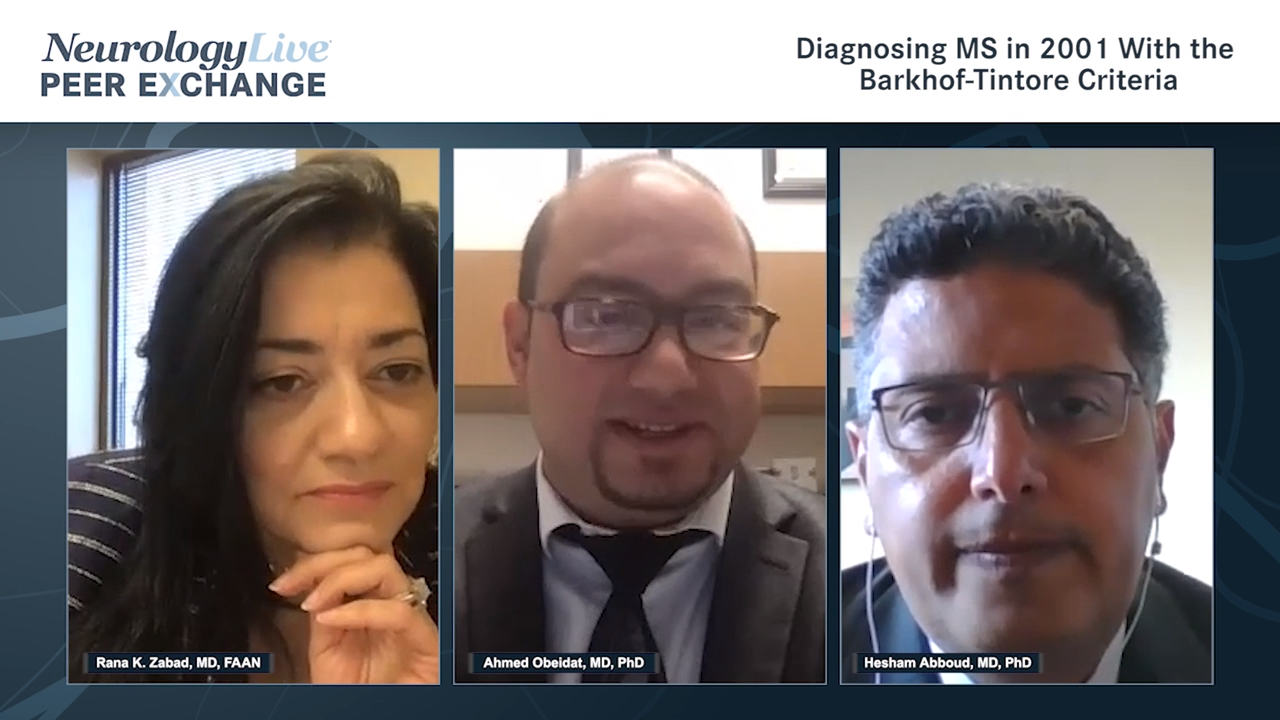
Join Ahmed Obeidat, MD, PhD; Hesham Abboud, MD, PhD; and Rana K. Zabad, MD, FAAN, for perspectives on how the diagnostic criteria for multiple sclerosis have evolved over time.
Advertisement
————————————
Panelists
Ahmed Obeidat, MD, PhD Assistant Professor, Department of Neurology, Neuroimmunology and Multiple Sclerosis; Director, Neuroimmunology and MS Fellowship Program, The Medical College of Wisconsin
Hesham Abboud, MD, PhD Assistant Professor of Neurology, Case Western Reserve University School of Medicine; Director, Multiple Sclerosis and Neuroimmunology Program, Staff Neurologist, Parkinson’s and Movement Disorders Center, University Hospitals, Cleveland Medical Center
Rana K. Zabad, MD, FAAN Professor, Department of Neurological Sciences, Chief, Multiple Sclerosis/Neuroimmunology Section, Program Director, Multiple Sclerosis Fellowship, University of Nebraska Medical Center
Key Learning Objectives
Virtual patient visits during COVID-19 when diagnosing MS
An epileptologist at Cleveland Clinic discussed findings from a recently published study of lifestyle interventions in epilepsy and why these approaches should complement rather than replace antiseizure medications.
Kiril Kiprovski, MD, clinical professor of neurology and director of the Division of Neuromuscular Medicine at NYU Langone, reviews the clinical clues, bedside tests, and referral considerations that help eye care clinicians identify Lambert-Eaton myasthenic syndrome in patients with fluctuating ptosis or diplopia.
IJMSC editor-in-chief, François Bethoux, MD, and colleagues cover idea generation, poster conversion, literature reviews, and peer review in a 4-part webinar series for MS clinicians.
Jeffrey Cohen, MD, professor of neurology and staff physician at the Cleveland Clinic Mellen Center for Multiple Sclerosis, discusses interim BREAKFREE-2 findings for zola-cel, a CD19-directed CAR T cell therapy, in relapsing and progressive MS.
Shadi Yaghi, MD, FAHA, Chair of Neurology at Hackensack Meridian Neuroscience Institute at Jersey Shore University Medical Center, discusses a new calculator that predicts stroke risk within 30 days of a procedure.
The clinical professor of neurology and pediatrics at The Ohio State University Wexner Medical Center discussed payer step therapy, earlier preventive treatment, and questions the updated guideline leaves open.