Robert Bowser, PhD, chief scientific officer at Barrow Neurological Institute, recaps his ALS Nexus presentation on TDP-43 biology, the emerging therapeutic landscape, and how cryptic peptide biomarkers could reshape ALS clinical trial design.
FDA approval of apitegromab introduces a muscle-targeting approach to SMA treatment, with phase 3 data demonstrating motor-function benefit when added to existing SMN2-directed therapies.
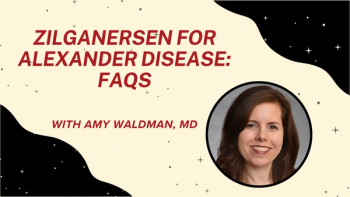
Amy Waldman, MD, Medical Director of the Leukodystrophy Center at Children's Hospital of Philadelphia, discusses zilganersen's mechanism, safety profile, clinical considerations, and what the first-ever approval for Alexander disease means for the broader leukodystrophy field.
Results recently published from the phase 2 HIMALAYA trial reported that SAR443820 did not slow functional decline, and was associated with more adverse events and treatment discontinuations in patients with ALS.
A new study reported that tremor and myoclonus affected nearly 7 in 10 patients with chronic inflammatory demyelinating polyneuropathy, with immunotherapy and beta-blockers showing potential benefit for symptom improvement.
The FDA has approved zilganersen (Zanvastro), the first Alexander disease treatment, giving clinicians a disease-modifying option and a clearer framework for counseling patients across the full age and phenotype spectrum.