Now Playing
Williams describes how the shift toward early use of high-efficacy therapy in relapsing MS has brought ofatumumab, an at-home, subcutaneous anti-CD20 agent, into treatment discussions at the start of the disease course.
High-efficacy treatment strategies have increasingly moved to the forefront of care for patients with relapsing multiple sclerosis (MS). Rather than relying on traditional escalation approaches that begin with lower-efficacy agents and advance only after breakthrough disease, many clinicians now favor initiating potent disease-modifying therapies earlier in the disease course. This shift is driven by growing evidence that early use of high-efficacy therapies can help reduce relapses, limit new MRI activity, and mitigate the risk of long-term disability.
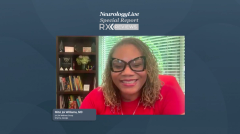
In this episode, Mitzi Joi Williams, MD, the founder and chief executive officer of Joi Life Wellness Group Multiple Sclerosis Center, outlines how this evolving treatment paradigm informs her approach to care for patients with relapsing MS. She describes the factors she considers when positioning high-efficacy options, including anti-CD20 therapies, within the broader disease-modifying therapy landscape. Williams emphasizes that the goal is to start effective treatment early to maximize the chance that patients can maintain function and live as normal a life as possible.
Williams also discusses where she places ofatumumab (Kesimpta; Novartis) among these high-efficacy options during initial treatment conversations. She notes that ofatumumab, a subcutaneous anti-CD20 therapy, is considered early in the decision-making process and highlights its at-home, self-administered dosing as a distinguishing feature relative to infusion-based therapies. These characteristics, she explains, can be particularly relevant for patients who require flexibility because of work, travel, or limited access to infusion centers, and are integrated into shared decision-making discussions with individuals early in their relapsing MS journey.