
Opinion|Videos|March 25, 2025
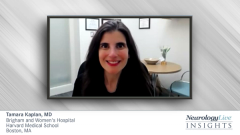
Sexual Problems and Neurogenic Bladder
Author(s)Tamara Kaplan, MD
Panelist discusses how managing bladder and sexual dysfunction in neurological care requires addressing access barriers, fostering open communication, recognizing symptom overlap, understanding medication adverse effects, and providing gender-specific care.
Advertisement
Episodes in this series
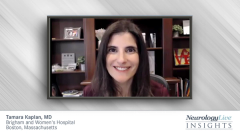
Video content above is prompted by the following:
- What are the common barriers patients face in seeking treatment for bladder issues?
- How can neurologists ensure their patients feel heard and understood when discussing bladder symptoms?
- How do bladder dysfunction and sexual problems overlap in patients with neurologic conditions?
- What should neurologists be aware of regarding iatrogenic sexual problems caused by neurological medications?
- How can neurologists address female sexual dysfunction in their patients?
Advertisement
Related to this article
Test your neurology knowledge with NeurologyLive®'s weekly quiz series, featuring questions on a variety of clinical and historical neurology topics. This week's topic is the history of neurology!

Although ocular signs in LEMS are typically mild and appear late, recognizing them alongside proximal weakness and autonomic symptoms can speed diagnosis and earlier detection of an associated lung cancer.
Take 5 minutes to catch up on NeurologyLive®'s highlights from the week ending October 30, 2026.

Shaida Khan, DO, associate professor of neurology at UT Southwestern Medical Center, reflected on a recent NeurologyLive Clinical Forum on generalized myasthenia gravis and discussed how FcRn and complement inhibitors are reshaping treatment algorithms for the disease.

The phase 3 TRONTIER 1 and 2 trials will test whether trontinemab's faster brain entry and rapid amyloid clearance translate into slower clinical decline in early Alzheimer disease.
Mind Moments®, a podcast from NeurologyLive®, brings you an exclusive interview with M. Scott Perry, MD. [LISTEN TIME: 15 minutes]
Sara Cuccurullo, MD, FAAPMR, and Talya Fleming, MD, FAAPMR, of Hackensack Meridian JFK Johnson Rehabilitation Institute, discuss the updated adult stroke rehabilitation and recovery guidelines and their implications for clinical practice.
Shadi Yaghi, MD, FAHA, Chair of Neurology at Hackensack Meridian Neuroscience Institute at Jersey Shore University Medical Center, discusses a new calculator that predicts stroke risk within 30 days of a procedure.
Advertisement
Advertisement
Trending on NeurologyLive - Clinical Neurology News and Neurology Expert Insights
1
Examining Trontinemab in Early Alzheimer Disease: The Phase 3 TRONTIER 1 and 2 Trials
2
Remibrutinib Phase 3 Results in RMS, Blood Pressure Variability Findings, and Updated Stroke Rehabilitation Guidelines
3
How MS Understanding Has Evolved: Activity, Impact, and Progression
4
Distinguishing Lambert-Eaton Myasthenic Syndrome From Myasthenia Gravis: Ocular and Systemic Clues
5