FDA approves once-daily oral tavapadon for Parkinson disease, a first-in-class D1/D5 partial agonist that improves motor function and ON time, with key safety warnings.
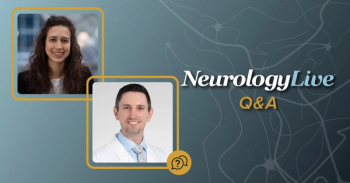
Doris D. Wang, MD, PhD, an associate professor of neurological surgery at UCSF, discusses a newly published adaptive deep brain stimulation system that adjusts in real time during walking and what it means for the future of Parkinson disease care.
Deep brain stimulation (DBS) has long been a cornerstone of Parkinson disease management, offering meaningful relief for tremor, rigidity, and slowness. But gait impairment and freezing of gait have remained stubbornly difficult to address with conventional continuous stimulation. A study published June 15, 2026, in Nature Medicine out of the University of California, San Francisco (UCSF) may represent a turning point, introducing an adaptive DBS system that detects neural signals tied to individual steps and adjusts stimulation in real time within fractions of a second.
Doris D. Wang, MD, PhD, is an associate professor of neurological surgery at UCSF and senior author of the study. Her work sits at the intersection of neuromodulation, movement disorders, and personalized medicine, and the research reflects years of effort to develop brain stimulation therapies that respond to what a patient is actually doing rather than delivering a fixed signal around the clock.
In this Q&A, Wang addressed why gait has been so difficult to treat with standard DBS and what makes the adaptive approach different. She discussed how the team identified personalized neural signatures tied to individual steps, what a larger clinical trial would need to look like, and how far away applications beyond gait, including speech and cognition, truly are.
Doris D. Wang, MD, PhD: Traditional DBS provides continuous stimulation, which is very effective for many Parkinson symptoms like tremor, rigidity, and slowness. But gait is different because walking is dynamic. The brain’s needs change from moment to moment and even from step to step. Our approach listens to the patient’s own brain signals during walking and times stimulation to specific phases of the gait cycle. Instead of delivering a constant signal, the device delivers stimulation when the brain is preparing or executing a step. We think this matters because gait is not 1 static motor state. It is a rhythmic, coordinated behavior. By aligning stimulation to that rhythm, adaptive DBS may better support the neural circuitry needed for walking.
The key was personalization. We did not assume that the same signal would work for every patient. We recorded brain activity from cortical and deep brain regions while each participant walked, then used machine-learning approaches to identify the neural features that best tracked that person’s stepping pattern.
Across participants, we found that step-related signals were present, but their exact frequency bands and anatomical locations varied. That variability is important. It tells us that gait control in Parkinson disease is highly individualized, and that future therapies will likely need to be tuned to each patient’s own neural physiology.
This is still early-stage work. Before recommending it broadly, we need a larger, prospective, blinded clinical trial with a more diverse group of patients and longer follow-up. We also need to understand which patients are most likely to benefit, how durable the effects are, and whether the system remains reliable in real-world environments outside the clinic.
For a therapy to work in daily life, it cannot depend on a laptop, a technician, or external computing equipment. The implanted device has to sense the brain signal, classify the gait phase, and adjust stimulation in real time while the person is moving naturally. That is technically challenging because implantable devices have limits on processing power, memory, and latency. We had to identify neural signatures that were not only biologically meaningful, but also simple and robust enough to be computed onboard the device in real time.
The analogy holds in the sense that both systems use sensing to guide stimulation. A cardiac pacemaker detects the heart’s rhythm and responds when needed. Similarly, adaptive DBS aims to detect relevant brain states and deliver stimulation in a more physiologic, responsive way. But the analogy breaks down because brain signals are much more complex than cardiac rhythms. The brain does not have 1 simple beat. It has distributed networks, multiple behaviors, and signals that vary across people and contexts. So the goal is similar, responsive therapy, but the neuroscience and engineering are far more complicated.
We are already seeing exciting progress in speech. Recent brain-computer interface studies have shown that neural activity can be decoded into speech with remarkable accuracy, highlighting the potential of these technologies to restore communication. Cognition is a harder challenge because it is less clearly defined. Unlike gait, which can be anchored to individual steps, or speech, which has a measurable output, cognitive processes such as attention, memory, and decision-making are distributed across multiple brain networks and vary with context. The biggest challenge is identifying reliable neural signatures that accurately reflect meaningful cognitive states. As our understanding of these brain networks improves, I think adaptive therapies for cognition will become increasingly feasible.
Transcript edited for clarity.