
Conference Coverage
Latest News
Oct 18, 2026 | Quiz
NeurologyLive® Brain Games: October 18, 2026

Nipocalimab in Myasthenia Gravis: Real-World Use, Long-Term Safety, and the Road Ahead
Oct 17, 2026

RGX-202 Meets Primary End Point in Phase 3 Duchenne Trial
Oct 16, 2026
NeurologyLive® Friday 5 — October 16, 2026
Oct 16, 2026

Levacetylleucine Shows Sustained Benefit at 3 Years in Niemann-Pick Disease
Oct 16, 2026

Advertisement
Shorts
1:48
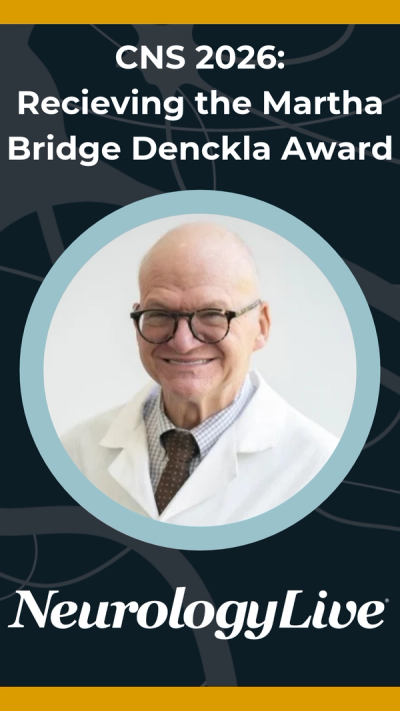
CNS 2026: Recieving the Martha Bridge Denckla Award
19 hours ago
by
Michael Msall, MD(+1 more)

1:01
Part 2: What's the Biggest Gap in Pediatric Neurology Care Right Now?
2 days ago
by
Bhooma Aravamuthan, MD, DPhil(+1 more)

1:26
Individualizing Device-Aided Therapies in Advanced Parkinson Disease
2 days ago
by
Hubert Fernandez, MD(+1 more)

1:30
Part 1: What's the Biggest Gap in Pediatric Neurology Care Right Now?
3 days ago
by
Hugh McMillan, MD(+1 more)

1:06
Using Personalized Risk Tools to Guide MS Treatment Conversations
4 days ago
by
Robert Bermel, MD

1:12
Translating AAIC 2026 Research Into Clinical Care
5 days ago
by
Heather Snyder, PhD(+1 more)

0:57
Measuring PIRA More Sensitively in the MS Clinic
5 days ago
by
Robert Bermel, MD

1:36
Advancing Women's Sleep Health Across the Lifespan
6 days ago
by
Anita Shelgikar, MD, MHPE(+1 more)

0:53
Why Pharmacogenomics Deserves More Attention in Multiple Sclerosis
6 days ago
by
Rebecca Cebull, CNP

1:51
RECAP: Neurology News Network - October 10th
7 days ago
by
Louie Pasculli
The G.L.O.B: Dr. Gatson's Living Oncology Brainstorm Column
This new column translates complex neuro-oncology topics into accessible, evidence-based insights.
Mind Moments Podcast
Mind Moments® is a biweekly podcast from NeurologyLive that brings you exclusive interviews with neurology experts.

NeuroVoices
NeuroVoices is weekly series of in-depth, exclusive Q&A conversations with a variety of experts in neurology.
Clinical Trial in Focus
Every month, an ongoing clinical trial in the landscape of neurology is featured, highlighting the design of the study.

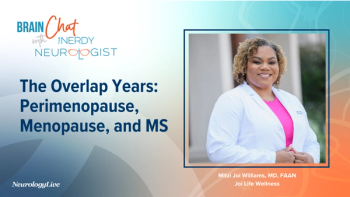
Brain Chat with the Nerdy Neurologist
Check out the "Brain Chat with the Nerdy Neurologist" podcast hosted by multiple sclerosis specialist Mitzi Joi Williams, MD.
Videos




Podcasts

Continuing Medical Education











Advertisement
All News
Advertisement
Adults with generalized myasthenia gravis who are anti-acetylcholine receptor antibody positive now have a second self-administration option for the complement inhibitor zilucoplan.
Mind Moments®, a podcast from NeurologyLive®, brings you an exclusive interview with Nicholas J. Maragakis, MD; and Jinsy Andrews, MD, MSc, FAAN, FANA. [LISTEN TIME: 23 minutes]
All 10 REVEAL Part A participants gained or regained at least 1 developmental milestone after a single intrathecal TSHA-102 dose, with no treatment-related SAEs reported.
Findings from the phase 3 METEOROID trial showed that satralizumab reduced the risk of relapse in patients with relapsing myelin oligodendrocyte glycoprotein antibody-associated disease.

The phase 1 ASCEND trial is testing a single intrathecal dose of the investigational AAV9 gene therapy INS1201 in young boys with Duchenne muscular dystrophy.

A quick-read roundup of 10 late-breaking abstracts from the 2026 MDS Congress, from phase 3 Parkinson disease readouts to long-term data in Huntington disease and Tourette syndrome, with the key results that matter for practice.

The designation follows phase 2 ClearMEMory data in which the oral NMDA receptor antagonist improved objective cognitive performance over placebo at 12 weeks.

An analysis of the phase 3 GEMZ trial presented at CNS 2026 showed that fenfluramine produced comparable seizure reductions and safety outcomes in children and adults with CDKL5 deficiency disorder.
Arimoclomol Plus Miglustat Shows Early, Sustained Slowing of Niemann-Pick Disease Type C Progression
A post hoc analysis of the phase 2/3 NPC002 trial presented at CNS 2026 showed that the benefit of arimoclomol plus miglustat in Niemann-Pick disease type C emerged as early as 3 months after treatment initiation.
The professor of neurology and program director of Neuromuscular Medicine at UC Irvine, discusses phase 3 NIMBLE trial findings for cemdisiran in generalized myasthenia gravis, including its novel siRNA mechanism, efficacy, and hospitalization data.
Advertisement

New 48-week phase 3 data show many patients with generalized myasthenia gravis reached minimal symptom expression on telitacicept, and most who did sustained it.

The Galassia trial will evaluate the safety and tolerability of intranasal cenegermin in about 60 children with spastic cerebral palsy across Italy.

New analyses found differences in functional outcomes over 2 years among patients aged 8 to 12 years treated with delandistrogene moxeparvovec, while separate findings characterized micro-dystrophin expression in children younger than 3 years.

The director of the Center for Neurological Restoration at Cleveland Clinic discusses when to transition beyond oral medication and considerations for selecting device-aided therapies in PD.

Here's some of what is coming soon to NeurologyLive® this week.
Advertisement
Advertisement
Trending on NeurologyLive - Clinical Neurology News and Neurology Expert Insights
1
ELEVIDYS Shows Functional Benefits in Patients With DMD, Dompé Launches Phase 2 Trial of Intranasal Nerve Growth Factor in CP, NeurologyLive Roundtable: The Road Ahead for Precision Medicine in MS
2
FDA Approves Autoinjector for Self-Administered Zilucoplan in Generalized Myasthenia Gravis
3
Satralizumab Reduces MOGAD Relapse Risk in Phase 3 METEOROID Trial
4
RGX-202 Meets Primary End Point in Phase 3 Duchenne Trial
5