
Take 5 minutes to catch up on NeurologyLive®'s highlights from the week ending September 19, 2025.

Isabella Ciccone, Content Associate, NeurologyLive®, has been with the team since September 2022. Follow her on X @iciccone7 or email her at iciccone@mjhlifesciences.com
Take 5 minutes to catch up on NeurologyLive®'s highlights from the week ending September 19, 2025.

Mind Moments®, a podcast from NeurologyLive®, brings you an exclusive interview with Michael Okun, MD. [LISTEN TIME: 14 minutes]

The latest McDonald Diagnostic Criteria revisions integrate imaging, biomarkers, and laboratory testing to create a more accurate, globally applicable framework for earlier diagnosis in MS.
At the 2025 STARS Research & Education Conference, the assistant professor of neurobiology and behavior at Stony Brook University discussed the current understanding of stuttering. [WATCH TIME: 5 minutes]
The CEO and cofounder of LSVT Global talked about how evidence-based therapies like LSVT LOUD and LSVT BIG can improve speech and movement in patients with Parkinson disease. [WATCH TIME: 5 minutes]
The director of the Adult Genetic Epilepsy Program at the University of Toronto shared “back-to-school” guidance on best practices in helping young patients with epilepsy transition to adult care.

New research revealed that mesenchymal stem cells from patients with secondary progressive multiple sclerosis may increase proinflammatory T-cell activities compared with those from healthy controls.

A recent study demonstrated that distinct aquaporin-4 changes in neuronal and glial synucleinopathies reflect different pathomechanisms and may warrant further investigation.
At AHS 2025, the assistant professor of neurology at Wake Forest Baptist Atrium Health discussed clinical interventions for women with enlarged breast who experience headache. [WATCH TIME: 4 minutes]
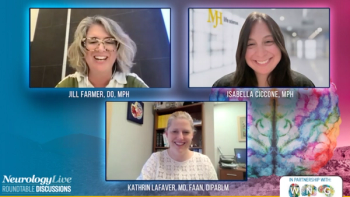
Movement disorder specialists from the Women Neurologists Group discussed supporting women in neurology through mentorship, innovation, and community connections. [WATCH TIME: 5 minutes]
Movement disorder specialists reflected on a decade of community, research, and career support in-person and online for members of the Women Neurologists Group. [WATCH TIME: 7 minutes]
Movement disorder specialists talked about how the 4th Annual Women in Neurology Conference will offer educational updates, career development, and networking opportunities for women across neurology. [WATCH TIME: 5 minutes]

Here's some of what is coming soon to NeurologyLive® this week.
Movement disorder specialists reflected on the community’s growth over the past decade in the Women Neurologists Group and shared program highlights of the group’s upcoming conference. [WATCH TIME: 5 minutes]
Take 5 minutes to catch up on NeurologyLive®'s highlights from the week ending September 12, 2025.
The director of the Neuroethics Program at Cleveland Clinic discussed ethics training, shared decision-making, and safeguards in guiding patients, families, and clinicians through complex clinical research decisions. [WATCH TIME: 3 minutes]

A new qualitative study of 20 patients with migraine explored and documented the prodrome phase, revealing some of their common symptoms and timing before headache onset.
The vice president of scientific engagement at the Alzheimer's Association shared data presented at AAIC 2025 from the phase 3 U.S. POINTER study among patients at risk for dementia. [WATCH TIME: 4 minutes]

At 48 weeks, patients treated with blarcamesine showed an 84.7% reduction in decline on the primary cognitive end point compared with placebo.
Catch up on any of the neurology news headlines you may have missed in August 2025, compiled into 1 place by the NeurologyLive® team.

Patients treated with RAP-219 had a 77.8% reduction in clinical seizures, with 24% achieving seizure freedom over 8 weeks, potentially supporting the agent’s advancement to phase 3 trials.
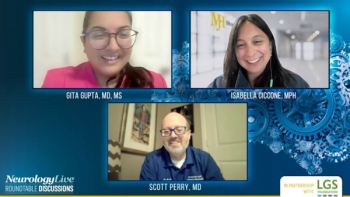
Experts noted that the Lennox-Gastaut Syndrome Foundation is a welcoming platform for collaboration, research advancement, and career development in the field. [WATCH TIME: 3 minutes]

New findings presented at the 2025 International Epilepsy Conference indicated that cenobamate may provide benefits beyond seizure control in patients with uncontrolled focal-onset seizures.
Experts discussed strategies to improve LGS clinical trial design, better understand comorbidities in rare epilepsies, and foster collaboration across stakeholders. [WATCH TIME: 5 minutes]
Experts discussed gaps in LGS research, including biomarker development, sleep assessment, and early intervention strategies to improve diagnosis and outcomes for patients. [WATCH TIME: 6 minutes]
Here's some of what is coming soon to NeurologyLive® this week.
Experts underscored that stakeholder collaboration, including clinicians, caregivers, and industry partners, can play a critical role in advancing understanding and management of LGS. [WATCH TIME: 3 minutes]
Experts discussed initiatives to standardize data collection, expand registries, and empower families in advancing care for Lennox-Gastaut syndrome. [WATCH TIME: 3 minutes]
Take 5 minutes to catch up on NeurologyLive®'s highlights from the week ending September 5, 2025.
Experts highlighted the need for clearer treatment sequencing and improved transition of care for patients with LGS from childhood to adulthood. [WATCH TIME: 3 minutes]