An MDS 2026 plenary speaker discusses the evolving role of infusion therapies, deep brain stimulation, and focused ultrasound in Parkinson disease, including when to consider device-aided therapies and how treatment selection can be individualized.
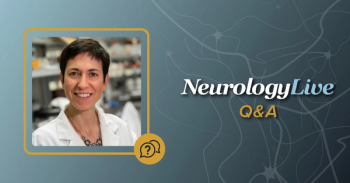
Sara Cuccurullo, MD, chair, vice president, and medical director, Hackensack Meridian JFK Johnson Rehabilitation Institute, discussed emerging evidence supporting structured cardiovascular rehabilitation after stroke and ongoing efforts to expand access through potential Medicare policy changes.
For many stroke survivors, recovery extends far beyond hospital discharge. Functional limitations, recurrent stroke risk, and barriers to long-term rehabilitation can continue to affect quality of life months or even years after the initial event, which highlights the need for strategies that support sustained recovery. To expand on this concept, NeurologyLive® reached out to stroke expert Sara Cuccurullo, MD, chair, vice president, and medical director, Hackensack Meridian JFK Johnson Rehabilitation Institute.
In first part of this discussion, Cuccurullo outlined research evaluating whether structured cardiovascular rehabilitation programs, similar to those used in cardiac disease, could improve functional outcomes, reduce mortality, and potentially reshape poststroke care through future Medicare coverage expansion. She also discussed the broader implications of these findings for long-term recovery, recurrent stroke prevention, and access to rehabilitation services nationwide.
Sara Cucurrullo, MD: Stroke Awareness Month is observed every May. It's an annual campaign put out by clinicians and professionals aimed at educating the public about stroke prevention, recognizing the warning signs, and emphasizing the critical need for expedient emergency care for stroke patients.
As everyone well knows, a stroke occurs when blood flow to the brain is blocked, that would be an ischemic stroke, or when a blood vessel ruptures, which is a hemorrhagic stroke. Without oxygen, nearly 2 million brain cells die every minute. Rapid treatment can really make the difference between a full recovery and permanent disability, which would significantly impact function and quality of life. That is what our specialty is about, making sure the patient's quality of life is maximized.
Time is brain, and the public needs to know that. They cannot afford to wait. If you see a loved one showing symptoms and they're saying, "Let's just wait and see if it gets better — I can't move my arm, but maybe it just fell asleep" — no. When you see the symptoms of a stroke, you need to act immediately.
Organizations like the American Stroke Association want the public to know that, and they've created the mnemonic BE-FAST to ensure patients are mobilized as quickly as possible. Most clinicians know that BE-FAST breaks down as follows: B is for balance, balance is altered. E is for eyes, the patient has diplopia, double vision, or blurred vision of some kind. F is for face — there is a unilateral facial droop. A is for arm, there is hemiplegia of the arm and potentially the leg on one side. S is for speech, they develop dysarthria, meaning they can't speak, or they have word-finding difficulty. And T is for time, as soon as you see these signs, you need to call 911 immediately. They should go via EMS, because EMS will get care started right in the field, as opposed to trying to take them to the ER yourself.
Stroke Awareness Month also serves as an opportunity to educate the public about preventative care, risk management, and post-acute rehabilitation, which is my specialty and my area of research. Once a patient has a stroke and is brought to the ER and treated in the acute care hospital, about 22% of stroke patients are sent to acute rehabilitation hospitals because their needs are so significant. Others are sent home for outpatient rehabilitation care.
My research is on the Stroke-HEART Trials, based at Hackensack Meridian JFK Johnson Institute. This is the home of innovative, original research being done nowhere else in the country. I'm a principal investigator, along with Dr. Talya Fleming, MD, and Dr. Hayk Petrosyan, PhD.
The research focuses on the known benefits of cardiac rehabilitation for patients who have vascular disease of the heart. The foundation of this research comes from findings on cardiac patients, those with coronary artery disease, myocardial infarction (MI), or chronic heart failure, who were shown to benefit from a comprehensive program of 36 sessions of aerobic exercise with some ancillary services. This work came out of the Mayo Clinic. It showed a 45% reduction in all-cause mortality over five years.
People who had a stent placed or experienced a heart attack, if they completed this intensive program within a certain time period afterward, had a 45% reduction in all-cause mortality. Quite honestly, if there were a pill that could reduce your mortality after a heart attack by 45%, whoever developed that medication would probably win the Nobel Prize.
That finding, which occurred over 20 to 25 years ago, is well documented in the literature. Medicare fully funds that program, and cardiac patients benefit tremendously from it. Peripheral vascular disease patients also had research done on them because they have blockages in the vessels in their legs and now have a program called the STEP program, which is a cardiac rehab program tailored to them as well.
But our concern here at JFK Johnson — and nationally — is: what about our stroke patients? They have vascular disease of the vessels in their brain, yet they have no comprehensive program of this kind. They only receive a capped amount of neuro-rehabilitation, which includes PT, OT, and speech therapy, and it's limited by CMS funding — approximately $2000 combined for PT and speech, and about $2000 for occupational therapy. But they don't receive this four-month comprehensive program of aerobic exercise. And we kept asking: why?
Why are stroke patients, who also have vascular disease, just of the brain, not benefiting from this? There has been no research done on this population to prove that it works. And because stroke patients have hemiplegia, many people believed they couldn't get on a treadmill, couldn't ride a bike, couldn't do what cardiac patients do, because of their functional deficits.
So here at JFK Johnson, we started the Stroke-HEART Trials back in 2015, with grant funding. We provided 36 sessions, 4 months worth of medically monitored interval cardiovascular training. We also provided nutritional support for risk management and risk factor education, psychological support, smoking cessation classes, dietary guidance, and a home exercise program.
As we conducted the research, we partnered with a company called NuStep, given that our patients have hemiplegia. We found that by placing them on recumbent cross-training bikes — with a hand mitt for their affected arm and a thigh cuff with a foot strap for the hemiplegic side — they were able to use their stronger side to escalate their heart rate into the moderate intensity range. They were able to do interval cardiovascular training for 30 minutes to an hour, 36 times over the course of that four-month period, beginning 30 to 45 days post-stroke.
The results were remarkable. In a paper we published in 2019 documenting our first group of patients, we found a significant reduction in one-year all-cause mortality, an improvement in cardiovascular capacity, and quite dramatic improvements in functional status. Patients showed increases in mobility, ADL function — activities of daily living — and cognitive status, all measured using the AM-PAC, which is the Activity Measure for Post-Acute Care. Across every measure, stroke patients who completed the program far outperformed their matched controls in functional independence.
Fewer of them died within that first year, and we found a tremendous reduction in all-cause mortality. The research was presented in multiple venues, and the paper we published in the Journal of Physical Medicine and Rehabilitation received the Excellence in Research Writing Award for most impactful article of the year.
Transcript was edited for clarity.