





Headache and Migraine
Latest News
Advertisement
Latest Videos







Shorts

0:40
AAIC 2026: Characterizing Midlife Brain Health in Retired Soccer Players
4 months ago
by
Caleigh G. Lynch, MSc(+1 more)

1:13
AHS 2026: Real-World INFUSE Trial of Eptinezumab in Migraine
5 months ago
by
Amaal J. Starling, MD(+1 more)

1:32
Overviewing 3-Year Data of Huntington Agent AMT-130
6 months ago
by
Marco Meglio(+1 more)
1:32
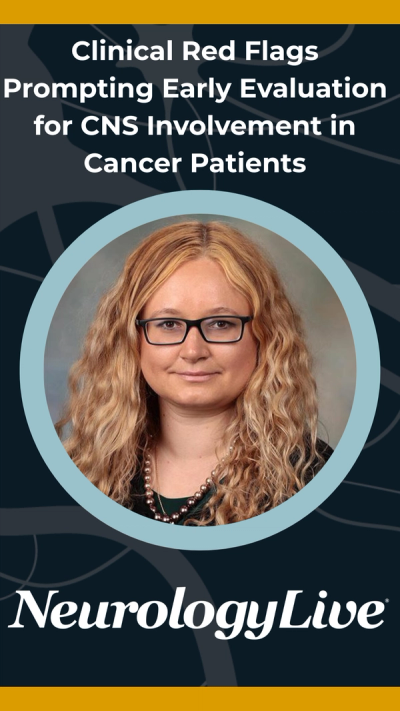
Clinical Red Flags Prompting Early Evaluation for CNS Involvement in Cancer Patients
6 months ago
by
Maya Hrachova, DO(+1 more)

1:16
Communicating Evidence-Based Information to Scientific Communities
6 months ago
by
Bill Nye

1:05
AAN 2026: Notable Advances and Overused Buzzwords
7 months ago
by
Johan Luthman, PhD

1:33
Reasons Behind Eptinezumab's Effectiveness in Treatment-Resistant Migraine
8 months ago
by
Marco Meglio(+1 more)

1:21
Migraine Care Needs of the LGBTQIA+ Patient Population
a year ago
by
Anna Pace, MD(+1 more)

1:10
The Future of Migraine Treatment
a year ago
by
Patricia Pozo-Rosich, MD, PhD(+1 more)
1:10
Understanding Adolescent Migraine Suffering
a year ago
by
Patricia Pozo-Rosich, MD, PhD(+1 more)
Podcasts





CME Content


Advertisement
More News

Bruce Ovbiagele, MD, MSc, MAS, MBA, founding president of the Society for Equity Neuroscience (SEQUINS) reflects on Black History Month, SEQUINS initiatives, and the policy and guideline reforms needed to advance brain health equity in 2026 and beyond.

New data suggest that prophylactic treatment with anti-calcitonin gene-related peptide monoclonal antibodies may be associated with improvements in sleep quality and daytime sleepiness among patients with migraine.

Fremanezumab, a humanized monoclonal antibody that selectively targets calcitonin gene–related peptide, demonstrated efficacy in children and adolescents with episodic migraine in full data release.
ACP urged to drop “provider” for physicians, warning it blurs expertise, commodifies care, and erodes professional identity, trust, and the patient relationship.

A Phase 1 study in healthy lactating women found that a single 10‑mg dose of zavegepant nasal spray was generally safe, well tolerated, and resulted in minimal infant exposure through breast milk.

Phase 2 BREAKTHROUGH Data Released, Liriglutide Effective in Obesity-Related Migraine, FDA Approves Generic Glatiramer Acetate Injection
Published: | Updated:
Neurology News Network for the week ending January 10, 2025. [WATCH TIME: 4 minutes]

Follow NeurologyLive's conference journey in 2026, highlighting advancements in diagnostics, treatments, and multidisciplinary care across multiple neurological conditions.

Explore anticipated FDA decisions on groundbreaking neurology drugs in 2026, shaping treatment options for various neurologic conditions.
As part of NeurologyLive®'s Year in Review, take a look at our top expert interviews on the latest advances and use of artificial intelligence in neurology care.
NeurologyLive® Year in Review 2025: Top trending Migraine Trials
Published: | Updated:
As part of NeurologyLive®'s Year in Review 2025, we've compiled some of the top trending migraine trials.
These were the most impactful FDA approval stories that were part of our coverage in 2025, brought to you as part of NeurologyLive's Year in Review.
Neurology News Network for the week ending December 27, 2025. [WATCH TIME: 4 minutes]
A look back at clinician-led features from 2025 that examine the questions, data, and decisions shaping neurologic care.
Explore the transformative buzzwords in neurology for 2025, highlighting advancements in AI, gene therapy, personalized treatment, and neuroplasticity.

GLP-1 research in neurology is on the rise, with several pivotal studies lending insights into their role.

New data from a phase 2b trial showed that elismetrep showed favorable efficacy and safety outcomes compared with placebo, supporting its continued development as a potential acute migraine therapy.

Baptist Health Brain & Spine enhances its neurology leadership with Peter Abdelmalik, MD, focusing on patient care, education, and operational efficiency.

Over the first 3 months of treatment, over 60% of patients with migraine treated with galcanezumab attained at least a 50% reduction in monthly migraine or headache days.

A new study confirms the Nerivio REN wearable provides long-term, drug-free migraine relief without dosage increases, ensuring consistent effectiveness over 3 years.

Despite not meeting its primary efficacy end point for preventive treatment of episodic migraine, onabotulinumtoxinA was well tolerated and safety outcomes were consistent with prior data.

A new study reveals that early treatment with the Nerivio wearable significantly enhances migraine relief, doubling efficacy outcomes for patients.

A physician assistant who specializes in neurology previewed her upcoming presentation on evaluating patients with headache at the 2025 Baptist Miami Neuroscience Symposium.

Evaluating Combined Supraorbital and Occipital Neuromodulation in Resistant Migraine Trial: The RECLAIM Study
Published: | Updated:
Salvia BioElectronics’ PRIMUS system, currently being assessed in a clinical trial, delivers subcutaneous occipital and supraorbital nerve stimulation for patients with resistant migraine.

In a recent randomized clinical trial, a smartphone-based relaxation technique provided to patients presenting to the emergency department was associated with reduced migraine-related disability.

At AHS 2025, Eric Baron, DO, headache specialist at Cleveland Clinic, presented findings from a cross-sectional survey that examined psychedelic use among Canadian patients with migraine and cluster headache.
Advertisement
Advertisement
Trending on NeurologyLive - Clinical Neurology News and Neurology Expert Insights
1
FDA Approves Factor XIa Inhibitor Asundexian for Secondary Stroke Prevention
2
FDA Investigates Confirmed Insertional Oncogenesis With Spinal Muscular Atrophy Gene Therapy
3
T-Cell Engager Cizutamig Shows Early Efficacy Signal in Generalized Myasthenia Gravis
4
Examining High-Dose Influenza Vaccination and Alzheimer Disease Risk
5