




Headache and Migraine
Latest News

Advertisement
Video Series

Latest Videos




Shorts

1:09
What Should Neurologists Know About Cluster Headache: Part 2
a day ago
by
Minali Nigam, MD(+1 more)

1:13
What Should Neurologists Know About Cluster Headache: Part 1
2 days ago
by
Jennifer Fokas, MD(+1 more)

1:35
The Missing Step Between iPSC Drug Screening and Clinical Trials
12 days ago
by
Ahmet Hoke, MD, PhD

0:35
What iPSC Models Miss About the Nervous System
13 days ago
by
Ahmet Hoke, MD, PhD

1:28
Building a Smarter Drug Development Pipeline for Neuropathy
13 days ago
by
Ahmet Hoke, MD, PhD

0:48
Why Animal Models Still Matter in Neuropathy Research
14 days ago
by
Ahmet Hoke, MD, PhD

1:08
Preventative Vs. Acute Migraine Therapy
22 days ago
by
Mitzi Joi Williams, MD

1:00
Botox Misconceptions Everyone Believes
a month ago
by
Mitzi Joi Williams, MD
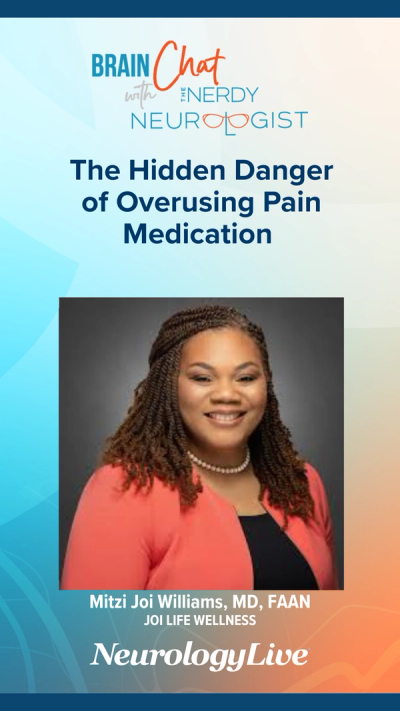
1:08
The Hidden Dangers of Overusing Pain Medication
a month ago
by
Mitzi Joi Williams, MD

0:40
AAIC 2026: Rethinking Patient-Centered Neurology Care Today
2 months ago
by
Mirnova Ceide, MD, MS(+1 more)
Podcasts



CME Content










Advertisement
More News

Findings from a new study showed that over 90% of counties in the United States lacked a UCNS-certified headache specialist, with access lowest in socioeconomically disadvantaged and rural areas.

Catch up on any of the neurology headlines you may have missed in August 2026, compiled into 1 place by the NeurologyLive® team.

The updated guideline offers evidence-graded recommendations on when to start migraine prevention, which medications to choose, and how to manage special populations.

The FDA has granted De Novo Authorization to Avulux's optical-filter lenses to reduce light sensitivity in patients aged 12 years or older with episodic migraine.

A narrative review highlighted the limited pediatric-specific evidence supporting headache treatment after stroke and in cerebrovascular disorders, emphasizing consideration of vascular pathophysiology, cerebral perfusion, and collateral flow when selecting therapies.
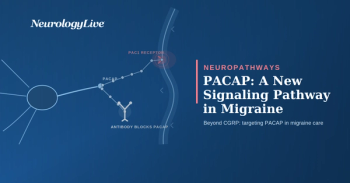
Clinician author Kevin Chang, PharmD, writes about PACAP as a distinct, druggable migraine pathway independent of CGRP, offering a promising option for patients who don't respond to current therapies.
Six FDA PDUFA decisions this fall could reshape care in Alzheimer disease, DMD, Sanfilippo syndrome, Alexander disease, and SMA, here's what clinicians need to know about the data behind each.

Cleveland Clinic experts Trishul Kapoor, MD, and Osama Kashlan, MD, discussed how advanced diagnostics, basivertebral nerve ablation, endoscopic surgery, and neuromodulation unite to ease chronic back pain.

In a cross-sectional analysis of more than 1700 participants, plasma CGRP concentrations did not distinguish individuals with migraine from healthy controls, suggesting limited utility as a standalone diagnostic biomarker.

AbobotulinumtoxinA met its primary end point in both the E-BEOND and C-BEOND phase 3 trials, marking the first time a botulinum toxin has demonstrated statistically significant efficacy in episodic migraine prevention.

Phase 2b PROCEED trial results and a phase 1 drug interaction study for bocunebart were presented at AHS 2026, collectively strengthening the drug's development case as a first-in-class PACAP-targeting therapy.

European regulators have expanded atogepant’s label to include acute migraine treatment, supported by phase 3 data showing significant pain freedom and sustained relief versus placebo.

A retrospective study presented at AAN 2026 suggested that short-course methylprednisolone tapers may reduce headache severity and daily headache burden in patients with acute posttraumatic headache after mild traumatic brain injury.

Kristine Yaffe, MD, distinguished professor at UCSF and SEQUINS Hall of Fame honoree, discusses dementia prevention, modifiable risk factors, and ongoing disparities in brain health and cognitive aging.

As a 2026 SEQUINS Hall of Fame honoree, James Galvin, MD, MPH, reflected on advancing equitable dementia care, culturally relevant cognitive assessment, and improving brain health outcomes across diverse communities.

SEQUINS Hall of Fame: George Howard, DrPH, on Understanding Geographic and Racial Stroke Disparities
As a 2026 SEQUINS Hall of Fame honoree, George Howard, DrPH, commented on decades of stroke disparities research, the impact of the REGARDS study, and why future efforts must focus more directly on upstream risk factors.

As a 2026 SEQUINS Hall of Fame honoree, Gretchen L. Birbeck, MD, MPH, reflected on her decades-long work advancing equity in global neurologic care and improving epilepsy outcomes in resource-limited settings.

As a 2026 SEQUINS Hall of Fame honoree, Edwin Trevathan, MD, MPH, reflects on global pediatric neurology, community-based care delivery, and the ongoing effort to reduce neurologic health inequities worldwide.

Phase 2/3 LIBRA trial design evaluates basimglurant, an mGluR5 modulator, using a randomized withdrawal approach to assess durability of pain control and safety in adults with trigeminal neuralgia.

A recently presented analysis at AAN 2026 reported comparable safety and tolerability between atogepant and erenumab, with atogepant demonstrating a greater likelihood of early response at 1 month in adults with migraine.

Phase 3 data presented at AAN 2026 show fremanezumab significantly reduces monthly migraine days in pediatric episodic migraine but not chronic migraine.

Single-dose adjunctive dexamethasone did not significantly lower 48-hour relapse rates or improve functional outcomes in children and adolescents treated for acute migraine in the emergency department.

A data-driven slideshow for National Public Health Week highlights the global burden of neurologic diseases, featuring key statistics on prevalence, disability, and workforce gaps across major conditions.

Take 5 minutes to catch up on NeurologyLive®'s highlights from the week ending March 13, 2026.

A recently published position statement from the American Headache Society recommends annual screening for migraine in girls and women, highlighting the potential role of tools like the ID Migraine screener to improve identification.
Advertisement
Advertisement
Trending on NeurologyLive - Clinical Neurology News and Neurology Expert Insights
1
Ulefnersen Meets Primary End Point in Phase 3 FUSION Trial for FUS-ALS
2
Xenon Submits New Drug Application for Azetukalner as Treatment for Focal Seizures
3
FDA Approves Levacetylleucine for Ataxia-Telangiectasia
4
Gefurulimab Recommended for EU Approval in Generalized Myasthenia Gravis
5