




Headache and Migraine
Latest News
Advertisement
Latest Videos




Shorts

0:35
What iPSC Models Miss About the Nervous System
2 months ago
by
Ahmet Hoke, MD, PhD

1:28
Building a Smarter Drug Development Pipeline for Neuropathy
2 months ago
by
Ahmet Hoke, MD, PhD

0:48
Why Animal Models Still Matter in Neuropathy Research
2 months ago
by
Ahmet Hoke, MD, PhD

1:08
Preventative Vs. Acute Migraine Therapy
2 months ago
by
Mitzi Joi Williams, MD

1:00
Botox Misconceptions Everyone Believes
2 months ago
by
Mitzi Joi Williams, MD

1:08
The Hidden Dangers of Overusing Pain Medication
2 months ago
by
Mitzi Joi Williams, MD

0:40
AAIC 2026: Rethinking Patient-Centered Neurology Care Today
4 months ago
by
Mirnova Ceide, MD, MS(+1 more)

0:58
RECAP: Neurology News Network - July 12th
4 months ago
by
Louie Pasculli
0:40
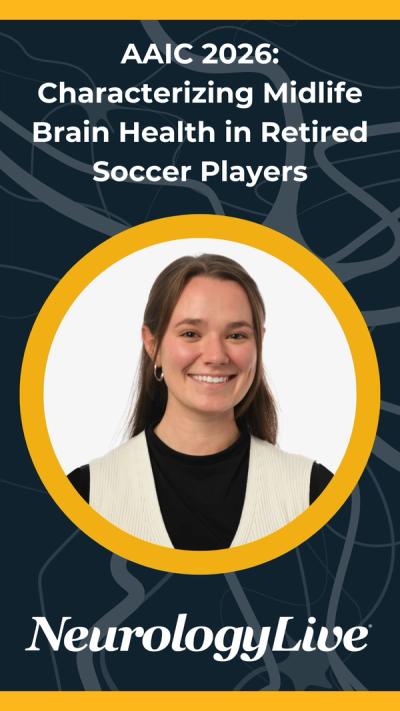
AAIC 2026: Characterizing Midlife Brain Health in Retired Soccer Players
4 months ago
by
Caleigh G. Lynch, MSc(+1 more)

1:13
AHS 2026: Real-World INFUSE Trial of Eptinezumab in Migraine
4 months ago
by
Amaal J. Starling, MD(+1 more)
Podcasts


CME Content







Advertisement
More News

The associate professor of neurology at Mayo Clinic College of Medicine highlighted emerging migraine targets, repurposed therapies, and growing emphasis on patient-reported outcomes beyond monthly migraine days. [WATCH TIME: 3 minutes]

Phase 2b PROCEED trial results and a phase 1 drug interaction study for bocunebart were presented at AHS 2026, collectively strengthening the drug's development case as a first-in-class PACAP-targeting therapy.

European regulators have expanded atogepant’s label to include acute migraine treatment, supported by phase 3 data showing significant pain freedom and sustained relief versus placebo.

A retrospective study presented at AAN 2026 suggested that short-course methylprednisolone tapers may reduce headache severity and daily headache burden in patients with acute posttraumatic headache after mild traumatic brain injury.

Kristine Yaffe, MD, distinguished professor at UCSF and SEQUINS Hall of Fame honoree, discusses dementia prevention, modifiable risk factors, and ongoing disparities in brain health and cognitive aging.

As a 2026 SEQUINS Hall of Fame honoree, James Galvin, MD, MPH, reflected on advancing equitable dementia care, culturally relevant cognitive assessment, and improving brain health outcomes across diverse communities.

SEQUINS Hall of Fame: George Howard, DrPH, on Understanding Geographic and Racial Stroke Disparities
As a 2026 SEQUINS Hall of Fame honoree, George Howard, DrPH, commented on decades of stroke disparities research, the impact of the REGARDS study, and why future efforts must focus more directly on upstream risk factors.

As a 2026 SEQUINS Hall of Fame honoree, Gretchen L. Birbeck, MD, MPH, reflected on her decades-long work advancing equity in global neurologic care and improving epilepsy outcomes in resource-limited settings.

As a 2026 SEQUINS Hall of Fame honoree, Edwin Trevathan, MD, MPH, reflects on global pediatric neurology, community-based care delivery, and the ongoing effort to reduce neurologic health inequities worldwide.

Phase 2/3 LIBRA trial design evaluates basimglurant, an mGluR5 modulator, using a randomized withdrawal approach to assess durability of pain control and safety in adults with trigeminal neuralgia.

A recently presented analysis at AAN 2026 reported comparable safety and tolerability between atogepant and erenumab, with atogepant demonstrating a greater likelihood of early response at 1 month in adults with migraine.

Phase 3 data presented at AAN 2026 show fremanezumab significantly reduces monthly migraine days in pediatric episodic migraine but not chronic migraine.

Single-dose adjunctive dexamethasone did not significantly lower 48-hour relapse rates or improve functional outcomes in children and adolescents treated for acute migraine in the emergency department.

A data-driven slideshow for National Public Health Week highlights the global burden of neurologic diseases, featuring key statistics on prevalence, disability, and workforce gaps across major conditions.

Take 5 minutes to catch up on NeurologyLive®'s highlights from the week ending March 13, 2026.

Mind Moments®, a podcast from NeurologyLive®, brings you an exclusive interview with AAN President Natalia Rost, MD, MPH. [LISTEN TIME: 16 minutes]

The associate professor of neurology at Mayo Clinic College of Medicine discussed how migraine trials can evolve to better incorporate patient-centered outcomes that reflect daily function and quality of life. [WATCH TIME: 3 minutes]

A recently published position statement from the American Headache Society recommends annual screening for migraine in girls and women, highlighting the potential role of tools like the ID Migraine screener to improve identification.
Take 5 minutes to catch up on NeurologyLive®'s highlights from the week ending March 6, 2026.
Mind Moments®, a podcast from NeurologyLive®, brings you an exclusive interview with Amaal Starling, MD, FAHS, FAAN. [LISTEN TIME: 16 minutes]

The associate professor of neurology at Mayo Clinic provided a breakdown of the real-world eptinezumab data from INFUSE and its implications for early, robust migraine intervention after CGRP failure.

Real-world INFUSE results show IV eptinezumab boosts good days and cuts monthly headache days for hard-to-treat migraine patients.
The associate professor of neurology at Mayo Clinic College of Medicine breaks down new real-world INFUSE findings and explains how clinicians should interpret the effectiveness of intravenous eptinezumab in patients with refractory, high-burden migraine. [WATCH TIME: 5 minutes]
Take 5 minutes to catch up on NeurologyLive®'s highlights from the week ending February 27, 2026.

In this Q&A, migraine expert Deena Kuruvilla, MD, FAAN, provided clinical context on the phase 4 COMPEL trial testing onabotulinumtoxinA as a preventive treatment of chronic migraine in diverse racial groups.
Advertisement
Advertisement
Trending on NeurologyLive - Clinical Neurology News and Neurology Expert Insights
1
Examining Trontinemab in Early Alzheimer Disease: The Phase 3 TRONTIER 1 and 2 Trials
2
Remibrutinib Phase 3 Results in RMS, Blood Pressure Variability Findings, and Updated Stroke Rehabilitation Guidelines
3
How MS Understanding Has Evolved: Activity, Impact, and Progression
4
Distinguishing Lambert-Eaton Myasthenic Syndrome From Myasthenia Gravis: Ocular and Systemic Clues
5