






MS and Demyelinating Disorders
Latest News
Advertisement
Latest Videos








CME Content






Advertisement
More News

The staff neurologist at the Mellen Center for MS at Cleveland Clinic discussed this challenge with misdiagnosis and how it impacts the clinicians who are treating these patients.

A pair of poster presentations regarding the use of cladribine in multiple sclerosis have shown that No Evidence of Disease Activity-3 status can be sustained up to 4 years, without any new safety signals appearing.

Data have suggested that neurologists treating MS have clearly and persistently deviated from the readily available evidence regarding DMT use, all while costs continue to rise and payers intensify efforts to control them.

A late-breaking poster has suggested that the use of disease-modifying therapy is safe in patients with MS over the age of 65, as well as that disability burden and relapse rates may be lower than believed.

The professor of medicine and community health sciences at the University of Manitoba spoke about the effects of comorbidity on diagnosis, outcomes, and treatment in multiple sclerosis.
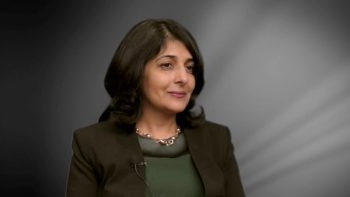
The professor of neurology at Harvard Medical School provided some insight into her experience with treating pediatric patients with MS.

The pediatric critical care medicine attending physician in the Department of Anesthesiology and Critical Care Medicine at the Children’s Hospital of Philadelphia spoke about how physicians can better address brain death in pediatric patients.

The PDUFA date for the novel oral fumarate has been set for the fourth quarter of 2019. If approved, Biogen plans to commercialize the product under the trade name Vumerity.

Natalizumab, Rituximab More Effective for MS Patients Who Switch from Interferon, Glatiramer Acetate
The investigators wrote that these findings are suggestive of a superior effect of natalizumab and rituximab compared with fingolimod in suppressing further disease activity in patients with RRMS who switched from interferon or glatiramer acetate due to breakthrough disease.


Advertisement
Advertisement
Trending on NeurologyLive - Clinical Neurology News and Neurology Expert Insights
1
FDA Approves Tavapadon for the Treatment of Parkinson Disease
2
Phase 4 Study Evaluates Transition From IVIG to Subcutaneous Efgartigimod in CIDP
3
FDA Accepts Fenebrutinib NDA Under Priority Review for Relapsing and Primary Progressive MS
4
PETUNIA Study to Track Nipocalimab Use in Pregnancy
5