






MS and Demyelinating Disorders
Latest News
Advertisement
Latest Videos





CME Content






Advertisement
More News



The FDA has set a PDUFA date of March 25, 2020.
The director of Behavioral Medicine at the Mellen Center for MS Treatment and Research at the Cleveland Clinic spoke about the importance of caring for patients with MS by using a team-based approach.
The program director of neurology at Zucker School of Medicine, Northwell Health, reviewed the contributions of neurologist S. Weir Mitchell, MD, and how today’s neurologists can gain insights for their own practice from Mitchell’s complicated history.
The chairman of the Department of Neuroscience at the Lerner Research Institute spoke about what the implications of the new subtype of MS could be in the understanding of the disease.
The MS neurologist at Cleveland Clinic’s Lou Ruvo Center for Brain Health discussed how leveraging real-world datasets can help reduce indication bias when comparing treatments for multiple sclerosis.

Patients with favorable prognostic profiles or relapsing-remitting MS are the least likely to initiate high-efficacy disease-modifying therapies recommended by their physician, with many patients citing access challenges.
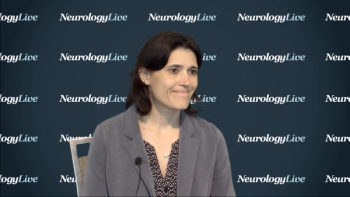
Despite high rates of depression in MS, picking up on signs that an individual may be at risk for suicide can be difficult. The staff neurologist at Cleveland Clinic’s Mellen Center discussed some of the red flags.

Results of a pooled analysis of 3 clinical trials suggest that the magnitude of fingolimod’s treatment effect in MS is not affected by the presence of migraine or headache in patients.
The MS neurologist at Cleveland Clinic’s Lou Ruvo Center for Brain Health spoke about the factors that should be taken into account when making treatment decisions in MS, such as tolerability, affordability, and the desire to start family planning.

Data from 5 clinical trials and their extensions along with 1 real-world study suggest that treatment with teriflunomide can help patients of varying ages maintain low annualized relapse rates and stable EDSS scores.

Diroximel fumarate may be an effective treatment option in both newly diagnosed and interferon/glatiramer acetate switch patients. Interim results show it significantly reduced disease activity and was well tolerated, with low rates of gastrointestinal adverse effects leading to treatment discontinuation.
Advertisement
Advertisement
Trending on NeurologyLive - Clinical Neurology News and Neurology Expert Insights
1
FDA Approves Tavapadon for the Treatment of Parkinson Disease
2
Phase 4 Study Evaluates Transition From IVIG to Subcutaneous Efgartigimod in CIDP
3
FDA Accepts Fenebrutinib NDA Under Priority Review for Relapsing and Primary Progressive MS
4
Congress Passes ACT for ALS Reauthorization, Extending Research Programs
5