



Neuromuscular
Latest News

Advertisement
Latest Videos








CME Content











Advertisement
More News
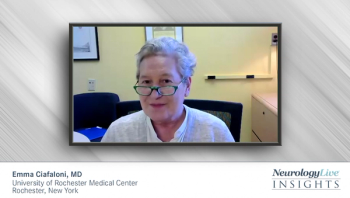
A neurology specialist offers clinical insights on communicating with patients about the diagnosis of Duchenne muscular dystrophy and discusses the important role of neuromuscular disease specialists.
Emma Ciafaloni, MD, provides an overview of the clinical presentation and diagnosis of Duchenne muscular dystrophy (DMD), highlighting the role of CK testing and the pathophysiology of the disorder.

Clinical experts in spinal muscular atrophy (SMA) address the issue of patient disengagement from healthcare services, which can occur due to a perceived lack of disease progression or stabilization, leading to undetected disease advancement and increased risk to patients, and provide recommendations for encouraging patients to re-engage with medical care.
Key opinion leaders (KOLs) further explore the transition of care from pediatric to adult healthcare systems for patients with spinal muscular atrophy (SMA), emphasizing the essential role of multidisciplinary support in ensuring a successful transition.

Here's some of what is coming soon to NeurologyLive® this week.

ND0612 Receives Complete Letter Response, Otsuka Terminates AVP-786, TSHA-102 Performs in Phase 1/2 REVEAL Studies
Published: | Updated:
Neurology News Network. for the week ending June 22, 2024. [WATCH TIME: 4 minutes]
Test your neurology knowledge with NeurologyLive®'s weekly quiz series, featuring questions on a variety of clinical and historical neurology topics. This week's topic is on Alzheimer disease/dementia.

The therapy is the first and only neonatal Fc receptor blocker approved for the treatment of CIDP, and will be available as a once-weekly, 30- to 90-second subcutaneous injection.
Take 5 minutes to catch up on NeurologyLive®'s highlights from the week ending June 21, 2024.

FDA Grants Traditional Approval to Elevidys Gene Therapy for Ambulatory DMD, Accelerated Approval for Nonambulatory Patients
Published: | Updated:
The AAV vector-based gene therapy originally received FDA approval for treating ambulatory pediatric patients aged 4 to 5 years with Duchenne under the accelerated approval pathway.

A phase 3 trial showed that over time, Hyqvia is a safe and well-tolerated maintenance treatment for patients with chronic inflammatory demyelinating polyneuropathy.

CNM-Au8, an oral suspension of clean-surfaced, catalytically-active gold nanocrystals, resulted in prolonged survival and reductions in neurofilament light, a prominent biomarker of neuroaxonal damage.
The director at the Foundation for the National Institutes of Health provided commentary on a recently launched partnership aimed at building a repository of ALS data to advance drug development for the disease.

Initial data from a few pediatric and adult patients with Rett syndrome showed that treatment with TSHA-102 resulted in numerous positive enhancements across multiple efficacy measures and clinical domains.

The cleared phase 1/2 clinical trial will assess SPG302 as a once-a-day pill among patients with amyotrophic lateral sclerosis.
Key opinion leaders (KOLs) address the challenges and obstacles associated with transitioning patients from pediatric to adult care as they age out of the pediatric system, offering valuable insights and strategies for successfully navigating this process.
Leading medical professionals specializing in spinal muscular atrophy (SMA) discuss the common clinical presentations of undiagnosed or newly diagnosed adult patients, highlighting crucial signs and symptoms that healthcare providers should recognize.
Here's some of what is coming soon to NeurologyLive® this week.

Neurology News Network. for the week ending June 15, 2024. [WATCH TIME: 4 minutes]
Test your neurology knowledge with NeurologyLive®'s weekly quiz series, featuring questions on a variety of clinical and historical neurology topics. This week's topic is on narcolepsy.

Rakesh Jain, PhD, MS, clinical professor of psychiatry at the Texas Tech University School of Medicine, provided insight on a recently approved tablet dosage for deutetrabenazine, an FDA-approved therapy for chorea and tardive dyskinesia associated with Huntington disease.
Take 5 minutes to catch up on NeurologyLive®'s highlights from the week ending June 14, 2024.

AOC 1020 (del-brax) from Avidity Biosciences shows over 50% reduction in DUX4 regulated genes, trends of functional improvement, and favorable safety in FSHD patients.

Newly Formed Clinical Advisory Board United in Potential of SAT-3247 for Duchenne Muscular Dystrophy
Published: | Updated:
Satellos Bioscience has established a clinical advisory board to aid in developing their lead drug candidate SAT-3247, an oral small molecule therapy for Duchenne muscular dystrophy.

Fordadistrogene movaparvovec is a recombinant AAV9 agent carrying a shortened version of the dystrophin gene, being assessed in the phase 3 CIFFREO study.
Advertisement
Advertisement
Trending on NeurologyLive - Clinical Neurology News and Neurology Expert Insights
1
FDA Accepts Troriluzole NDA Resubmission for Spinocerebellar Ataxia
2
Real-World Data Show Switch to Subcutaneous Ocrelizumab Well Tolerated
3
Advances in Spinal Cord MRI for Multiple Sclerosis: Julien Cohen-Adad, PhD
4
CALLIPER Extension Data Show Sustained Disability Outcomes With Vidofludimus Calcium in Progressive MS
5