


Sleep Disorders
Latest News

Advertisement
Latest Videos






Podcasts

CME Content






Advertisement
More News

The sleep and stroke neurologist at Barrow Neurological Institute provided insights on the potential of sleep-boosting strategies—including pharmacologic options—to enhance glymphatic clearance and improve stroke recovery outcomes. [WATCH TIME: 4 minutes]

Following positive phase 3 findings, Apnimed plans to submit a new drug application to the FDA in early 2026 for its lead candidate AD109 as a potential treatment of obstructive sleep apnea.
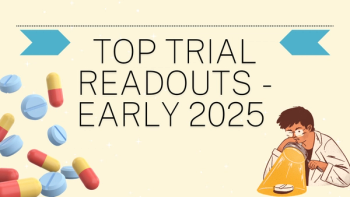
Overviewing the major clinical trial readouts in neurology from the first half of 2025, with data that could reshape patient care.

Here's some of what is coming soon to NeurologyLive® this week.
Here's some of what is coming soon to NeurologyLive® this week.
Take 5 minutes to catch up on NeurologyLive®'s highlights from the week ending June 20, 2025.

Omonigho Michael Bubu, MD, PhD, an associate professor of psychiatry, neurology, & population health at NYU Langone, discussed how OSA contributes to Alzheimer disease risk through race- and sex-specific mechanisms and neurodegenerative biomarkers.

Richard Bogan, MD, FCCP, FAASM, an associate clinical professor at the University of South Carolina School of Medicine, discussed a bevy of presentations from the 2025 SLEEP Annual Meeting highlighting the effects of once-nightly sodium oxybate.

Anita Shelgikar, MD, a clinical professor at the University of Michigan and president of the American Academy of Sleep Medicine, provided post-conference perspectives on the 2025 SLEEP meeting, giving clinicians insights on the latest in research and treatment updates.

Centessa Pharmaceuticals initiates Phase 1 study for ORX142, a novel orexin receptor agonist targeting neurological disorders, promising new treatment avenues.

The director of sleep health at Flinders University discussed the latest clinical advances in pharmacotherapy, precision treatment targets, and combination strategies for obstructive sleep apnea.

Deepa Burman, MD, FAASM, co-director of the Pediatric Sleep Evaluation Center at UPMC Children’s Hospital of Pittsburgh, discussed the potential contributors to pediatric insomnia and the role of a thorough assessment for effective management.
Here's some of what is coming soon to NeurologyLive® this week.

Funke Afolabi-Brown, MD, FAASM, chief executive officer of Restful Sleep MD, discussed the potential role of family dynamics and individualized planning in the effective management of pediatric sleep disorders.

A new phase 2 study explores samelisant's potential to treat cataplexy in narcolepsy type 1, promising improved patient outcomes and safety.

New 5-year findings from the National RLS Opioid Registry presented at SLEEP 2025 highlight the long-term stability and dose trends of low-dose opioid therapy in patients with restless legs syndrome.

Switching to once-nightly sodium oxybate significantly improves sleep-related eating disorder in narcolepsy patients, enhancing overall treatment outcomes.

An interim analysis of an ongoing study suggested that the tonic motor activation demonstrated comparable short-term outcomes for both painful and painless forms of restless legs syndrome.

Findings from the Jazz DUET study presented at SLEEP 2025 showed that low-sodium oxybate reduced daytime sleepiness and improved sleep parameters in patients with narcolepsy types 1 and 2.
The neuroscientist and physician at Mount Sinai explored the role of sleep-dependent brain clearance in Alzheimer disease and how emerging research is challenging longstanding assumptions.

Data from a pair of phase 3 trials suggest that tirzepatide treatment may improve patient-reported measures of sleepiness in individuals with obstructive sleep apnea and obesity.

New phase 2 trial data presented at SLEEP 2025 suggest TAK-861 significantly decreased microsleep frequency and delayed onset of first microsleep in individuals with narcolepsy type 1.

New analysis reveals insights on hypnagogic and hypnopompic hallucinations in narcolepsy patients treated with once-nightly sodium oxybate.

A newly presented actigraphy-based algorithm demonstrated high accuracy in detecting daytime naps, offering insights into napping behavior changes in patients with narcolepsy type 1.

A recent analysis reveals the safety profile of once-nightly sodium oxybate for narcolepsy, highlighting low discontinuation rates and common adverse events.
Advertisement
Advertisement
Trending on NeurologyLive - Clinical Neurology News and Neurology Expert Insights
1
Cladribine Tablets Show Ability to Improve or Stabilize Cognitive Function in Patients With Relapsing Multiple Sclerosis
2
Cladribine Maintains Efficacy, Safety Profile in Older Patients With Multiple Sclerosis
3
Myelin Protective Small Molecule Lucid-MS Shows Promising Early-Stage Data in Healthy Volunteers
4
CD40L Inhibitor Frexalimab Enters Phase 3 FREXITE Trial of Non-Relapsing Secondary Progressive Multiple Sclerosis
5