





Sleep Disorders
Latest News

Advertisement
Video Series




Latest Videos









Shorts

0:57
What Other Nerve Conditions Are Teaching Us About Reversing DPN
9 days ago
by
Brian Callaghan, MD, MS

0:57
The 5 to 10 Year Outlook for Diabetic Peripheral Neuropathy
10 days ago
by
Brian Callaghan, MD, MS

0:49
The Research Gaps Standing Between DPN and Reversibility
10 days ago
by
Brian Callaghan, MD, MS

1:06
What Is the Most Significant Shift in Treating Hypersomnia?
20 days ago
by
KuangHua Guo, MD, PhD(+1 more)

1:35
The Missing Step Between iPSC Drug Screening and Clinical Trials
25 days ago
by
Ahmet Hoke, MD, PhD

0:35
What iPSC Models Miss About the Nervous System
25 days ago
by
Ahmet Hoke, MD, PhD

1:28
Building a Smarter Drug Development Pipeline for Neuropathy
a month ago
by
Ahmet Hoke, MD, PhD

0:48
Why Animal Models Still Matter in Neuropathy Research
a month ago
by
Ahmet Hoke, MD, PhD
0:48
Overviewing Newly Approved Oveporexton for Narcolepsy Type 1
a month ago
by
Marco Meglio(+1 more)
1:41
SLEEP 2026: Designing Phase 3 Trials for Narcolepsy Type 1
2 months ago
by
Elena Koundourakis, PhD(+1 more)
Podcasts
CME Content















Advertisement
More News

Catch up on any of the neurology headlines you may have missed in August 2026, compiled into 1 place by the NeurologyLive® team.
Catch up on any of the neurology headlines you may have missed from last week, compiled into 1 place by the NeurologyLive® team.

A phase 3 trial found that solriamfetol significantly improved wakefulness and reduced excessive daytime sleepiness in Chinese patients with obstructive sleep apnea, with a safety profile consistent with prior studies conducted in Western populations.

New phase 1 data showed favorable pharmacokinetic and safety findings for the investigational orexin-2 receptor agonist BP-205, supporting continued clinical development.
Six FDA PDUFA decisions this fall could reshape care in Alzheimer disease, DMD, Sanfilippo syndrome, Alexander disease, and SMA, here's what clinicians need to know about the data behind each.
The FDA has approved oveporexton, marketed as Orzeyful, as the first therapy to directly restore orexin signaling and address the full symptom range of narcolepsy type 1.
Catch up on any of the neurology headlines you may have missed in July 2026, compiled into 1 place by the NeurologyLive® team.
Take 5 minutes to catch up on NeurologyLive®'s highlights from the week ending July 31, 2026.
Take 5 minutes to catch up on NeurologyLive®'s highlights from the week ending July 24, 2026.

Ahead of World Brain Day, NeurologyLive explores 5 emerging strategies for preventing neurologic disease, from modifiable dementia risk factors to GLP-1 drugs, sleep science, the gut brain axis, and wearable technology.

Here's some of what is coming soon to NeurologyLive® this week.
If approved, AD109 could become the first medication to address both the nighttime airway obstruction and oxygen deprivation central to OSA, as well as its daytime symptoms, such as fatigue.
The FDA files the NDA for Axsome’s AXS-12 for cataplexy in narcolepsy, backed by phase 3 data wins showing fewer attacks and better daytime alertness.
Here's some of what is coming soon to NeurologyLive® this week.
Take 5 minutes to catch up on NeurologyLive®'s highlights from the week ending July 10, 2026.
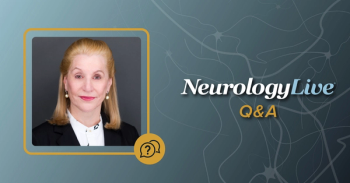
Carol Rosen, MD, professor emerita of pediatrics at Case Western Reserve University School of Medicine, discussed the transformation of pediatric sleep medicine from a clinical curiosity to a core medical specialty at SLEEP 2026.

Fariha Abbasi-Feinberg, MD, FAASM, FAAN, newly installed president of the American Academy of Sleep Medicine and medical director of sleep medicine at Millennium Physician Group, shares her clinical and policy priorities for the year ahead and her vision for the future of sleep medicine.
Led by Na Tosha Gatson, MD, PhD, FAAN, director of the Center for Neuro-Oncology at the Indiana University Health Neurosciences and Cancer Institutes, this new column translates complex neuro-oncology topics into accessible, evidence-based insights.

A sleep specialist and sleep patient advocate discussed diagnostic and patient-reported outcome measures that aim to better capture the cognitive, functional, and psychosocial burden of central disorders of hypersomnolence.
Here's some of what is coming soon to NeurologyLive® this week.
Take 5 minutes to catch up on NeurologyLive®'s highlights from the week ending July 3, 2026.
The professor of neurology at Wake Forest School of Medicine discussed the evolution of sleep medicine education, its relevance across neurologic specialties, and advice for early-career clinicians.
Here's some of what is coming soon to NeurologyLive® this week.
Take 5 minutes to catch up on NeurologyLive®'s highlights from the week ending June 26, 2026.
Here's some of what is coming soon to NeurologyLive® this week.
Advertisement
Advertisement
Trending on NeurologyLive - Clinical Neurology News and Neurology Expert Insights
1
FDA Accepts Fenebrutinib NDA Under Priority Review for Relapsing and Primary Progressive MS
2
Phase 3 PROPEL Trial to Test Imeroprubart in Generalized Myasthenia Gravis
3
Nipocalimab’s Safety Profile Slightly Favored Over Other Myasthenia Gravis Therapies, Indirect Comparison Shows
4
2026 Rachel Horne Prize Winner Sandra Vukusic, MD, PhD, on Advancing Women's Health in MS
5