




Stroke
Latest News
Advertisement
Latest Videos
CME Content








Advertisement
More News
The associate professor of neurology at Johns Hopkins detailed how artificial intelligence is shaping the future of neurology through its integration in clinical care, research, and medical education. [WATCH TIME: 4 minutes]
Nuri Jacoby, MD, a neurologist at Maimonides Medical Center and SUNY Downstate, previewed his talk at the 2025 AUPN Annual Meeting on using simulation to evaluate nonclinical competencies like communication and professionalism. [WATCH TIME: 3 minutes]
The professor of neurology at Albert Einstein College of Medicine talked about new findings presented at AHS, which suggested that both men and women with migraine can face significantly increased risks of ischemic stroke. [WATCH TIME: 5 minutes]

Mind Moments®, a podcast from NeurologyLive®, brings you an exclusive interview with Joyce Lee-Iannotti, MD, PhD. [LISTEN TIME: 17 minutes]
A recent trial reveals that a flat head position before thrombectomy significantly reduces the risk of neurological deterioration in stroke patients.
Test your neurology knowledge with NeurologyLive®'s weekly quiz series, featuring questions on a variety of clinical and historical neurology topics. This week's topic is on stroke triage.
The sleep and stroke neurologist at Barrow Neurological Institute provided insights on the potential of sleep-boosting strategies—including pharmacologic options—to enhance glymphatic clearance and improve stroke recovery outcomes. [WATCH TIME: 4 minutes]
Overviewing the major clinical trial readouts in neurology from the first half of 2025, with data that could reshape patient care.
Eptinezumab Improves Medication Overuse Headache, Submission for GTx-104 in Subarachnoid Hemorrhage, FDA Expands Indication for Vizamyl PET Imaging
Published: | Updated:
Neurology News Network. for the week ending June 28, 2025. [WATCH TIME: 4 minutes]

Grace Therapeutics submits NDA for GTx-104, a promising IV treatment for aSAH, aiming to revolutionize patient care and improve outcomes.
The director of the Center for Brain and Mind Health at Yale University discussed new findings in thrombolytic therapy, stroke monitoring, neuroprotection, and imaging technologies presented at ESOC 2025. [WATCH TIME: 7 minutes]
The sleep and stroke neurologist at Barrow Neurological Institute detailed how improving glymphatic function may prevent strokes and enhance recovery from both hemorrhagic and ischemic events. [WATCH TIME: 5 minutes]
Explore innovative neurorehabilitation strategies for stroke recovery, emphasizing personalized approaches and advanced technologies to enhance patient outcomes.
The clinical associate professor of neurology and neurosurgery at NYU Langone talked about the promise of machine learning in identifying patients at high risk for hematoma expansion to guide care. [WATCH TIME: 2 minutes]
The professor of neurology at the University of Pennsylvania Perelman School of Medicine discussed the evolving role of noninvasive neuromodulation in promoting brain plasticity. [WATCH TIME: 3 minutes]
The clinical professor of stroke neurology and neurocritical care at Stanford University discussed the shifting perspective on early blood pressure lowering in intracerebral hemorrhage. [WATCH TIME: 4 minutes]
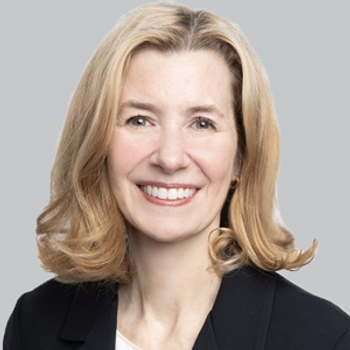
From Neurology Enthusiast to Advocate for Health Equity: Moira Kapral’s SEQUINS Hall of Fame Journey
Moira Kapral, MD, MSc, reflects on her SEQUINS Hall of Fame recognition, the evolution of brain health equity, and her work addressing disparities in stroke care.
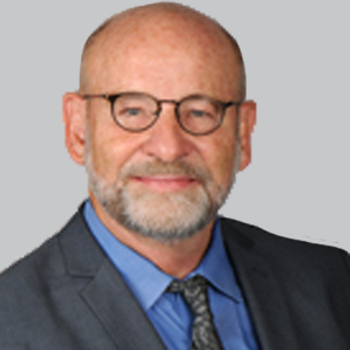
Robert J. Adams, MS, MD, reflects on his SEQUINS Hall of Fame recognition, his work on stroke prevention, and the importance of equity in brain health.

Barbara Vickrey, MD, MPH, discusses her SEQUINS Hall of Fame honor, the evolution of healthcare delivery models, and the role of mentorship in fostering equity in neurology.
Lewis B. Morgenstern, MD, reflects on his SEQUINS Hall of Fame recognition, the importance of health equity research, and his ongoing efforts to reduce stroke disparities.
Cheryl Bushnell, MD, MHS, a professor of neurology at Wake Forest University, discussed her SEQUINS Hall of Fame recognition, her work on sex differences in stroke risk, and her ongoing efforts to improve stroke care equity.
The ZEISS INTRABEAM 700 advances neurosurgical oncology by enabling precise intraoperative radiotherapy delivery, improved workflow efficiency, and enhanced collaboration between neurosurgeons and oncologists.
Among patients with BAD, 20.4% on argatroban plus DAPT experienced early neurological deterioration vs 47.1% on DAPT alone, and 87.8% vs 68.6% achieved excellent 90-day outcomes.
Test your neurology knowledge with NeurologyLive®'s weekly quiz series, featuring questions on a variety of clinical and historical neurology topics. This week's topic is on stroke in epilepsy.
High doses of RNS60 led to greater number of patients with modified Rankin scale scores between 0-2, improved EQ-5D-5L index score, and enhanced NIHSS score at each pre-specified time point over placebo.
Advertisement
Advertisement
Trending on NeurologyLive - Clinical Neurology News and Neurology Expert Insights
1
Solengepras Meets Primary Endpoint in Phase 3 ARISE Trial of Parkinson Disease
2
CSF Biomarkers Identify Shared LRRK2 Pathway Activation in Sporadic and LRRK2-Associated Parkinson Disease
3
Advanced Therapies in Parkinson Disease: Matching the Right Treatment to the Right Patient
4
Beyond MRI: The Role of Serum Biomarkers in Multiple Sclerosis
5