


Stroke
Latest News

Advertisement
Latest Videos
CME Content







Advertisement
More News
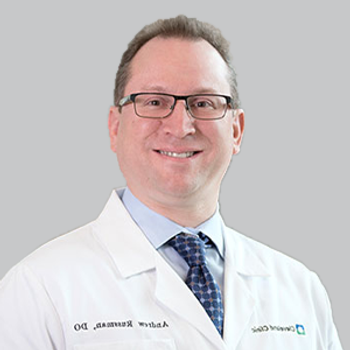
Andrew Russman, DO, medical director of Cleveland Clinic’s Comprehensive Stroke Center, shared insights on stroke awareness, prevention, and the growing importance of heart-brain collaboration in care.
Amid World Stroke Day, neurosurgeon Evan Luther, MD, discussed the PICASSO trial’s effort to clarify the role of acute carotid stenting during mechanical thrombectomy for tandem occlusions in ischemic stroke.
The chief science officer at the American Heart Association discusses its priorities for stroke prevention, cross-specialty collaboration, and equitable care as clinicians mark World Stroke Day 2025.
In this final episode, Drs. Snelling and De Los Rios share lessons from building a coordinated, multi-hospital stroke system and how network integration improves speed, access, and outcomes. [WATCH TIME: 3 minutes]
In episode 4, neurologists Brian Snelling, MD, and Felipe De Los Rios, MD, discuss how stroke recovery and secondary prevention have evolved, highlighting new therapies, combination strategies, and the complexities of real-world implementation. [WATCH TIME: 4 minutes]
The conversation centers around the pursuit of effective neuroprotective agents in stroke, the challenges of clinical trial design, and what could make future therapies succeed. [WATCH TIME: 5 minutes]
At CNS 2025, the program director of child neurology residency at Boston Children's Hospital discussed strategies to expose medical students to child neurology early in their clinical training. [WATCH TIME: 4 minutes]
In episode 2, a pair of stroke neurologists explore how artificial intelligence is accelerating stroke detection, streamlining workflows, and redefining collaboration in modern stroke care. [WATCH TIME: 4 minutes]
In this kickoff episode, Drs. Brian Snelling, MD, and Felipe De Los Rios, MD, discussed how evolving evidence continues to expand mechanical thrombectomy eligibility, from extended time windows to large-core and medium-vessel occlusions. [WATCH TIME: 6 minutes]
The codirector of interventional neuroradiology at Baptist Health's Neuroscience Institute, outlined a pragmatic, anatomy-first approach to aneurysm care, balancing endovascular options against open surgery and ways to tailor decision-making. [WATCH TIME: 3 minutes]
The co-director of interventional neuroradiology at Baptist Health Miami Neuroscience Institute discussed decision-making for ruptured and unruptured aneurysm, endovascular and open outcomes, and training priorities for modern cerebrovascular care.
Portable optical blood flow monitors can enhance prehospital stroke diagnosis, enabling faster, accurate triage for large vessel occlusions and improving patient outcomes.
Semaglutide demonstrates superior cardiovascular benefits over dulaglutide, reducing heart attack and stroke risks in type 2 diabetes patients.
Grace Therapeutics reveals promising results for GTx-104, an innovative IV treatment for aSAH, potentially transforming patient care in neurocritical settings.
A recent trial reveals perispinal etanercept is safe for chronic stroke patients but shows no significant efficacy compared with placebo.
Novo Nordisk's semaglutide gains EU approval as the first oral GLP-1 RA to reduce cardiovascular risks in type 2 diabetes patients.
A recent study reveals GLP-1 receptor agonists significantly reduce medication use and symptoms in idiopathic intracranial hypertension patients, suggesting a promising management strategy.
Semaglutide significantly reduced the risk of heart attack, stroke, and death compared to tirzepatide in patients with obesity and cardiovascular disease.
Impaired kidney function significantly increases the risk of recurrent ischemic stroke, highlighting the need for tailored treatment strategies in high-risk patients.
Revalesio's RNS60 gains FDA fast track status, offering a groundbreaking approach to neuroprotection in ischemic stroke treatment.
The neurologist at Maimonides Medical Center and SUNY Downstate shared how interactive simulations give neurology trainees the chance to practice skills, gain feedback, and move beyond passive learning. [WATCH TIME: 3 minutes]

At AHS 2025, Elizabeth Seng, PhD, professor of neurology at Albert Einstein College of Medicine, presented findings from a study showing that migraine was associated with increased odds of ischemic stroke in veterans.
The Harold I. Nemuth Chair in Neurological Disorders at Virginia Commonweath University discussed the rationale, results, and future directions of GLP-1 RA therapy as a novel treatment strategy for idiopathic intracranial hypertension.
The Harold I. Nemuth Chair in Neurological Disorders at Virginia Commonwealth University provided hypothetical insights on potential stroke-related avenues for GLP-1 RAs to treat following positive data in idiopathic intracranial hypertension. [WATCH TIME: 4 minutes]
The Harold I. Nemuth Chair in Neurological Disorders at Virginia Commonwealth University discussed the next steps in advancing GLP-1s for idiopathic intracranial hypertension and the research necessary to further understand their therapeutic impact. [WATCH TIME: 3 minutes]
Advertisement
Advertisement
Trending on NeurologyLive - Clinical Neurology News and Neurology Expert Insights
1
Clene Submits NDA Seeking Accelerated Approval for ALS Drug
2
Early Data Show Dual-Targeting CAR-T Agent CTA313 Stabilizes Progressive Multiple Sclerosis
3
Real-World Data Show Switch to Subcutaneous Ocrelizumab Well Tolerated
4
CALLIPER Extension Data Show Sustained Disability Outcomes With Vidofludimus Calcium in Progressive MS
5