


Stroke
Latest News

Advertisement
Latest Videos
CME Content










Advertisement
More News
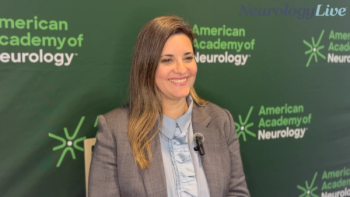
The clinical associate professor of neurology and neurosurgery at NYU Langone Health emphasized the importance of rapid, targeted blood pressure reduction and bundled care to improve outcomes in patients with intracerebral hemorrhage. [WATCH TIME: 4 minutes]
The clinical professor of stroke neurology at Stanford University discussed the clinical rationale and evidence supporting early, intensive blood pressure lowering in patients with intracerebral hemorrhage.
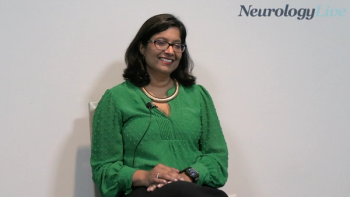
The clinical professor of stroke neurology and neurocritical care at Stanford University advocated for early and intensive blood pressure reduction in patients with intracerebral hemorrhage to limit hematoma expansion and improve outcomes. [WATCH TIME: 5 minutes]

AHN Neuroscience Institute is the first in western Pennsylvania to offer the FDA-approved Vivistim device, combining vagus nerve stimulation with traditional rehab to improve stroke recovery.
Here's some of what is coming soon to NeurologyLive® this week.
Take 5 minutes to catch up on NeurologyLive®'s highlights from the week ending March 14, 2025.

Mind Moments®, a podcast from NeurologyLive®, brings you an exclusive interview with Bijoy Menon, MD, MSc, FRCPC. [LISTEN TIME: 18 minutes]
Explore the key 2024 neurology guideline updates shaping clinical care across stroke, epilepsy, movement disorders, and more in this essential feature.
Take 5 minutes to catch up on NeurologyLive®'s highlights from the week ending March 7, 2025.
The thrombolytic treatment, branded as TNKase and approved for adults, is administered as a 5-second IV bolus, upping the speed and simplicity of the 60-minute infusion of the previously approved alteplase (Activase; Genentech).
Take 5 minutes to catch up on NeurologyLive®'s highlights from the week ending February 28, 2025.

RapidAI identified 98% of LVOs compared to 74% by Viz LVO, while also correctly identifying 94% of LVO-negative cases compared to 91% for Viz.

Propranolol showed a stronger protective effect against ischemic stroke compared to other beta-blockers, such as metoprolol and timolol, possibly due to its unique pharmacological profile.
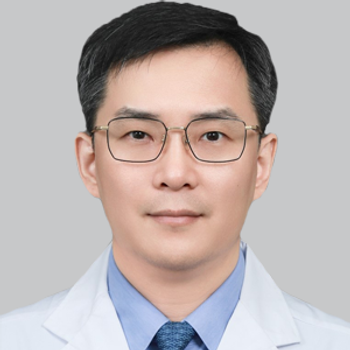
ANGEL-TNK demonstrated Tenecteplase's potential to enhance microcirculation post-thrombectomy, reducing brain tissue damage from inadequate blood flow.

The director of the Cerebrovascular Center at Mount Sinai discussed how results from the ESCAPE-MeVO trial highlight the impact of anesthesia rates, thrombectomy techniques, and the need for rigorous clinical trials to minimize bias. [WATCH TIME: 3 minutes]
Take 5 minutes to catch up on NeurologyLive®'s highlights from the week ending February 21, 2025.

The president of the American Heart Association discussed how precision medicine, advanced imaging, and expanded treatment windows are transforming stroke care, as displayed at ISC 2025. [WATCH TIME: 5 minutes]
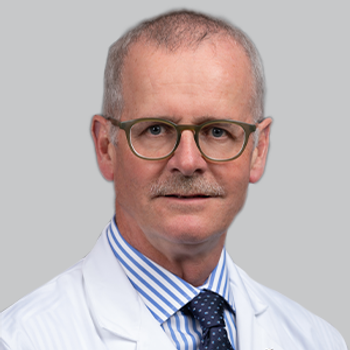
A pair of lead neurologists at Baptist Health South Florida provided commentary on some of the promising developments expected to emerge in neurology over the coming months.
The president of the American Heart Association provided post-conference commentary on the advances shaping stroke care and excitement behind this year’s International Stroke Conference. [WATCH TIME: 3 minutes]
The director of the Cerebrovascular Center at Mount Sinai highlighted key differences in patient selection criteria and trial designs that may influence how stroke treatment data is applied in clinical practice. [WATCH TIME: 5 minutes]
Take 5 minutes to catch up on NeurologyLive®'s highlights from the week ending February 14, 2024.
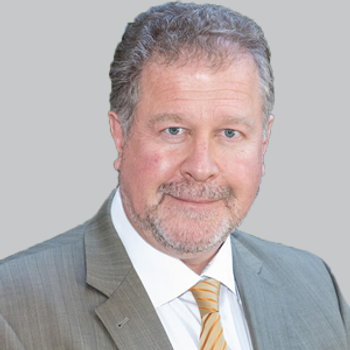
Andrei Alexandrov, MD, chair of the department of neurology at the University of Arizona College of Medicine, covered the latest advancements in stroke care from ISC 2025, from expanding thrombectomy indications to evolving imaging techniques.

Stroke neurologists Lauren Sansing, MD, MS, FAHA, FANA, and Bijoy Menon, MD, MSc, FRCPC, provided a post-conference perspective on the emerging data and research presented at the 2025 International Stroke Conference.
The director of the Cerebrovascular Center at Mount Sinai talked about findings from recent trials presented at ISC 2025 investigating thrombectomy for distal vessel occlusions. [WATCH TIME: 4 minutes]
The professor and chair of the neurology department at the University of Arizonia, Phoenix, gave clinical insights on the notable progress in the stroke treatment world, highlighted by advances presented at the 2025 International Stroke Conference. [WATCH TIME: 3 minutes]
Advertisement
Advertisement
Trending on NeurologyLive - Clinical Neurology News and Neurology Expert Insights
1
Clene Submits NDA Seeking Accelerated Approval for ALS Drug
2
Early Data Show Dual-Targeting CAR-T Agent CTA313 Stabilizes Progressive Multiple Sclerosis
3
Real-World Data Show Switch to Subcutaneous Ocrelizumab Well Tolerated
4
CALLIPER Extension Data Show Sustained Disability Outcomes With Vidofludimus Calcium in Progressive MS
5